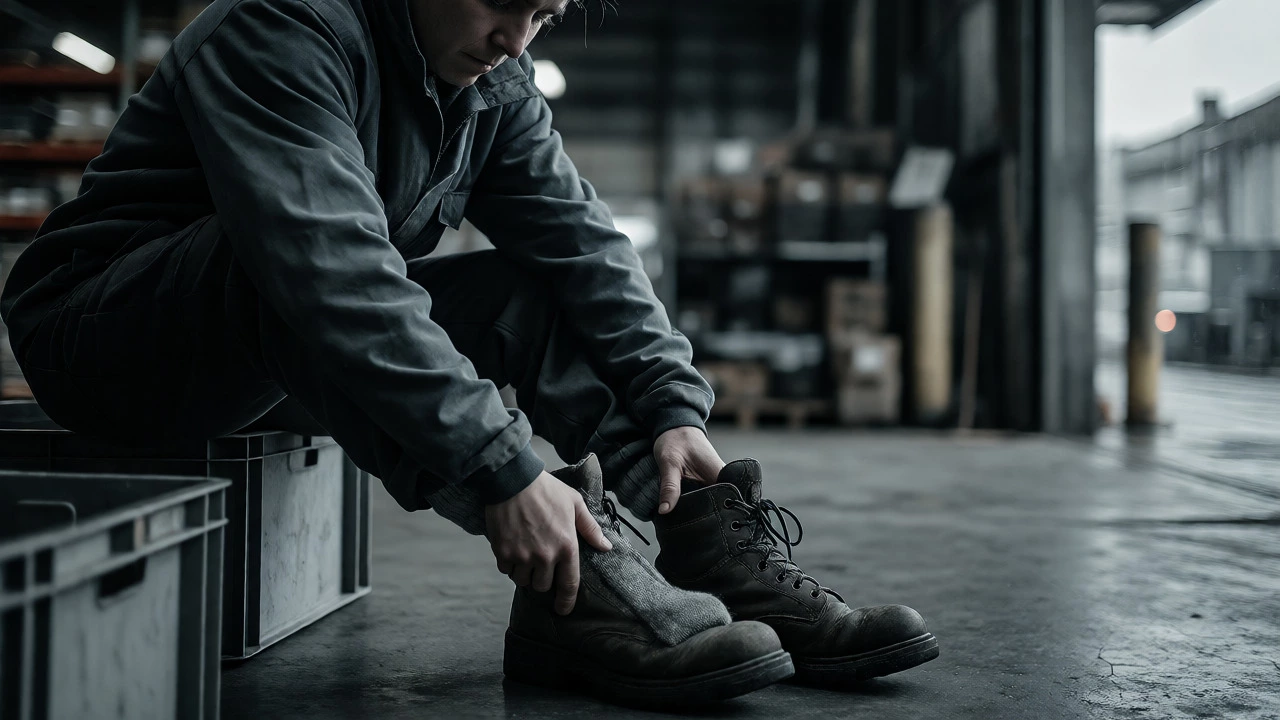
Irish Workplace Foot Pain Risk Calculator
Calculate your risk level and get tailored advice to stop feet hurting at work.
Your Risk Profile
Risk Level
Awaiting Calculation
Enter your details to see personalized tips for Irish workplaces.
If you’ve ever walked out of a shift in a Dublin warehouse or finished a long day on your feet in a Cork hospital ward with throbbing arches and swollen ankles, you know the struggle. It’s not just about being tired; it’s about that specific, grinding ache that makes you dread the commute home. The truth is, most of us are wearing the wrong work shoes. We buy them because they look professional or fit within our budget, not because they support the unique demands of an eight-hour shift on concrete floors or wet pavement. This guide breaks down exactly how to stop feet hurting at work, tailored specifically for the realities of working in Ireland.
Why Your Feet Are Screaming by 5 PM
Let’s be honest: Irish weather plays a massive role here. You’re often dealing with dampness, sudden rain showers, and cold temperatures that constrict blood flow. But the bigger culprit is usually static loading. Whether you’re a nurse in Galway, a barista in Belfast, or a site manager in Limerick, standing still is harder on your body than walking. When you stand still, your calf muscles don’t pump blood back up to your heart efficiently. This causes pooling in the lower legs, leading to swelling and pain. Add in the hard surfaces common in industrial estates or retail parks, and you have a recipe for plantar fasciitis-the inflammation of the thick band of tissue across the bottom of your foot.
It’s also worth noting that many people ignore early signs of fatigue. That slight twinge in your heel? It’s not something you should “push through.” Ignoring it leads to compensatory movements where you shift weight awkwardly, which then wrecks your knees, hips, and lower back. Fixing the root cause starts at the ground level.
The Shoe Audit: What Actually Works
You don’t need to spend a fortune, but you do need to be smart. Here is what actually works when you’re looking for relief:
- Closure Systems: Lace-up shoes are superior to slip-ons. They allow you to adjust tightness throughout the day as your feet swell. If you wear safety boots, make sure they have good lacing systems rather than cheap velcro that loses grip after a month.
- Wide Toe Box: Many standard dress shoes taper too sharply. If you can’t wiggle your toes, your nerves are getting compressed. Look for brands that offer wide fits (often marked as 'W' or 'E'). In Ireland, high-street chains like Clarks or specialized workwear suppliers like Snugpak often carry these options.
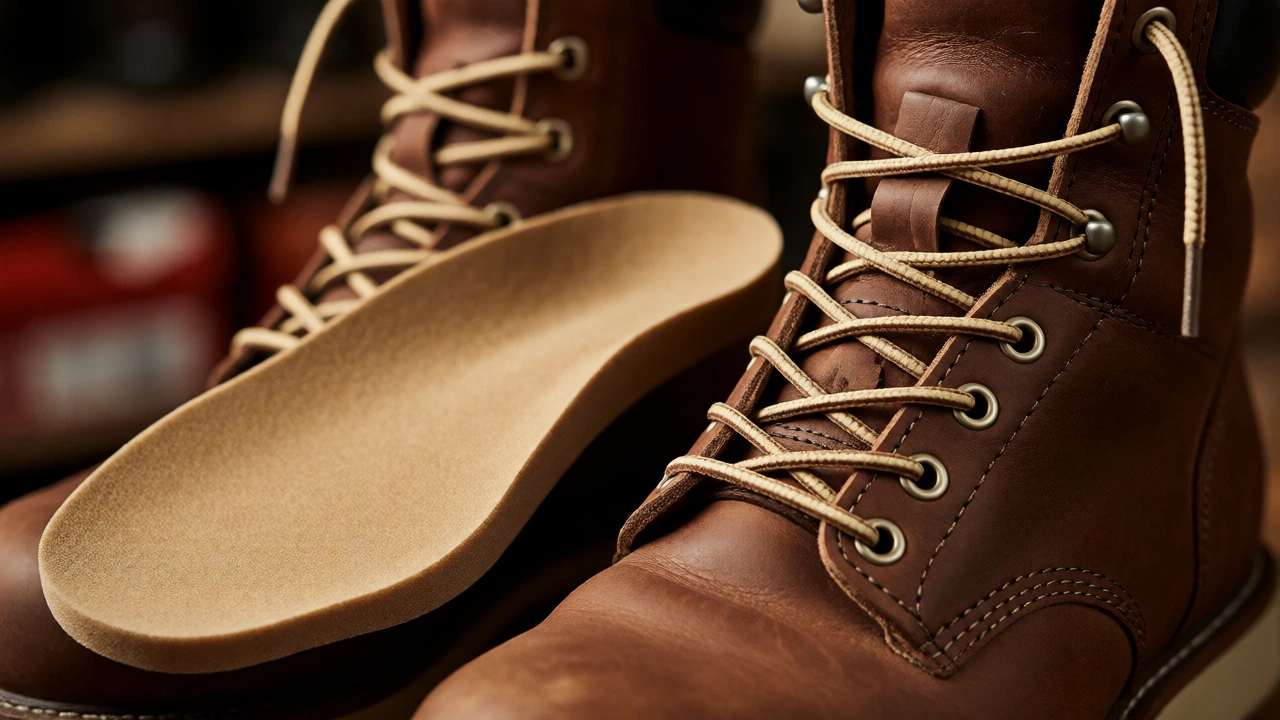
- Arch Support: Flat soles are the enemy. You need a shoe that mirrors the natural curve of your foot. If your current shoes are flat, don’t throw them out yet-try quality orthotic insoles first.
Insoles vs. New Shoes: Where to Spend Your Money
This is the million-euro question. Should you buy new boots or just upgrade the insides? For most people, upgrading the insole is the best bang for your buck. Standard factory insoles are thin foam that compresses into nothingness after two weeks. Replacing them with medical-grade orthotics can transform a mediocre shoe into a comfortable one.
| Option | Average Cost (EUR) | Lifespan | Best For |
|---|---|---|---|
| Generic Foam Insoles | €10 - €20 | 2-4 Weeks | Mild discomfort, temporary fixes |
| Prescription Orthotics | €150 - €300 | 2-3 Years | Chronic pain, flat feet, bunions |
| Premium Safety Boots | €80 - €150+ | 6-12 Months | Construction, heavy industry, wet environments |
If you have structural issues like fallen arches, see a podiatrist. In cities like Dublin or Cork, private consultations range from €70 to €100, but many employers cover this under occupational health schemes if you push for it. Don’t assume it’s covered automatically-ask your HR department.
Workplace Habits That Save Your Soles
Your gear is only half the battle. How you move matters just as much. Here are practical tweaks you can start today:
- The 2-Minute Rule: Every hour, take two minutes to walk around. If you’re stuck at a desk, do seated calf raises. Lift your heels, hold for five seconds, lower slowly. This pumps blood out of your feet.
- Anti-Fatigue Mats: If you work behind a counter or at a bench, ask your manager for an anti-fatigue mat. These foam mats reduce impact forces significantly. If your employer won’t provide one, consider buying a personal one (approx. €30-€50) and claiming it as a work expense.
- Rotation Strategy: Never wear the same pair of shoes two days in a row. Materials need time to dry out and regain shape. Having two pairs of work shoes allows each to air out, reducing moisture buildup-a major issue given Ireland’s humidity.
Socks Matter More Than You Think
We tend to overlook socks, treating them as disposable commodities. But in wet, cold conditions, cotton socks are terrible-they stay wet and cause blisters. Switch to merino wool blends. Brands like Smartwool or local Irish makers using Merino wool wick moisture away from the skin while keeping feet warm. Yes, they cost more (€15-€20 per pair), but they last longer and prevent the soggy feeling that leads to fungal infections and slipping inside the shoe.

Recovery Rituals for After Work
Once you’re home, don’t just collapse onto the sofa. Spend ten minutes actively recovering. Roll your foot over a frozen water bottle or a tennis ball. This acts as a self-massage for the plantar fascia. Elevate your legs above heart level for 15 minutes to drain fluid from the ankles. If you live in an apartment without space for stretching, use a doorway stretch against the wall to loosen tight calves, which are often the hidden cause of heel pain.
When to See a Doctor
Pain that wakes you up at night, numbness, tingling, or visible deformities like severe bunions require professional attention. In Ireland, you can access public podiatry services through the HSE, though waiting lists can be long. Private clinics offer faster access. If you suspect stress fractures (common in runners or those suddenly increasing activity levels), get an X-ray. Ignoring these can lead to months of downtime instead of weeks.
Do I really need steel-toe caps if I work in an office?
Generally, no. Unless you work in a logistics hub or a construction-adjacent office environment, steel-toe caps add unnecessary weight and rigidity. Focus on cushioned, flexible sneakers or loafers with good arch support instead. Weight reduction is key for comfort during sedentary or light-active roles.
Is it better to wear compression socks at work?
Yes, especially if you stand for more than four hours continuously. Compression socks improve venous return, reducing swelling and fatigue. Start with mild compression (15-20 mmHg). You can find these in pharmacies across Ireland, such as Boots or independent chemists. Ensure they fit correctly; too tight will cut off circulation, making things worse.
Can wet feet cause permanent damage?
Not necessarily permanent structural damage, but chronic exposure to dampness can lead to Athlete’s Foot (tinea pedis), nail fungus, and skin maceration. Given Ireland's rainy climate, waterproofing your shoes and rotating pairs is essential hygiene practice to prevent recurring infections.
Are expensive running shoes good for standing all day?
Often, yes, but with caveats. Running shoes are designed for forward motion, not static stability. Some models are too soft and unstable for standing still. Look for "stability" running shoes or cross-trainers rather than maximalist cushioning shoes like Hoka Cliftons, which can feel wobbly when stationary. Test them by standing still for 10 minutes in the shop before buying.
Does my employer have to pay for my work shoes?
In Ireland, there is no universal legal requirement for employers to fund general footwear unless specified in your contract or collective agreement. However, if safety footwear is mandatory due to risk assessments, the employer must typically provide or reimburse it. Check your employment contract and speak to your union representative if applicable.