Leather Quality Checker
Does "100% Leather" mean high quality? Use this checker to evaluate a pair of shoes based on common labeling traps and physical tests described in our guide.
Verdict
Irish Weather Suitability
Care Recommendations
You’re standing in a shop on Grafton Street or browsing an online retailer that ships to Dublin, and you see a pair of leather shoes with a label screaming "100% Leather." It sounds perfect, right? But here’s the catch: in the world of footwear, especially here in Ireland where we value durability against our notoriously wet weather, that label can be misleading. Does "100%" actually mean it’s full-grain, high-quality hide, or is it just marketing speak for bonded scraps and plastic coatings? If you’ve ever wondered why one pair costs €40 and another €200 despite both claiming to be leather, you aren’t alone. The truth is, "100% leather" doesn’t always mean what you think it means.
The Labeling Trap: What "100%" Actually Tells You
When a manufacturer writes "100% Leather," they are usually referring to the composition of the upper part of the shoe, not its grade. This is a crucial distinction for anyone shopping in the Irish market. Under EU regulations, which apply strictly across Ireland, labeling must be truthful about materials. If a shoe says "100% Leather," it generally means no synthetic fabrics like polyester or nylon were used in the upper construction. But it does not guarantee that the leather is top-tier.
Think of it like buying apples. "100% Apple" tells you there’s no banana mixed in. It doesn’t tell you if you’re getting a crisp Bramley apple from County Cork or a bruised, mealy apple that’s been waxed to look shiny. In footwear, this "waxing" equivalent is often a heavy plastic coating called PU (polyurethane) or PVC. These coatings can make low-quality leather feel smooth and uniform, hiding imperfections that would otherwise reveal its lower grade. So, while the material is technically leather, the experience might feel more like wearing plastic wrapped around cardboard.
Decoding the Grades: Full-Grain vs. Genuine vs. Bonded
To avoid wasting money on pairs that fall apart after one winter in Galway, you need to understand the hierarchy of leather grades. Not all hides are created equal, and knowing the difference will save you headaches and cash.
- Full-Grain Leather: This is the gold standard. It uses the entire grain layer of the hide without sanding down imperfections. It’s tough, breathable, and ages beautifully. Brands like Clarks or higher-end Irish makers often use this for their premium lines. If you see "full-grain," you’re getting the best durability available.
- Top-Grain Leather: Slightly less durable than full-grain because the surface has been sanded to remove scars. It’s softer and easier to clean, making it popular for dress shoes sold in city centers like Dublin or Cork. It’s still excellent quality but lacks the rugged character of full-grain.
- Genuine Leather: Here’s where confusion peaks. "Genuine" doesn’t mean "real" as opposed to fake; it’s a specific grade below top-grain. It’s often made from layers of leftover hide split off from the top. While it is real leather, it’s thinner and less durable. Many mid-range chains stock this extensively.
- Bonded Leather: This is the lowest tier. It’s made by shredding leather scraps into fibers and bonding them with latex or polyurethane onto a fiber backing. It’s cheap, cracks easily, and offers poor water resistance. Avoid this if you walk much in Irish rain.
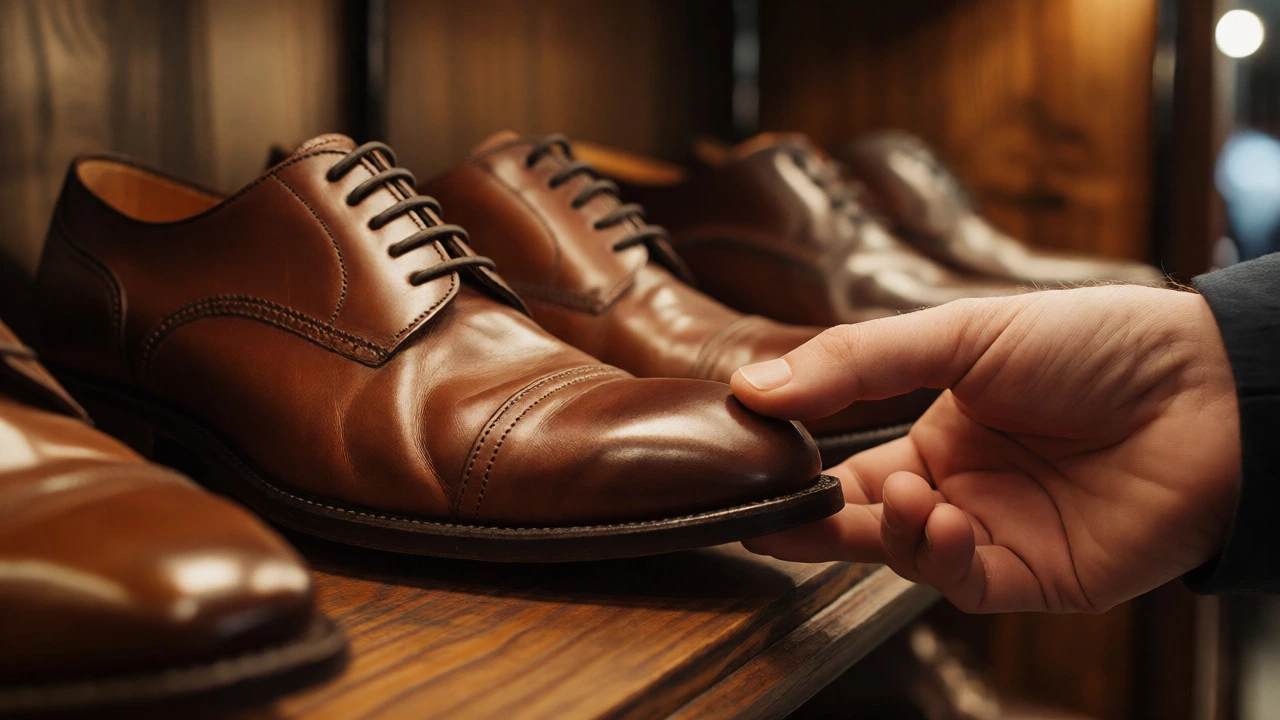
A common pitfall in Irish retail is seeing "Genuine Leather" highlighted in large font, implying authenticity. In reality, it’s a middle-ground product. If you want longevity, look for "Full-Grain" or "Top-Grain" explicitly stated on the box or tag.
How to Spot Fake or Low-Quality Leather
You don’t need a degree in chemistry to test leather quality. There are simple checks you can do in-store or at home before committing to a purchase. Since many of us buy online now, check return policies carefully so you can perform these tests at your kitchen table.
First, the smell test. Real leather has a distinct, rich scent-a mix of earth and musk. Synthetic leather or heavily processed bonded leather smells like plastic, glue, or chemicals. If it smells like a new car dashboard, it’s likely coated heavily or synthetic.
Second, the touch and temperature test. Real leather feels warm to the touch initially and adjusts to your body temperature. It also has a slight give when pressed. Synthetic materials feel cold and rigid. Try pressing your thumb into the material; real leather should wrinkle slightly around the pressure point, showing natural elasticity. Plastic-coated leather will resist and bounce back without creasing naturally.
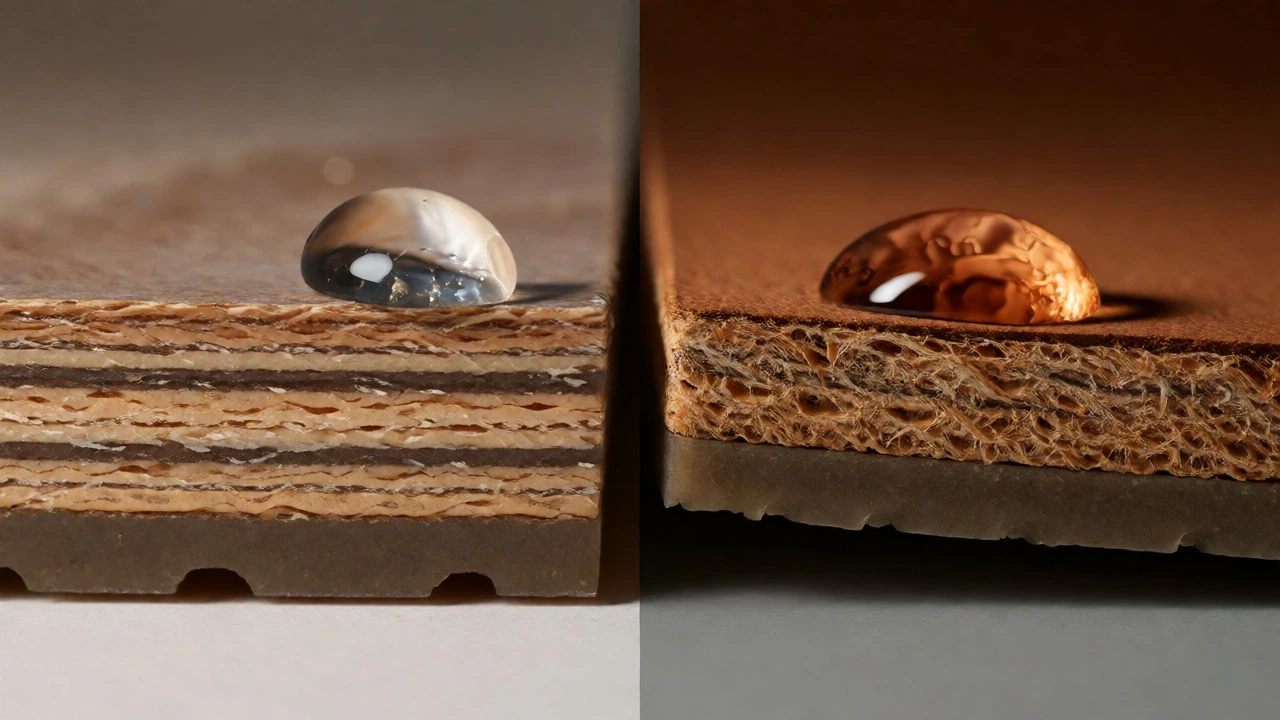
Third, inspect the edges. Look at the cut edge of the shoe tongue or collar. Real leather edges are fibrous and uneven. If the edge looks perfectly smooth, painted, or layered like plywood, it’s likely bonded leather or a synthetic composite. In Ireland, where dampness is constant, exposed raw edges on real leather can absorb water quickly, so reputable manufacturers seal these edges well. Poorly sealed edges on cheap "genuine" leather lead to rapid deterioration.
Why Climate Matters for Your Choice
Living in Ireland means dealing with humidity and rain almost year-round. This environmental factor should heavily influence your choice of leather type. Full-grain and top-grain leathers have natural pores that allow moisture vapor to escape, keeping feet drier over long periods. They also handle wet conditions better if properly maintained with wax-based conditioners.
Bonded leather, however, is porous in a bad way. It absorbs water rapidly, swells, and then cracks as it dries. Have you ever seen a cheap pair of work boots from a discount store start to peel after a few weeks of walking through puddles near Lough Neagh? That’s bonded leather failing. For daily commuting in cities like Belfast or Dublin, investing in higher-grade leather pays off because it resists the cycle of wetting and drying better than its cheaper counterparts.
Moreover, consider maintenance. Real leather requires care-cleaning, conditioning, and waterproofing. If you’re someone who never polishes shoes, maybe "easy-care" coated leathers (often marketed as stain-resistant) are worth the trade-off in longevity. But if you’re willing to spend ten minutes once a month treating your shoes, real leather will last years, not months.
Navigating Irish Retail and Online Shopping
Shopping for footwear in Ireland involves navigating both physical stores and international online giants. Local heritage brands and established retailers often provide clearer information about leather sourcing. For instance, some Irish designers source hides locally or from trusted European tanneries, ensuring transparency. When buying from global fast-fashion chains, read reviews specifically mentioning durability in wet climates.
Online descriptions can be vague. Instead of relying solely on "100% Leather," look for keywords like "vegetable-tanned," "chrome-free," or "Italian leather." These indicate higher processing standards. Also, check if the brand specifies the country of origin for the leather. Italian and Spanish leathers are renowned for quality, while some Asian-sourced leathers vary widely in consistency.
| Type | Durability | Water Resistance | Best For | Price Range (EUR) |
|---|---|---|---|---|
| Full-Grain | High | Good (with care) | Daily wear, hiking, formal | €150 - €300+ |
| Top-Grain | Medium-High | Moderate | Office, casual smart | €80 - €150 |
| Genuine | Low-Medium | Poor | Occasional use, dry days | €40 - €80 |
| Bonded | Very Low | Very Poor | Fashion only, indoor | €20 - €40 |
Care Tips to Make Your Leather Last in Ireland
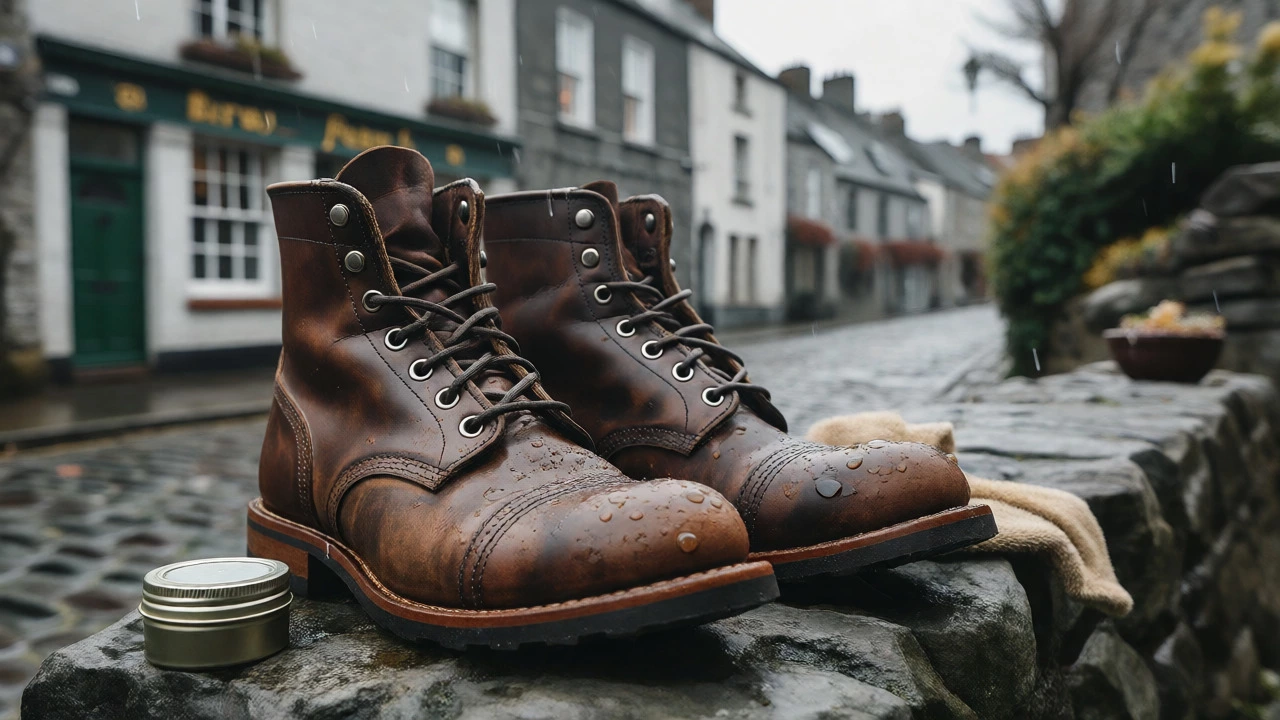
Owning real leather shoes is a commitment, but it’s a rewarding one. Given our damp climate, here’s how to keep them looking sharp:
- Use Shoe Trees: Cedar shoe trees absorb moisture and maintain shape. Essential for anyone walking through rain regularly.
- Rotate Your Pairs: Never wear the same pair two days in a row. Give them 24 hours to dry out completely. This prevents bacterial growth and material stress.
- Apply Waterproofing Wax: Don’t rely on factory treatments. Use a beeswax-based conditioner every 4-6 weeks. This replenishes oils lost to wind and rain.
- Clean Before Conditioning: Mud from Irish fields or city streets can abrade leather. Wipe off dirt with a damp cloth before applying any polish.
If you notice white salt stains after walking through de-iced roads in winter, mix equal parts water and vinegar, wipe gently, and let air dry away from radiators. Heat cracks leather; patience saves your shoes.
Common Myths About Leather Shoes
Let’s bust a few myths that confuse shoppers. First, "More expensive always means better." Not necessarily. Brand markup plays a huge role. A €200 designer shoe might use the same leather grade as a €100 independent maker’s shoe. Focus on the material description, not the logo.
Second, "Vegan leather is inferior." Modern vegan leathers, especially those made from recycled plastics or plant-based materials like pineapple leaf fiber, are improving rapidly. They’re consistent, cruelty-free, and often easier to clean. However, they rarely breathe as well as real leather and may crack sooner in extreme cold. For Irish winters, real leather still holds the advantage for warmth and comfort.
Finally, "If it’s real leather, it’s waterproof." False. Untreated leather absorbs water. That’s why proper finishing and regular conditioning are non-negotiable here. A drop of water on untreated leather will soak in within seconds. On conditioned full-grain, it beads up.
Final Verdict: Is It Worth It?
So, does 100% leather mean real leather? Technically, yes, but practically, it’s a warning sign to dig deeper. In the Irish context, where weather challenges footwear constantly, settling for low-grade "genuine" or bonded leather often leads to frustration. Investing in full-grain or top-grain options provides superior comfort, durability, and style evolution over time.
Next time you’re eyeing a pair, ignore the big "100%" claim. Turn the shoe over. Check the lining. Smell it. Press it. Ask yourself if the price reflects the hidden costs of replacement. If you want shoes that survive the journey from a pub in Temple Bar to a hike in Wicklow Mountains, choose quality over quantity. Your feet-and your wallet-will thank you in the long run.
Is "Genuine Leather" fake leather?
No, "Genuine Leather" is real animal hide, but it is a lower grade than full-grain or top-grain. It is often made from split layers of hide and may be heavily coated to hide imperfections. It is real, but less durable and breathable than higher grades.
How can I tell if my shoes are real leather?
Check the smell (earthy vs. chemical), feel the temperature (warmer vs. cold), and inspect the edges (fibrous vs. smooth/painted). Real leather wrinkles when pressed, while synthetic or coated leather tends to bounce back rigidly.
Are leather shoes suitable for Irish rain?
Yes, provided they are made from high-quality full-grain or top-grain leather and are properly treated with waterproofing wax. Lower-grade leathers absorb water too quickly and can damage easily in wet conditions.
What is bonded leather?
Bonded leather is a man-made material composed of shredded leather scraps bonded together with polyurethane or latex onto a fiber backing. It contains little actual leather content and is prone to cracking and peeling.
Do I need to condition my leather shoes?
Absolutely. Conditioning restores natural oils lost due to exposure to elements and cleaning. In Ireland’s humid and rainy climate, conditioning every 4-6 weeks helps prevent drying, cracking, and water absorption.