Irish School Uniform Cost & Bullying Reality Checker
Uniform Cost Estimator
Enter your estimated spending to see if you are above or below the national average for Irish schools.
Bullying Prevention Check
Do you believe uniforms stop bullying? Let's test that assumption against the data.
Insight:
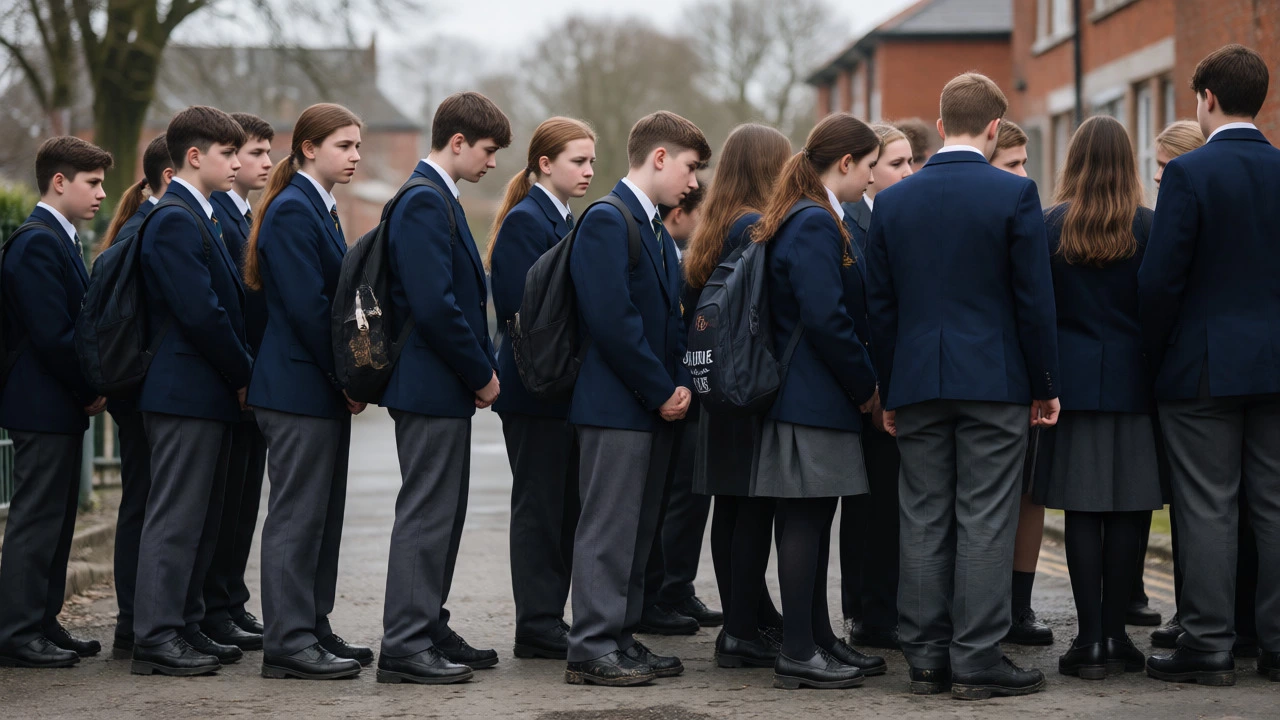
You’ve probably heard it a thousand times at the school gate: "If we all wore the same thing, nobody would pick on anyone." It’s a comforting idea, especially when you’re standing in a queue at Primark or a local tailor in Dublin, trying to get your kid’s blazer fitted before term starts. But does putting every child in the same navy jumper actually stop the mean comments? In Ireland, where school uniform culture is deeply entrenched from primary right through to secondary level, this isn’t just a fashion debate-it’s a serious question about student wellbeing and social dynamics.
The short answer? No, not really. While uniforms might hide the brand of your sneakers, they don’t magically erase hierarchy. In fact, some research suggests that strict uniform policies can sometimes shift bullying from clothing-based teasing to other areas like accessories, shoes, or even how neatly the uniform is worn. Let’s break down what’s actually happening in Irish classrooms, why parents keep buying into the myth, and what actually works to curb bullying.
The Myth of the "Great Equalizer"
The core argument for uniforms is economic leveling. The logic goes that if everyone looks the same, kids from wealthier families in areas like Sandymount or Cork City suburbs can’t flaunt their designer labels against classmates who wear hand-me-downs. On paper, this makes sense. You remove the visible markers of income inequality.
But here’s the catch: human beings are creative bullies. If you take away the hoodie with the trendy logo, they’ll target the brand of the backpack. Or the quality of the shoes. Or whether the blazer fits properly. A study published by the Department of Education in Ireland highlighted that while uniforms reduce pressure to buy expensive casual clothes, they often create new pressures around maintaining the "correct" look of the uniform itself. For example, a scuffed pair of black school shoes can become a target just as easily as an off-brand trainer.
In many Irish secondary schools, the focus shifts to subtle deviations. Is the tie tied correctly? Is the skirt length within regulation? These small infractions become social currency. Students who can afford dry-cleaning or ironing services (yes, some parents do use them) might have crisper shirts than those whose parents work late shifts. So, instead of eliminating status symbols, uniforms just move the goalposts.
What the Research Actually Shows
Let’s look at the data. There’s no robust scientific evidence proving that school uniforms directly reduce bullying rates. A widely cited review by researchers at the University of Limerick examined peer interactions in mixed-gender and single-sex schools across the country. They found that bullying incidents were more closely linked to school climate-how teachers respond to aggression, how inclusive the curriculum feels-than to what students were wearing.
Interestingly, some studies suggest a slight increase in certain types of social friction in highly regulated uniform environments. When individuality is suppressed, students may seek differentiation elsewhere. This can lead to more intense scrutiny of personal hygiene, hairstyle, or even body shape. In Ireland, where body image issues among teens are rising according to Jigsaw, the national mental health organization for young people, forcing a one-size-fits-all aesthetic can inadvertently heighten self-consciousness rather than alleviate it.
| Aspect | Perceived Benefit | Real-World Reality in Irish Schools |
|---|---|---|
| Economic Equality | Hides wealth disparities | Shifts focus to shoes, bags, and accessory brands |
| Social Cohesion | Promotes team spirit | Can feel restrictive; doesn't guarantee kindness |
| Bullying Reduction | Limits clothing-based teasing | No significant drop in overall bullying rates |
| Identity Expression | Reduces distraction | May suppress individuality, leading to hidden stress |

The Irish Context: Tradition vs. Modern Needs
Ireland has a long history with school uniforms, rooted in the Catholic education system which dominated schooling for decades. Today, even under the new Ethos Board guidelines that allow for more diverse patronage models, most schools retain uniform policies. Why? Because it’s tradition. And because it simplifies mornings for parents.
However, the conversation is changing. In urban centers like Galway and Limerick, some progressive schools are experimenting with relaxed dress codes or "smart casual" days. The goal isn’t just comfort-it’s testing whether autonomy reduces anxiety. Anecdotally, teachers report that students seem more engaged when they feel trusted to make choices about their appearance, provided basic standards are met.
There’s also the financial angle. While proponents argue uniforms save money, Irish parents often complain about the high cost of specific branded items. A blazer from a designated supplier can cost €60-€80, plus ties, skirts, trousers, and PE kits. For low-income families, this upfront cost is steep. Organizations like St. Vincent de Paul run uniform banks to help, but the burden remains. If the uniform itself becomes a source of shame due to cost or fit, it can contribute to the very insecurity it claims to prevent.
Where Bullying Actually Comes From
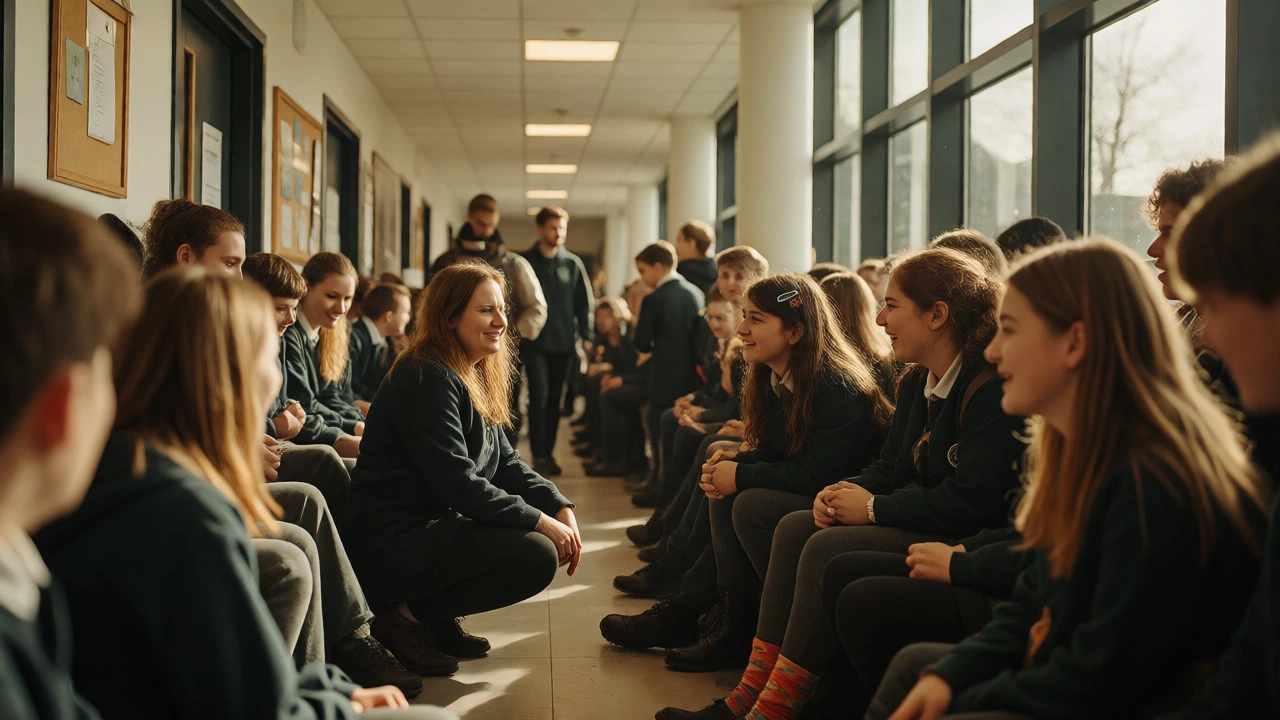
If uniforms aren’t the magic bullet, what is? Bullying in Irish schools stems from complex social structures, lack of empathy training, and inadequate supervision during unstructured times like lunch breaks and bus rides. The National Council for Special Education (NCSE) emphasizes that inclusion strategies matter far more than dress codes.
Consider the role of digital communication. Much of today’s bullying happens online, via WhatsApp groups or Instagram DMs, after school hours. No amount of matching jumpers will stop a cruel comment posted at 9 PM. In fact, the anonymity of screens allows bullies to be more aggressive than they might be face-to-face. Schools need to address digital citizenship head-on, teaching kids how to navigate online spaces responsibly.
Moreover, teacher-student relationships play a huge role. When educators know their students personally and foster open dialogue, bullying is reported earlier and handled better. A rigid uniform policy can sometimes act as a barrier to this connection, creating an "us vs. them" dynamic between staff and pupils.
Practical Tips for Parents and Schools
So, should we ditch uniforms entirely? Not necessarily. Many schools find value in having a baseline standard. But we need to rethink how we implement them.
- Focus on Comfort and Fit: Ensure uniforms are available in a wide range of sizes and cuts. Ill-fitting clothes draw attention and discomfort.
- Allow Personal Expression: Permit variations in socks, hair accessories, or jewelry (within reason). Let kids show personality without breaking rules.
- Address Cost Barriers: Schools should offer second-hand uniform swaps or subsidies. Check if your local council offers grants for school costs.
- Talk About Behavior, Not Clothes: Reinforce values of respect and kindness daily. Make it clear that cruelty is unacceptable, regardless of attire.
- Monitor Digital Spaces: Work with platforms like Webwise.ie to educate kids on safe online behavior.
Ultimately, preventing bullying requires a cultural shift, not a wardrobe change. It demands active engagement from parents, teachers, and policymakers. Uniforms are a tool, not a solution. Use them wisely, but don’t expect them to do the heavy lifting alone.
Do school uniforms really reduce bullying?
Research generally shows no direct link between school uniforms and reduced bullying. While they may minimize clothing-based teasing, bullying often shifts to other factors like accessories, shoe brands, or personal traits. Effective anti-bullying strategies focus on school culture, teacher intervention, and social-emotional learning rather than dress codes.
Are school uniforms mandatory in Ireland?
Most Irish primary and secondary schools require uniforms, but there is no national law mandating them. Each school sets its own policy based on its ethos. However, parents must adhere to these policies if they enroll their children in such schools.
How much do school uniforms cost in Ireland?
Costs vary significantly by school and region. A full set including blazers, jumpers, trousers/skirts, and ties can range from €150 to over €300 per child. Additional items like PE kits and shoes add to the expense. Many schools now offer pre-loved uniform sales to help manage costs.
Can I opt out of school uniforms in Ireland?
Generally, no. If a school has a uniform policy, it is part of the enrollment agreement. Opting out usually requires special dispensation for medical or religious reasons. Some newer community schools may have more flexible dress codes, but traditional schools remain strict.
What alternatives exist to traditional uniforms?
Some schools adopt "smart casual" policies or color-coded systems (e.g., white shirt, black trousers) rather than branded blazers. This approach aims to balance affordability and equality while allowing more personal expression. Pilot programs in parts of Dublin and Cork are exploring these models.