Leather Shoe Quality Checker
Use this tool while inspecting a pair of shoes in-store or at home. Check each feature you observe to calculate a quality score.
Verdict Guide:
- 8-10 Points: Excellent Quality. Worth the investment for long-term wear in Irish weather.
- 5-7 Points: Decent. Good for occasional wear, but check if resoling is possible.
- 0-4 Points: Poor Quality. Likely fast fashion or bonded leather. Expect short lifespan.
You’ve just walked into a shop on Grafton Street or browsed the racks at Brown Thomas, eyeing a pair of leather shoes. The price tag makes you wince. Is it worth the €150? Or is it just overpriced cardboard pretending to be luxury? Here’s the truth: in Ireland’s damp, unpredictable climate, bad leather doesn’t just look cheap-it falls apart within two winters. You need to know how to tell if those boots or brogues are actually built to last before you hand over your cash.
Touch and Smell: The First Line of Defense
Forget the label for a second. Pick up the shoe. Real quality leather has a distinct sensory signature that synthetic materials can’t fake. If you’re shopping in Dublin’s humid air, this test is crucial because moisture reveals flaws quickly.
- The Smell Test: Genuine leather smells like... well, skin and earth. It has a rich, organic aroma. If it smells like plastic, chemicals, or strong glue, walk away. High-end tanneries use vegetable tanning processes that leave a natural scent. In Ireland, where we value authenticity, this nose check is your best friend.
- The Temperature Check: Real leather feels warm to the touch after holding it for a few seconds. Synthetic vinyl stays cold and clammy. This is especially relevant when trying on shoes in a drafty store during an autumn chill.
- The Surface Feel: Run your thumb across the upper. Good quality full-grain leather should feel slightly uneven-natural pores and minor imperfections are signs of integrity, not defects. If it’s perfectly smooth and plasticky, it’s likely corrected grain or bonded leather.
Inspect the Construction: Goodyear Welt vs. Glue
Here is where most people get tricked. A beautiful upper means nothing if the sole is glued on with industrial adhesive. For Irish streets, which range from cobblestones in Galway to wet pavement in Cork, construction method determines lifespan.
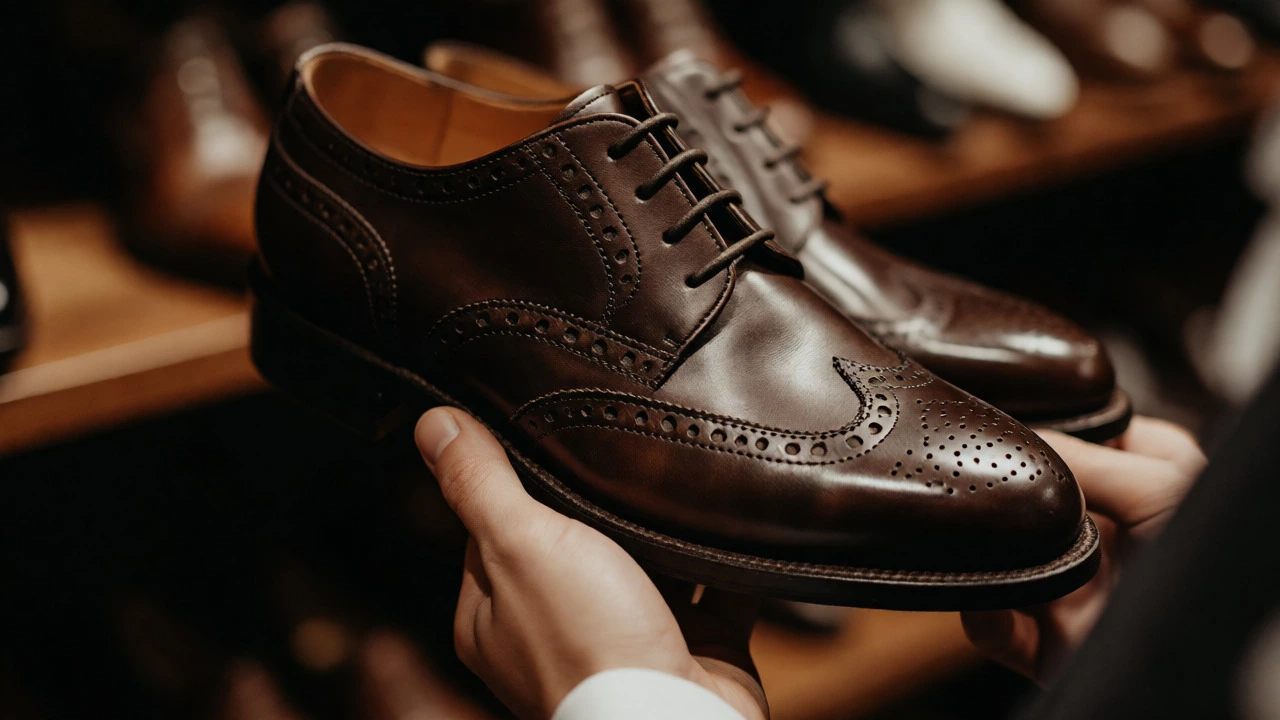
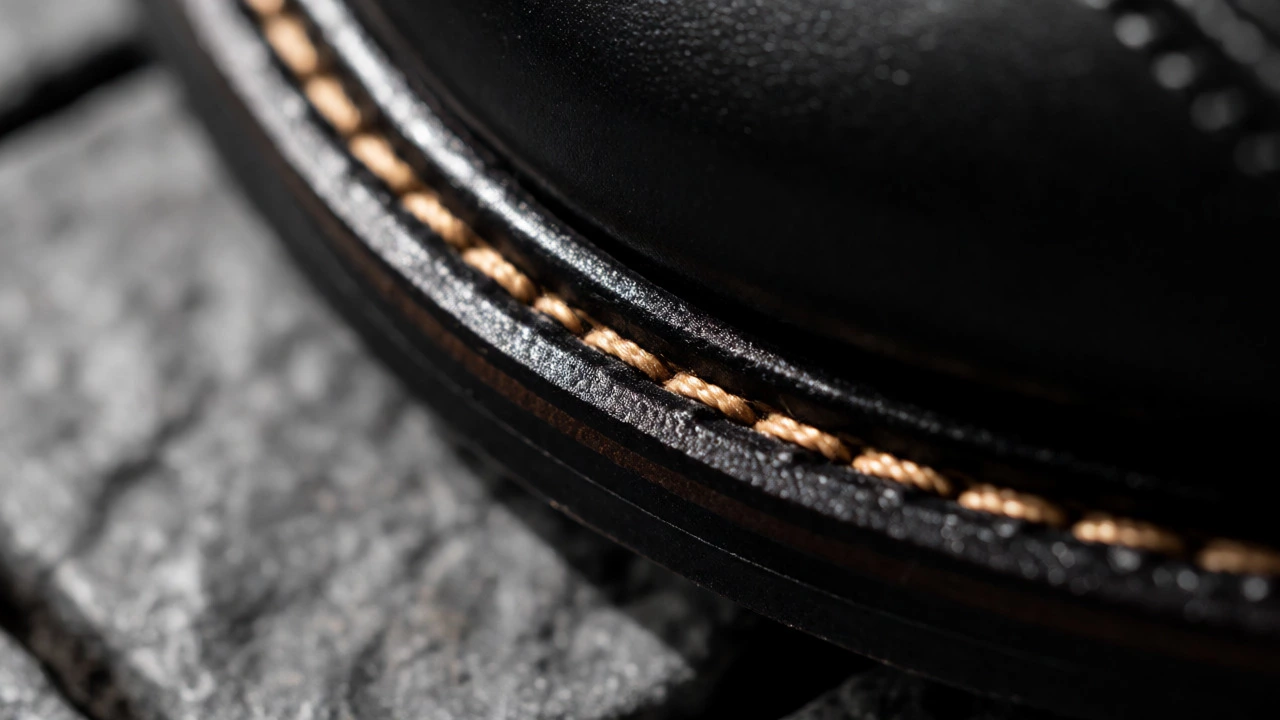
Look closely at where the sole meets the upper. You want to see stitching. Specifically, ask yourself: "Is this a Goodyear welt?" This technique involves stitching the upper, lining, and insole together, then attaching the outsole separately. It allows a cobbler to replace the sole multiple times without ruining the shoe. Brands like Loake or Tricker’s often use this. If you only see glue and no visible stitch line around the perimeter, you’re buying disposable footwear. Given the cost of living in Ireland, buying shoes you can resole twice is smarter than buying three pairs of glued ones.
| Method | Durability | Repairability | Best For |
|---|---|---|---|
| Goodyear Welt | High (5-10+ years) | Excellent (3-4 resoles) | Daily wear, office work |
| Cemented (Glued) | Low (1-2 years) | Poor (rarely repairable) | Fashion trends, dry weather |
| Blake Stitch | Medium-High | Good (requires specialist) | Slim profile dress shoes |
Check the Lining and Insole
Turn the shoe inside out. If the interior is lined with fabric that peels off easily, you have a problem. Quality shoes use leather linings. Why does this matter in Ireland? Because our feet sweat, even in winter. Leather linings breathe; they wick moisture away from your foot. Synthetic linings trap heat and moisture, leading to blisters and that unmistakable smell after a day on the Luas or walking through Trinity College grounds.
Press down on the insole. It should spring back slowly. If it collapses instantly and stays flat, the cushioning is poor. Look for cork filling between the insole and outsole in high-quality welted shoes. Cork molds to your foot over time, creating a custom fit. This is a hallmark of craftsmanship you’ll find in heritage brands sold in independent Irish retailers.
Evaluate the Sole Material
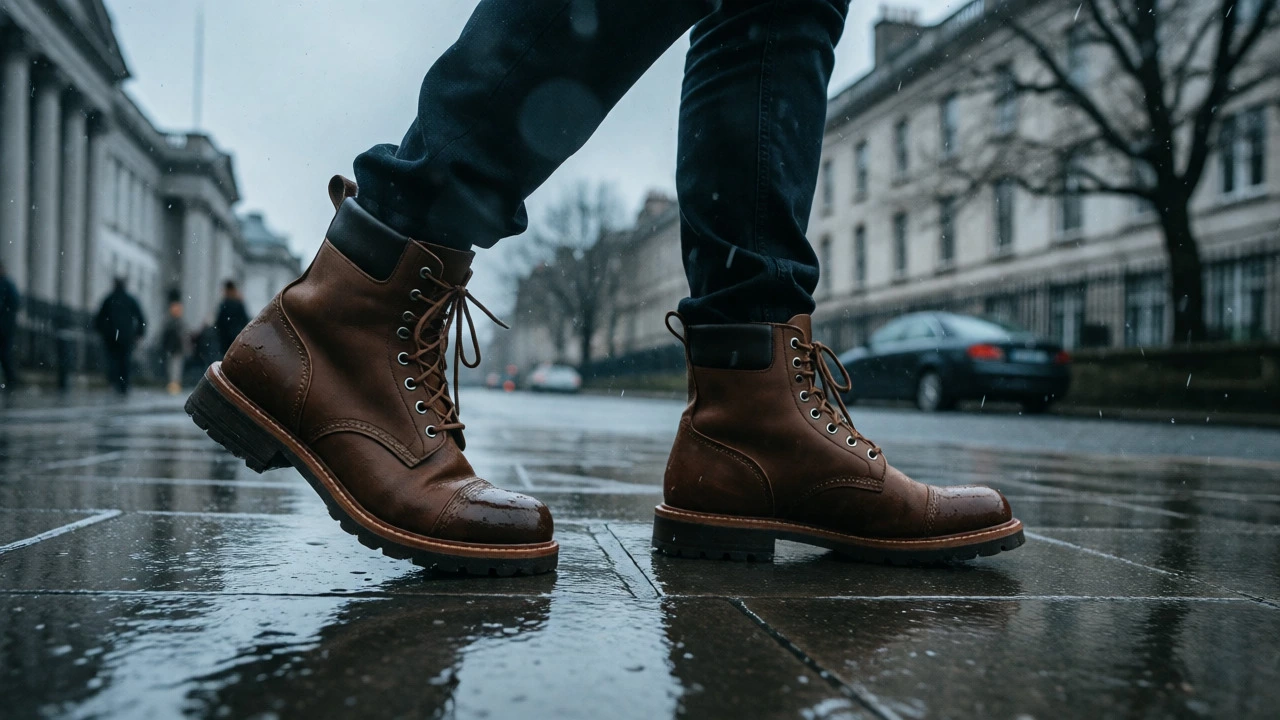
Not all soles are created equal. When assessing quality, consider what you’ll actually walk on. Leather soles are elegant but slippery on wet Dublin pavements. Rubber soles offer grip but can look bulky.
A top-tier compromise is a Dainite rubber sole-a studded pattern that provides traction while maintaining a sleek profile. Many premium Irish-made shoes now feature these. If the sole is thick, rigid plastic, it will crack in the cold. Flex the shoe gently. It should bend at the ball of the foot, not in the middle. If the sole cracks under slight pressure, the rubber compound is low-grade.
Hardware and Details Matter
Zoom in on the details. Eyelets should be metal, not plastic. They shouldn’t rust immediately after one rainstorm. Zippers, if present, should glide smoothly-YKK zippers are a good sign. Check the heel counter (the back part of the shoe). Squeeze it. It should be firm and hold its shape. A floppy heel means the internal structure is weak, and your shoe will lose form after a month of wear.
Also, look at the stitching consistency. Are the stitches evenly spaced? Do they pull the leather tight without puckering? Sloppy stitching indicates rushed manufacturing. In a market flooded with fast fashion imports, precise stitching is a clear differentiator of artisanal care.
Price vs. Value: The Irish Context
Let’s talk money. A decent pair of full-grain leather, Goodyear-welted shoes starts around €180-€250. Anything under €100 claiming to be "genuine leather" is usually split-grain or coated. Split-grain is the lower layer of the hide; it lacks durability and breathability.
Consider local options. While international chains dominate, supporting Irish makers like Murphy & Nye or exploring vintage markets in Dublin’s George’s Street Arcade can yield hidden gems. Vintage leather, if well-maintained, often beats new mass-produced items. Plus, buying second-hand aligns with the growing sustainability movement in Ireland.
Remember, the total cost of ownership matters. A €200 pair that lasts five years costs €40/year. A €60 pair that dies in six months costs €120/year. Factor in the cost of repairs-a resole in Dublin might cost €50-€70, but it extends life significantly.
Common Pitfalls in Retail Stores
Shop assistants often say "it’s real leather" because technically, it might contain some leather fibers. Don’t let them brush you off. Ask specifically: "Is this full-grain or top-grain?" If they hesitate, assume it’s not premium. Also, beware of "patent" finishes on cheap shoes. They hide poor quality leather underneath a thick coat of paint. Once that paint scratches, the ugly truth shows.
Finally, try the shoes on in the afternoon. Feet swell during the day. If they fit perfectly in the morning, they might be too tight by evening. This is practical advice for anyone commuting in Ireland, whether by bus, train, or bike.
Can I waterproof any leather shoe?
You can apply wax-based conditioners to full-grain leather to improve water resistance. However, suede and nubuck require specific sprays. Never use silicone-based sprays on high-quality leather as they can clog pores and damage the material over time. In Ireland's rainy climate, regular conditioning every 3-6 months is essential.
What is the difference between full-grain and top-grain leather?
Full-grain leather includes the entire top layer of the hide, including natural imperfections, making it the strongest and most durable. Top-grain is sanded down to remove marks, resulting in a smoother surface but reduced durability. For long-term investment, always choose full-grain.
Are expensive brands always better quality?
Not necessarily. You pay for branding and marketing too. Some mid-range brands use excellent Italian or Spanish leathers and proper construction techniques. Always inspect the physical attributes rather than relying solely on the logo.
How do I maintain leather shoes in Ireland's damp weather?
Use cedar shoe trees to absorb moisture and maintain shape. Wipe off mud immediately with a damp cloth. Let them air dry away from direct heat sources like radiators, which can crack the leather. Apply a neutral polish monthly to protect the finish.
Is vegan leather a viable alternative?
Modern polyurethane (PU) vegan leathers are more breathable than older PVC versions, but they generally lack the longevity and aging character of animal leather. They may peel or crack faster in extreme temperatures, which can occur in Irish winters.