Boot Investment Calculator
Enter Your Details
Analysis Result
Visual Comparison (Total Cost)
Enter your details and click calculate to see how much you save by investing in quality footwear that lasts.
If you have walked down Grafton Street or navigated the cobblestones of Temple Bar after a sudden summer downpour, you know that shoes in Ireland are not just fashion statements-they are survival equipment. The question "What makes Thursday boots special?" is one I hear constantly from friends in Dublin and Cork alike. It isn't just about the price tag, though that helps when rent prices are what they are. It is about how these boots handle the unique, often brutal, combination of damp chill, wind, and uneven terrain that defines life here.
Thursday Boots, founded in Brooklyn but now a global staple, has carved out a massive niche in the Irish market. They offer a specific blend of heritage style and modern durability that resonates deeply with our need for practical yet stylish footwear. But why exactly do they stand out against established European brands like Clarks or Dr. Martens? Let’s break down the construction, the materials, and the real-world performance of these boots on our wet streets.
The Construction: Built for More Than Just Show
When we talk about quality footwear, we usually look at how the sole attaches to the upper. Many cheap boots use cemented construction, where glue holds everything together. Eventually, that glue fails, especially in cold, wet conditions. Thursday Boots primarily uses Goodyear welt construction or high-quality Blake stitching for their core lines like the Captain and the Walker.
Goodyear welting involves stitching a strip of leather (the welt) to the upper and the insole, then stitching the outsole to the welt. This creates a barrier against water and allows the boot to be resoled multiple times. For someone walking from Merrion Square to St. Stephen’s Green daily, this means your boots can last five, ten, or even fifteen years if cared for properly. You aren’t buying a shoe; you are investing in a long-term companion.
This durability is crucial in Ireland. We don’t have dry seasons. Even in July, you can get hammered by rain. A boot that swells, leaks, or falls apart after six months is a financial loss. Thursday’s commitment to traditional craftsmanship ensures that the structural integrity remains intact despite constant exposure to moisture and mud.
Material Quality: Full-Grain Leather That Ages Well
The leather used by Thursday is another key differentiator. They predominantly use full-grain leather, which is the highest grade available. Unlike corrected grain leather, which is sanded and coated to hide imperfections, full-grain retains the natural grain structure of the hide. This makes it more breathable and significantly more resistant to water penetration.
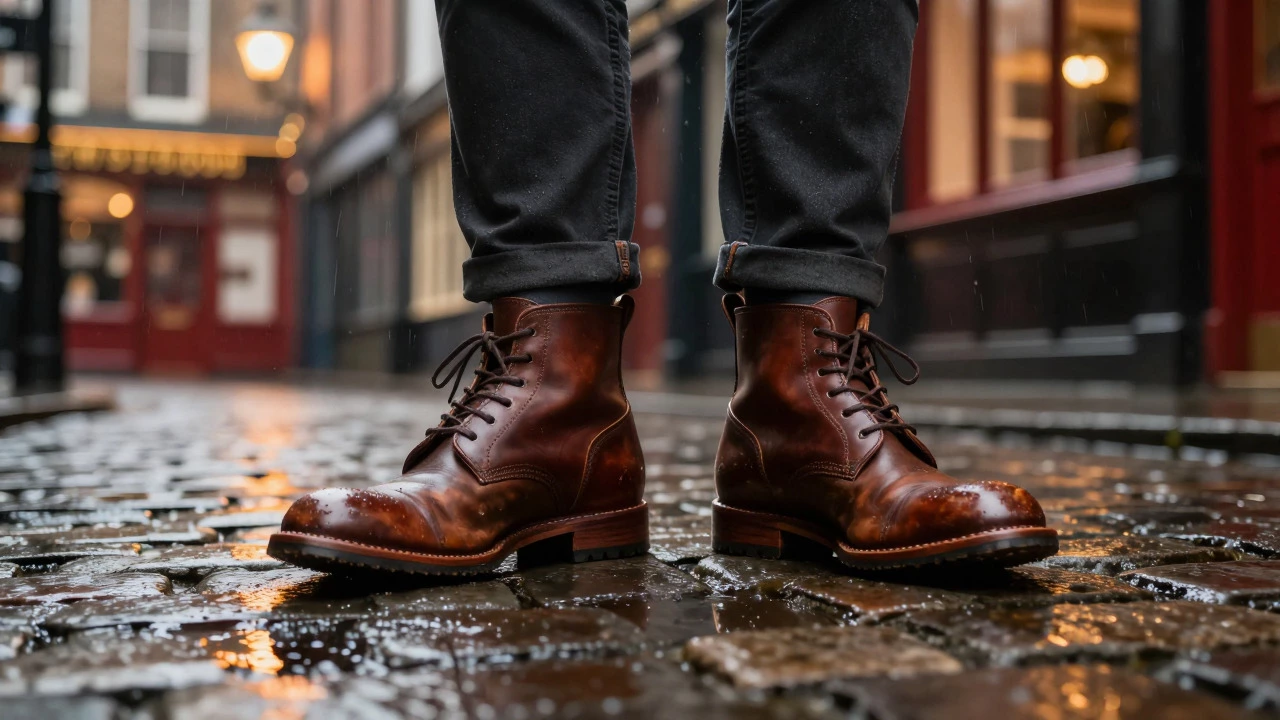
In the context of Irish weather, breathability matters. If your feet sweat inside a non-breathable boot, they get cold faster. Full-grain leather allows some air circulation while keeping the rain out. Over time, this leather develops a patina-a rich, darkened sheen that tells the story of where you’ve been. Walking through the Wicklow Mountains or commuting on the Luas tram will leave marks, but those marks make the boots look better, not worse.
| Construction Type | Durability | Water Resistance | Resoleable? | Best For |
|---|---|---|---|---|
| Goodyear Welt | High | Excellent | Yes | Rainy commutes, hiking |
| Cemented | Low | Poor | No | Fashion only, dry days |
| Blake Stitch | Medium-High | Good | Yes | Urban wear, lighter weight |
Design Versatility: From Office to Pub
One of the reasons Thursday Boots have gained such traction among women in Ireland is their aesthetic flexibility. The designs lean towards classic Americana-think chukkas, desert boots, and rugged hikers-but they are clean enough to wear with jeans, dresses, or work trousers.
Consider the typical Irish woman’s week. Monday might involve a professional meeting in a Dublin office tower. Wednesday could mean grabbing coffee in Temple Bar. Saturday might involve a hike in the Phoenix Park or visiting family in the countryside. Thursday Boots bridge these gaps effortlessly. The sleek profile of the 'Captain' model works well with smart-casual attire, while the 'Walker' offers more protection for muddy trails. You don’t need three pairs of shoes to cover your lifestyle; one robust pair does the job.
This versatility saves closet space and money. In a country where housing spaces can be compact, having fewer, higher-quality items is a practical advantage. Plus, the timeless design means you won’t feel outdated next year. Trends come and go, but a well-made leather boot remains relevant.
Comfort and Break-In Period
A common complaint with heritage boots is the painful break-in period. Thick leather can feel like wearing bricks for the first few weeks. Thursday addresses this by pre-breaking some of the stiffness during manufacturing and using softer linings in certain models. However, no leather boot is instantly comfortable.
To ease the transition, many locals recommend wearing them around the house for short periods before taking them out for a full day. Use thick socks to stretch the material slightly. Apply a conditioner like Saphir Medaille d’Or to keep the leather supple. After about two to three weeks, the boots will mold to the shape of your foot, providing custom support. This personalized fit reduces fatigue during long walks, whether you’re exploring the cliffs of Moher or navigating the busy streets of Galway.
Price Point and Value Proposition
Let’s talk numbers. Thursday Boots typically retail between €150 and €250. Compared to luxury European brands that charge €400+, this is accessible. Compared to fast-fashion options at €30, it seems steep. But consider the cost per wear. If a €30 boot lasts six months, that’s €60 a year. If a €200 Thursday boot lasts five years, that’s €40 a year. The math favors the durable option.
Furthermore, because they are resoleable, the lifespan extends indefinitely. A local cobbler in your neighborhood can replace the worn-out soles for a fraction of the original cost. This circular economy approach aligns with growing environmental consciousness in Ireland, reducing waste and consumption.
Caring for Your Boots in an Irish Climate
Owning high-quality boots requires maintenance, especially in our climate. Here is a simple routine to keep them in top condition:
- Brush regularly: Remove dirt and mud after every wear. Dried mud can crack leather over time.
- Condition monthly: Use a leather conditioner to replenish oils lost to drying winds and rain.
- Waterproof wisely: Apply a silicone-free waterproofing spray designed for full-grain leather. Avoid heavy waxes that darken the color too much unless you want that effect.
- Stuff with paper: If they get wet, stuff them with newspaper to absorb moisture and maintain shape. Never put them directly on a radiator, as heat cracks leather.
Local shops like Brown Thomas or smaller independent boutiques in cities like Limerick and Waterford often carry care kits. Investing in good care products ensures your boots remain functional and attractive for years.
Alternatives and Comparisons
While Thursday stands out, other brands compete in this space. Blundstone is hugely popular in Ireland for its slip-on convenience and extreme durability, particularly for outdoor work. Red Wing offers similar Goodyear welted quality but often at a higher price point and with a heavier, more industrial aesthetic. Clarks provides comfortable, lightweight options but often lacks the same level of resoleable construction.
For most urban dwellers seeking a balance of style, comfort, and longevity, Thursday hits the sweet spot. They are less bulky than Red Wings, more structured than Clarks, and more fashionable than Blundstones. This positioning makes them ideal for the mixed-use lifestyles prevalent in Irish cities.
Are Thursday Boots waterproof?
They are water-resistant due to the full-grain leather, but not fully waterproof like rubber boots. With proper conditioning and waterproofing spray, they can handle heavy rain for several hours without letting water through. However, submerging them in puddles should be avoided.
Where can I buy Thursday Boots in Ireland?
You can purchase them online directly from the Thursday website, which ships to Ireland. They are also stocked in select multi-brand retailers in Dublin and occasionally in larger department stores. Checking stock locally before traveling is recommended.
How long does the break-in period take?
Typically two to four weeks. Wearing them indoors initially and using thick socks can speed up the process. The discomfort is usually mild soreness rather than pain, provided you size correctly.
Can I get Thursday Boots resoled in Ireland?
Yes, any reputable cobbler familiar with Goodyear welted boots can resole them. Major cities like Dublin, Cork, and Galway have skilled shoemakers who perform this service regularly.
Do Thursday Boots run true to size?
Most models run true to size, but some styles like the Captain may feel snug initially. It is advisable to check the specific product page for sizing notes or try them on in-store if possible. Half sizes are often available.