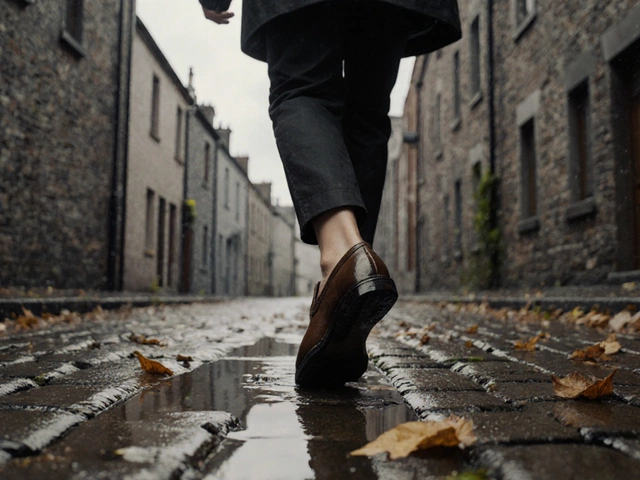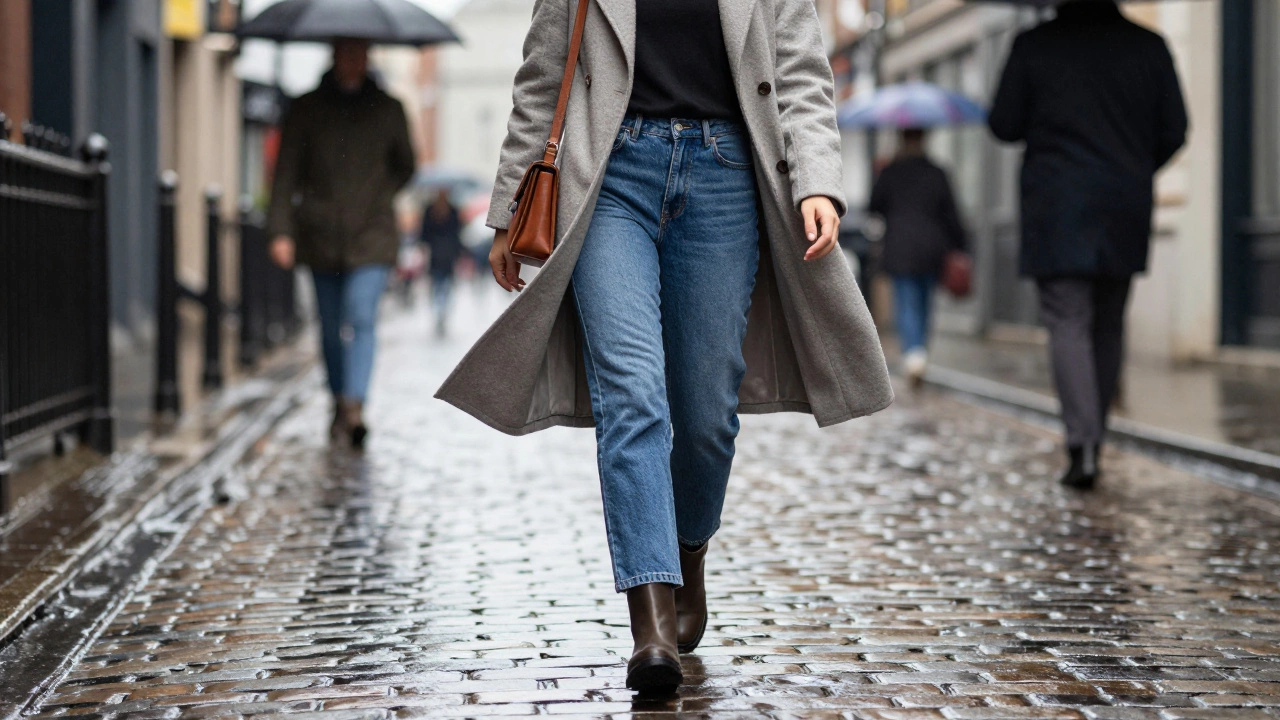
When you walk down Grafton Street on a drizzly Tuesday morning or hop on the Luas after work in Cork, your jeans aren’t just clothing-they’re your armor against the rain, the chill, and the unspoken rules of Irish style. In Ireland, denim doesn’t follow global trends blindly. It adapts. It survives. And in 2026, the jeans that work best here aren’t the ones you see on Instagram influencers in LA-they’re the ones that hold up through mud-streaked hikes in the Wicklow Mountains, pub crawls in Galway, and sudden downpours in Dublin’s North Strand.
Forget Skinny Jeans-They’re Done Here
Skinny jeans ruled the Irish market for over a decade. You saw them on students in UCD, on commuters in Limerick, even on grandmas at the local farmers’ market in Kilkenny. But by 2025, they started to feel… tight. Literally. And not just in the leg. The fabric stretched thin after a few washes, lost shape after a rainy walk to the bus stop, and refused to dry properly in Ireland’s damp climate. By last autumn, major Irish retailers like Penneys (Primark), Dunnes Stores, and even local boutiques in Galway’s Spanish Arch had quietly phased out skinny fits from their main denim lines.
Why? Because Irish women and men don’t want jeans that restrict movement. We want jeans that let us climb a hill in the Burren, sit on a cold stone wall in Glendalough, or squeeze into a pub booth after a few pints without looking like a sausage casing. The truth? Skinny jeans are now seen as outdated here-not because they’re unfashionable, but because they’re impractical.
The New Standard: Straight Leg and Slightly Flared
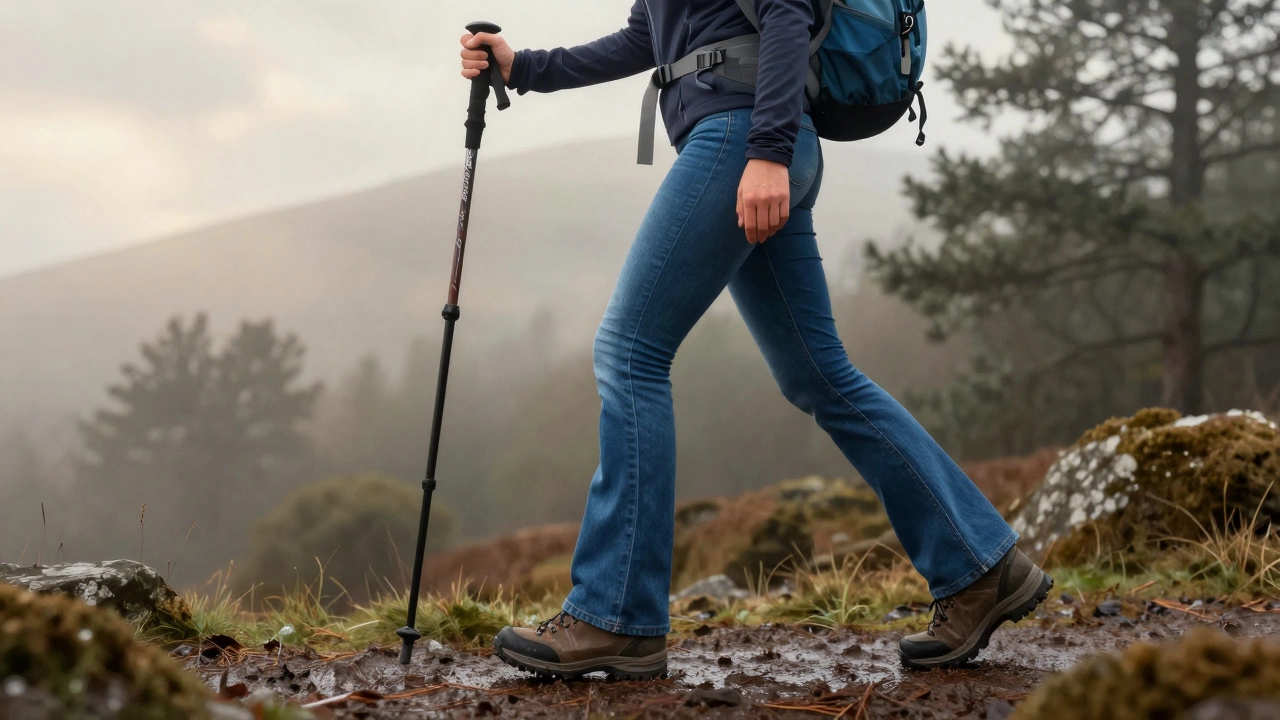
This year, the most worn jeans in Ireland are straight leg. Not too tight, not too baggy. Just enough room to layer thermal leggings underneath in January, and enough fabric to tuck neatly into ankle boots when the sun finally breaks through. The rise? Medium to high. The hem? Hits just above the ankle. This cut works with everything: from waterproof hiking boots in the Dingle Peninsula to classic leather ankle boots in Dublin’s Temple Bar.
And here’s the twist: slightly flared jeans are making a quiet comeback. Not the 70s bell-bottom kind. Think subtle flare-just enough to open up at the knee and create a clean line over a sturdy boot. You’ll spot them on teachers in Louth, nurses in Waterford, and even on the staff at the Cliffs of Moher visitor centre. Why? Because the flare adds movement. It lets air flow. It dries faster. And when you’re walking home from the pub in a light drizzle, that tiny bit of extra fabric around the calf makes all the difference.
Fabric Matters More Than You Think
In Ireland, not all denim is created equal. A pair of jeans from a fast-fashion brand might look perfect in a showroom in Belfast, but after one rain-soaked walk from the train station in Sligo, they’ll turn stiff, lose color, and feel like wet cardboard. That’s why local shoppers now look for three things:
- Stretch with memory-at least 2% elastane so the jeans bounce back after sitting on a wet bench or hiking over boggy terrain.
- Water-repellent finish-brands like Levi’s a global denim brand with a strong presence in Ireland, known for its durable and water-resistant denim treatments and Nudie Jeans a Swedish brand popular in Ireland for its sustainable, repairable denim with natural indigo dye and water-resistant coating now offer jeans with DWR (durable water repellent) coatings that shed light rain without looking glossy or synthetic.
- Weight-12.5oz to 14oz denim is the sweet spot. Lighter than that, and it’s useless in February. Heavier than 16oz, and you’ll overheat in a heated pub.
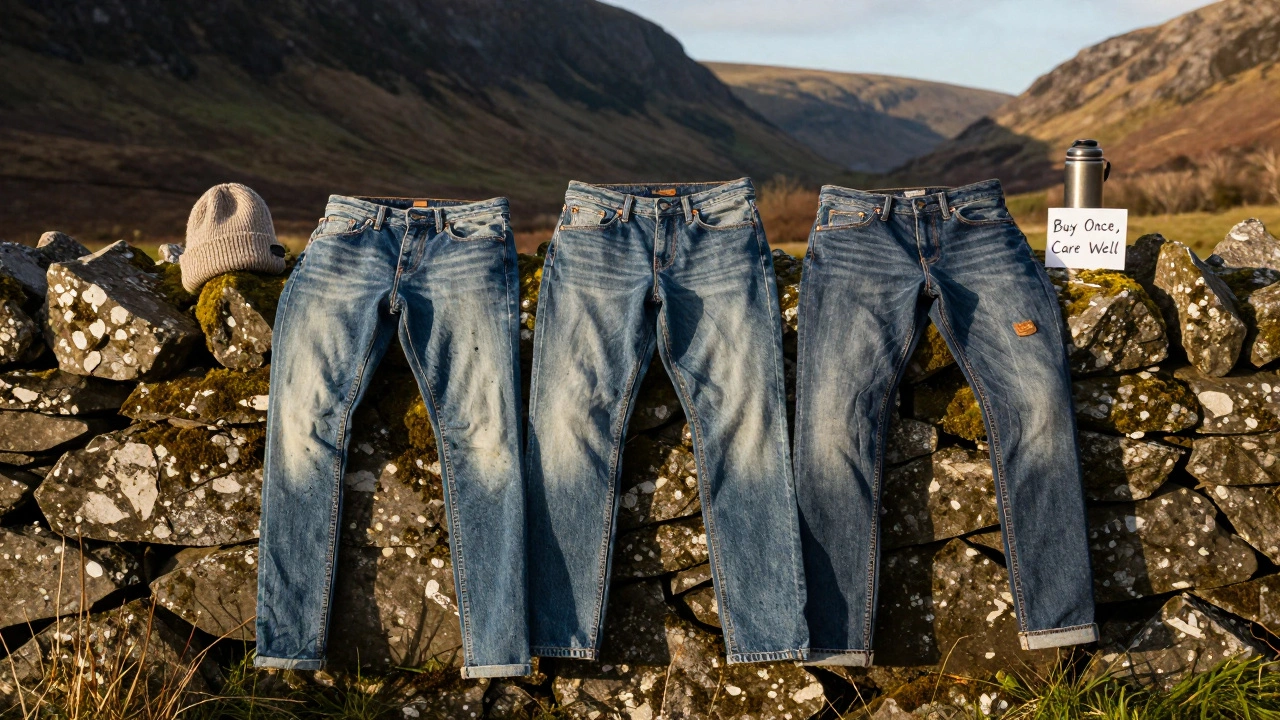
Local Irish brands are stepping up too. Wexford Denim a small-batch Irish denim brand based in Wexford, known for its hand-finished, locally sourced cotton and traditional selvedge weaving has been quietly selling out of its 13.5oz straight-leg styles. Their jeans are dyed with natural indigo, stitched in Ennis, and designed to last through four seasons. They’re not cheap-€180-but they last five years, and you can send them back for free repairs. That’s the Irish way: buy once, care well.
What to Avoid in the Irish Climate
Some fits just don’t work here. Avoid:
- Baggy or boyfriend cuts-they trap moisture and take forever to dry. Plus, they look sloppy in a country where even the most casual outfit has a hint of polish.
- Distressed or ripped styles-yes, they’re trendy elsewhere, but in Ireland, torn knees look like you forgot to fix them after a tumble on the trail, not like a fashion choice.
- Low-rise jeans-they ride up when you’re sitting on a damp bench at a GAA match in Cavan. No one wants to flash their thermal underwear.
Where to Buy in Ireland
You don’t need to order online from New York or Tokyo. Here’s where real Irish people are buying their 2026 jeans:
- Penneys (Primark)-their new “All-Weather Denim” line, launched in late 2025, has a 94% return rate of zero. That’s unheard of. The fit is straight leg, the fabric is 98% cotton with 2% recycled elastane, and it costs €29.99.
- Dunnes Stores-their “Irish Cut” range is designed by a Dublin-based team. The jeans are cut for wider hips and broader shoulders, common in Irish body types. Available in sizes 8 to 24.
- Local boutiques-check out Thread & Co. in Galway, Denim & Dust in Cork, or The Denim Edit in Limerick. These shops stock Wexford Denim, Nudie, and small-batch Irish brands you won’t find anywhere else.
- Secondhand-Irish thrift culture is strong. Charity shops like Oxfam and St. Vincent de Paul have entire racks of unworn, high-quality denim. Look for Levi’s 501s from the 2010s-they’re perfect for a straight-leg remake.
How to Style Them
Irish style is about function meeting understated elegance. Here’s how to wear your 2026 jeans:
- Pair with a longline wool coat (think Claremont or John Rocha) and waterproof ankle boots.
- Roll the hem once-never twice. It looks intentional, not sloppy.
- Wear with a fitted turtleneck or a lightweight knit. No bulky sweaters. We’re not in Norway.
- Accessories? A wool beanie, not a beanie with a pom-pom. A leather crossbody bag, not a giant tote. Keep it clean.
And remember: in Ireland, you don’t need to match your jeans to your boots. You just need them to survive the journey.
Are skinny jeans completely out of style in Ireland?
Not officially banned, but they’re rare. Most retailers have stopped stocking them. People who still wear them tend to be older or in urban fashion circles in Dublin. For everyday life-hiking, commuting, shopping, or going to the pub-straight leg and slightly flared are the new norm. If you still have a pair, wear them for special occasions, not daily errands.
What’s the best denim brand for Irish weather?
For durability and water resistance, Nudie Jeans and Levi’s lead the pack, especially their eco-conscious lines with DWR coating. For local support, Wexford Denim is unmatched-handmade in Ireland, repairable, and built for our climate. If you’re on a budget, Penneys’ All-Weather Denim gives you 90% of the performance for under €30.
Do Irish people wear jeans in winter?
Absolutely. But not alone. Most layer thermal leggings underneath, especially in the north and west where temperatures dip below 2°C. The key is choosing jeans with enough room in the thigh and knee so the layers don’t bunch. Straight leg jeans are ideal for this. Avoid tight fits-they cut circulation and feel colder.
Is it worth buying expensive jeans in Ireland?
If you’re going to wear them 3-4 times a week, yes. A pair of Wexford Denim lasts 5+ years. A cheap pair lasts 6-8 months. Over time, the better jeans cost less per wear. Plus, Ireland’s repair culture means you can send them back for free mending. It’s not luxury-it’s smart economics.
Where can I get my jeans repaired in Ireland?
Many local denim brands offer repair services. Wexford Denim and Nudie Jeans both have free repair programs. In Dublin, The Mending Studio on Capel Street does expert denim repairs. In Cork, Stitch & Co. in the English Market offers same-day fixes. Even some Penneys stores now have in-store repair kiosks.
If you’re shopping for jeans in Ireland this year, forget what’s trending in Paris or Milan. The best fit is the one that keeps you dry, comfortable, and moving-whether you’re heading to the pub in Limerick or walking the cliffs in Mayo. Choose wisely. Wear them often. And don’t be afraid to let them get a little worn. That’s not damage-it’s character.