Irish Footwear Survival Calculator
Not sure if you should risk the leather? Input your planned activity details below to get a safety rating and expert recommendation.
There is a specific kind of heartbreak known only to those who own nice leather shoes and live in Ireland. You step out onto the pavement in Dublin, Cork, or Galway, feeling sharp and put-together. Ten minutes later, you are standing in a puddle that defies physics, watching your suede absorb water like a sponge. The question isn't just about fashion; it is about survival against one of the wettest climates in Western Europe.
If you are trying to build a wardrobe that works for life on the Emerald Isle, understanding when to leave the leather at home is crucial. This isn't about giving up style. It is about knowing the limits of materials when faced with Atlantic winds and relentless drizzle.
The Reality of Irish Rain vs. Leather
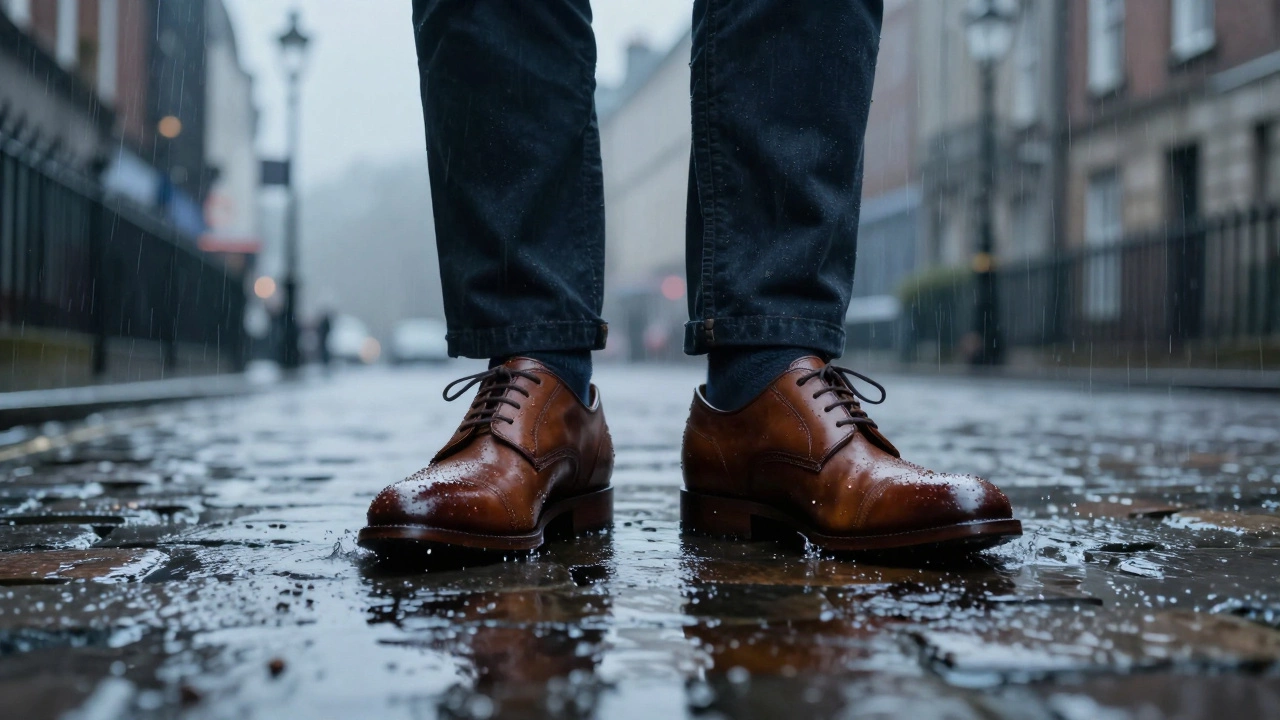
To understand why leather can be problematic, you have to look at how it behaves under pressure. Leather is a porous material. Even high-quality calfskin or full-grain leather has microscopic pores that allow air to pass through. In dry conditions, this breathability keeps your feet comfortable. In Ireland, where rain often falls horizontally due to wind speeds from the west, that same breathability becomes a liability.
Consider a typical Tuesday in November in Kerry. The rain isn't a storm; it is a fine, persistent mist that lasts for six hours straight. If you are wearing standard leather loafers or dress shoes without heavy-duty waterproofing, the moisture will eventually penetrate the upper layer. Once inside, the water gets trapped between your sock and the shoe lining. This creates a warm, damp environment that leads to blisters, cold toes, and potential fungal issues like athlete's foot.
Furthermore, salt damage is a real concern in coastal areas. If you walk along the promenade in Howth or near the Cliffs of Moher during a high tide, sea spray mixes with road salt used on sidewalks. This combination accelerates the drying and cracking of leather, ruining the finish far faster than simple rain would.
Situations Where Leather Fails You
Knowing when to swap your leather shoes for something more resilient requires reading the forecast and understanding your route. Here are the specific scenarios where leather shoes should stay in the closet.
- Extended Outdoor Commutes: If you walk more than fifteen minutes to get to the Luas stop or the DART station, especially if there is no covered path, leather is risky. The exposure time allows water to seep in before you can seek shelter.
- Rural Travel and Countryside Walks: Driving through counties like Mayo or Sligo means dealing with gravel roads and muddy verges. Leather soles offer poor traction on wet grass and slippery stones. Suede or smooth leather will stain instantly from mud splashes that are nearly impossible to clean.
- Festivals and Outdoor Events: Attending events like the Galway Arts Festival or a GAA match in Croke Park often involves standing on grass or packed earth. When the ground is saturated, your shoes will be soaked from the bottom up. Leather does not repel ground moisture well.
- Winter Storms: During winter storms, such as those frequently hitting the west coast, temperatures drop below freezing while precipitation remains liquid. Wet leather freezes stiff, causing cracks and making walking painful until the shoes thaw indoors.
Better Alternatives for Irish Weather
You do not need to sacrifice style for practicality. There are several footwear options that handle Irish weather significantly better than traditional leather.
| Material | Water Resistance | Durability in Mud | Best For |
|---|---|---|---|
| Standard Leather | Low (unless treated) | Poor | Indoor events, dry days |
| Suede | Very Low | Very Poor | Fashion statements in dry weather |
| Rubber/Neoprene | High | Excellent | Heavy rain, rural walks |
| Waterproof Treated Leather | Medium-High | Good | Business casual, light rain |
| Technical Synthetics | High | Good | Hiking, active commuting |
Rubber boots, particularly stylish versions from brands like Hunter or local Irish makers, remain the gold standard for heavy rain. They are easy to clean and provide complete protection. For a more formal look, consider waterproof-treated leather boots. Many modern work boots and hiking boots use membranes like Gore-Tex, which block water vapor from entering while allowing sweat to escape. These are ideal for navigating cobblestone streets in Dublin’s Temple Bar area when it is pouring.
Technical synthetics are another excellent choice. Materials like nylon or polyester blends with waterproof coatings dry much faster than leather. If you get caught in a sudden downpour while shopping on Grafton Street, synthetic shoes will shed water quickly, whereas leather will hold it for hours.
Maintaining Leather Shoes in a Wet Climate
If you must wear leather shoes, proper maintenance is non-negotiable. Ignoring care routines in Ireland will destroy your footwear within a single season.
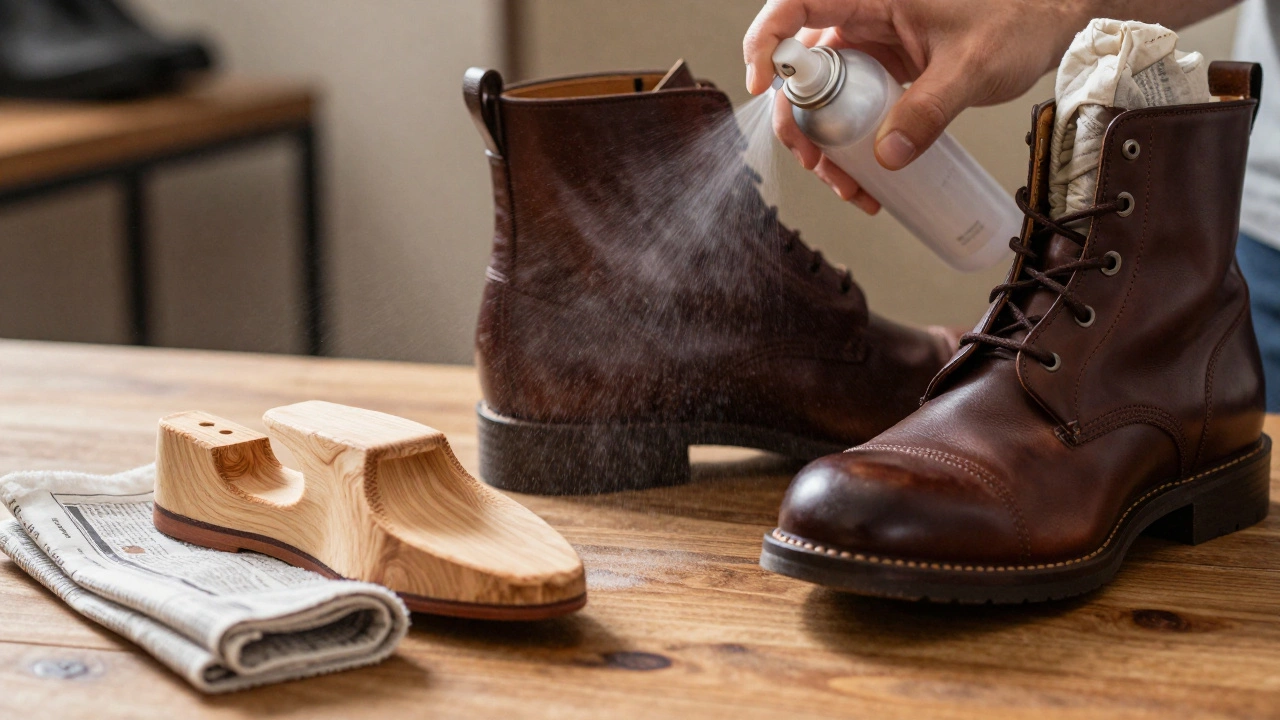
- Apply Waterproofing Spray Regularly: Use a silicone-based or fluoropolymer waterproofing spray every two weeks during the rainy season. This creates a barrier that causes water to bead up and roll off rather than soaking in.
- Dry Them Properly: Never place wet leather shoes near a radiator or direct heat source. Heat causes leather to shrink and crack. Instead, stuff them with newspaper to absorb moisture and let them air dry at room temperature.
- Condition Monthly: Rain strips natural oils from leather. Apply a quality leather conditioner once a month to keep the material supple and prevent cracking.
- Use Shoe Trees: Cedar shoe trees help maintain the shape of the shoe and absorb internal moisture, reducing odors and preventing deformation.
Cultural Context: Dressing for Occasion
In Ireland, dress codes can vary significantly depending on the setting. Understanding these nuances helps you decide when leather is appropriate despite the weather.
For business environments in Dublin’s financial district, polished leather shoes are still expected. However, many professionals carry a pair of waterproof boots in their office to change into after commuting. This "two-shoe strategy" ensures you arrive looking professional but stay comfortable throughout the day.
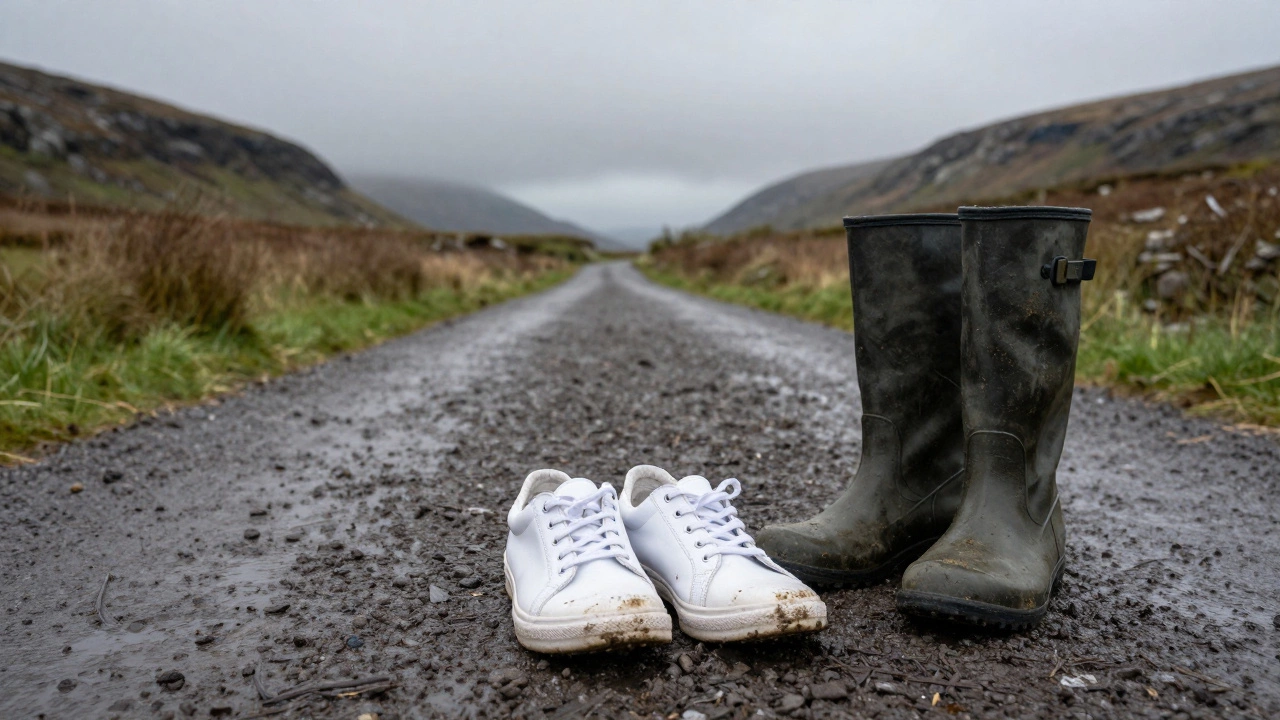
At social gatherings, such as weddings or pub nights, the expectation shifts. While leather might be worn for formal dinners, outdoor celebrations like garden parties or festivals demand more practical footwear. Wearing pristine white leather sneakers to a ceilidh in a field is a recipe for disaster. Opt for dark-colored, treated leather or sturdy alternatives instead.
Tourists visiting iconic sites like Newgrange or the Ring of Kerry often underestimate the terrain. Guided tours frequently involve walking on uneven, wet paths. Recommending waterproof hiking shoes over fashionable leather ones is a common piece of advice given by local guides to ensure visitors enjoy the experience without discomfort.
Seasonal Considerations
The suitability of leather shoes changes with the seasons in Ireland.
Spring (March-May): Spring showers are frequent. Lighter leather shoes may be okay for short trips, but heavier boots are safer. Watch for mud, which is particularly damaging to light-colored leather.
Summer (June-August): This is the best time for leather. Rainfall decreases, and temperatures rise. Breathable leather sandals or loafers become viable options. However, summer storms can still occur, so always check the forecast.
Autumn (September-November): As leaves fall and rains return, switch back to waterproofed boots. The ground stays wet longer, and drainage can be an issue in older parts of cities like Limerick or Waterford.
Winter (December-February): Avoid unprotected leather entirely. Combine waterproof footwear with thermal socks. Salt on roads is at its peak, increasing the risk of corrosion and staining.
Local Shopping Tips
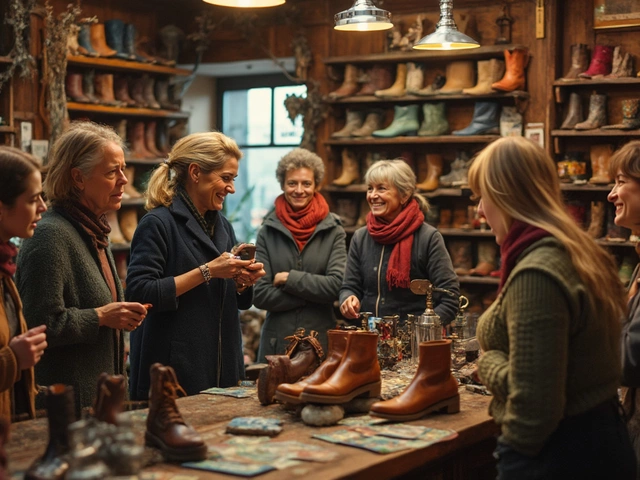
When looking for durable footwear in Ireland, consider supporting local cobblers and shops. Stores like Shoecare chains found in most towns offer professional cleaning and waterproofing services. Independent cobblers in areas like Temple Bar or Georgian Quarter in Galway can repair damaged soles and apply heavy-duty treatments.
Brands like Clarks and ECCO have strong presences in Irish department stores and often feature lines designed for wet weather. Additionally, outdoor retailers like Decathlon or Mountain Warehouse provide affordable technical footwear suitable for harsh conditions.
Can I wear suede shoes in Ireland?
Generally, no. Suede is highly susceptible to water stains and damage. Unless you are indoors all day or in a guaranteed dry location, avoid suede in Ireland. If you must wear it, use a specialized suede protector spray, but expect some wear and tear.
How do I clean salt stains off leather shoes?
Mix equal parts white vinegar and water. Dampen a cloth with the solution and gently wipe the stained areas. Allow the shoes to dry naturally away from heat. Afterward, apply a leather conditioner to restore moisture lost during cleaning.
Are waterproof leather shoes worth the extra cost?
Yes, especially in Ireland. The initial investment pays off in longevity and comfort. Waterproof membranes prevent internal saturation, keeping your feet dry and reducing the frequency of deep cleaning needed.
What should I wear to an Irish wedding in autumn?
Choose dark, polished leather shoes that have been recently waterproofed. Alternatively, opt for sleek black boots with a low heel. Avoid light colors and suede. Carry an umbrella and plan to change into drier shoes if the ceremony moves outdoors.
Does rain ruin leather shoes permanently?
Not immediately, but repeated exposure without care leads to permanent damage. Cracking, warping, and mold growth can occur over time. Consistent maintenance and avoiding prolonged wetness are key to preserving leather footwear.