Irish Sundress Qualifier
Not sure if that dress in your wardrobe is a true "sundress" for Ireland's unpredictable summers? Check the fabric weight, breathability, and silhouette against our strict Irish criteria.
Detailed Assessment:
You’re standing in Grafton Street on a rare July afternoon, the sun actually hitting your face, and you spot someone wearing what looks like a sundress. But wait-is it really a sundress if they’re also carrying a raincoat? In Ireland, the line between "summer dress" and "sundress" gets blurry because our seasons don’t follow the textbook definitions. We get three days of heatwave followed by four weeks of drizzle. So, what actually qualifies as a sundress here? It’s not just about sleeveless cuts or floral prints. It’s about fabric weight, breathability, and how well the garment handles the specific chaos of Irish weather.
Let’s clear up the confusion. A true sundress isn’t defined by where you wear it (though beachside helps), but by its construction. If you’re shopping at Brown Thomas or browsing Penneys for something to throw on when the temperature hits 20°C, you need to know what makes a dress qualify as a genuine sundress versus just a regular summer frock.
The Fabric Test: Why Cotton and Linen Rule
Here is the hard truth: if the fabric feels heavy or synthetic against your skin, it’s probably not a sundress. The defining characteristic of this category is lightweight, natural fibers that breathe. Think cotton poplin, linen, chambray, or viscose blends with high natural fiber content. Polyester might look pretty under the lights, but try walking through St Stephen’s Green in 25°C humidity while wearing polyester, and you’ll feel like you’re wrapped in cling film.
In the Irish market, brands like Zara and H&M often mix materials. You have to check the label. Look for these specific attributes:
- Cotton: Ideally 100% or close to it. It absorbs sweat and dries relatively quickly.
- Linen: The king of breathability. It wrinkles easily, which is fine-embrace the rumpled look. It’s perfect for hot spells in Dublin or Cork.
- Viscose/Rayon: Made from wood pulp, it feels cool to the touch. Great for flowy silhouettes, but be careful-it can lose shape if washed poorly.
- Chambray: Looks like denim but feels like a shirt. Lighter than jeans, tougher than silk.
If a dress contains more than 30% synthetic material without moisture-wicking technology, it fails the sundress test for practical Irish summers. You want something you can wash after a day out in Howth without worrying about it holding onto dampness overnight.
Silhouette and Cut: Airflow is Everything
A sundress needs room to move. Tight bodycon dresses trap heat against your body. The classic sundress silhouette allows air circulation between the fabric and your skin. This usually means an A-line cut, a shift dress, or a tiered maxi style. These shapes don’t cling; they float.
Consider the neckline and straps. Thin spaghetti straps are iconic, but wide shoulder straps offer better support if you’re doing more than sitting on a café terrace. Square necklines and scoop necks are popular because they expose the collarbone, helping you cool down naturally. If you’re planning a trip to the Cliffs of Moher, remember that wind plays a huge role. A very loose, billowy dress might fly up unexpectedly unless it has a proper hem weight or lining. Practicality matters in Ireland.
Length is another factor. Mini sundresses are great for casual outings in Dublin city centre. Midi lengths offer modesty and protection from sudden sunburns or light rain. Maxi dresses are fantastic for evening events or relaxed weekends in Galway, provided the fabric is light enough not to drag in puddles. Avoid heavy velvet or thick wool blends entirely-those belong in autumn, not summer.
| Feature | True Sundress | Standard Summer Dress |
|---|---|---|
| Fabric Weight | Lightweight (<150 GSM) | Medium to Heavy |
| Material | Natural fibers (Cotton, Linen) | Mixed synthetics possible |
| Cut | Loose, airy, non-clinging | Can be fitted or structured |
| Use Case | Hot weather, daytime, casual | Versatile, office-appropriate options |
| Layering | Designed to stand alone | Often requires jackets/blazers |
Patterns and Colors: Embracing the Irish Palette
There’s a stereotype that sundresses must be bright florals. While florals are common, they aren’t mandatory. What qualifies visually is a sense of ease and lightness. Pastels work beautifully against grey skies-they reflect light rather than absorbing it. White and cream are classic choices, though let’s be honest: in Ireland, white clothes show every speck of mud from a walk along the Liffey. Navy blue is a smart alternative; it looks crisp, hides stains better, and still feels summery.
Stripes, gingham, and solid colors all qualify if the fabric meets the criteria. Don’t limit yourself to "holiday mode" patterns. A simple navy linen shift dress is arguably more versatile for daily life in Dublin than a loud tropical print you only wear once a year. Local designers often use muted tones inspired by the Irish landscape-sea greens, stone greys, and earthy browns-which fit perfectly into a sustainable wardrobe approach.
Practicality in Irish Weather: The Rain Factor
This is where the global definition of a sundress clashes with local reality. In California, a sundress stays dry. In Ireland, it might get soaked in five minutes. Does that disqualify it? No. But it changes how you treat it.
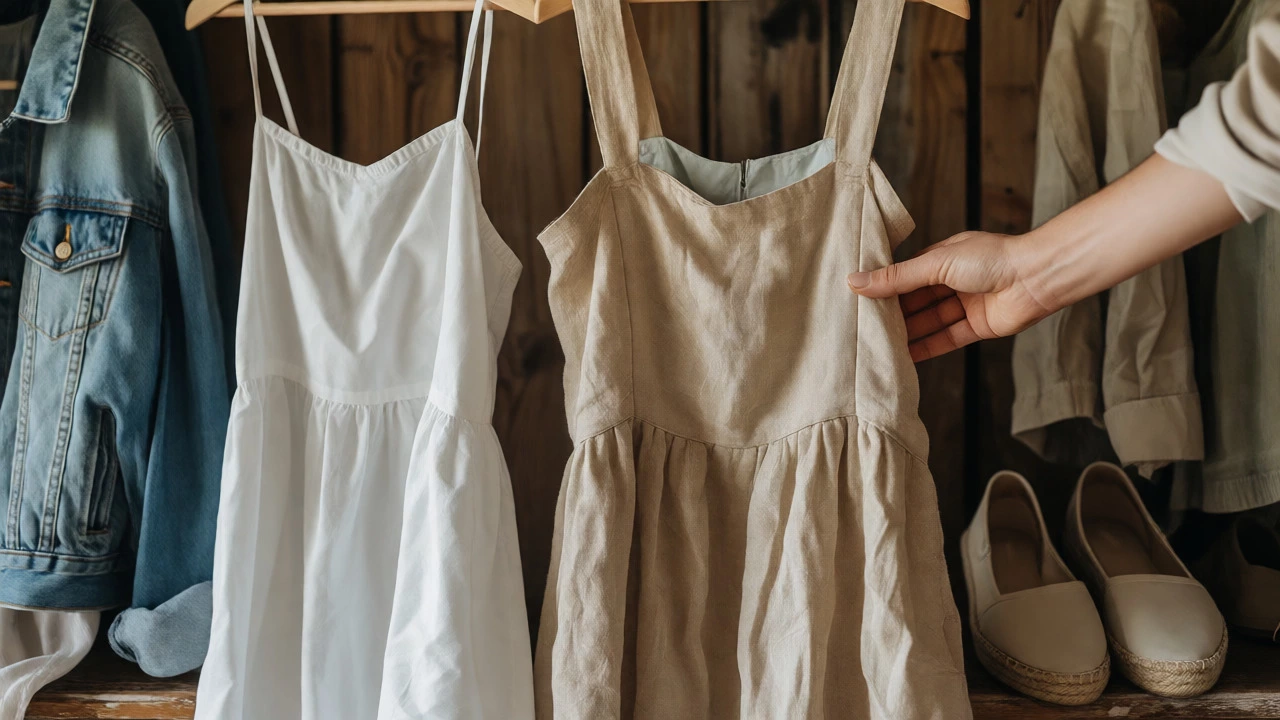
A qualifying sundress should be easy to care for. If it’s hand-wash only silk, it’s a luxury item, not a functional sundress for everyday Irish use. Machine-washable cotton or linen is superior here. You need to toss it in the wash after a day out without fuss. Also, consider how it layers. Can you throw a denim jacket over it? Yes. Does it bunch up awkwardly under a raincoat? If yes, it’s less practical.
Shoes matter too. You won’t find many people pairing sundresses with heels in rural Ireland. Flat sandals, espadrilles, or clean white sneakers make the outfit complete. If you’re heading to a festival like Electric Picnic or All Together Now, durability becomes key. A delicate lace sundress might tear in a crowd; a sturdy cotton one will survive.

Where to Shop for Authentic Sundresses in Ireland
You don’t need to fly to Spain to buy good sundresses anymore. Irish retail has improved significantly. For budget-friendly options, Penneys and Primark release dedicated summer collections every May. Check their labels carefully-some "linen-look" items are pure polyester. Stick to the natural fiber tags.
For mid-range quality, check out Next and M&S. Their cotton dresses tend to hold shape better after multiple washes. If you want to support local, browse independent boutiques in areas like Ranelagh or Rathmines in Dublin, or Shandon Street in Cork. Many Irish designers now focus on slow fashion, using organic cottons sourced responsibly. Brands like Trojan (for accessories) and local seamstresses often create custom pieces that fit perfectly-a huge plus when standard sizes don’t match your frame.
Online retailers like ASOS deliver to Ireland quickly, but returns can be a hassle. Try to buy from sites with free return policies within 30 days. That way, if the fabric feels wrong in person, you haven’t wasted money.
Caring for Your Sundress: Longevity Tips
To keep your sundress looking new, avoid tumble drying whenever possible. Heat shrinks cotton and damages linen fibers. Line dry them in the shade to prevent fading. If you live in a flat with limited space, a drying rack near an open window works wonders. Ironing linen while slightly damp gives it a professional finish without scorching.
Store sundresses loosely. Cramped closets cause deep creases that are hard to remove. Use wooden hangers instead of plastic ones to allow airflow around the shoulders. During winter, store them in breathable cotton bags, not plastic covers, to prevent yellowing or mold buildup in damp Irish winters.
Can I wear a sundress to work in Ireland?
It depends on your workplace dress code. In creative industries or casual offices in Dublin, a midi-length sundress in a solid color or subtle pattern is often acceptable, especially if paired with a blazer. However, conservative corporate environments may require more formal attire. Always check your company policy before wearing a sleeveless dress to important meetings.
Is linen really better than cotton for Irish summers?
Linen is generally more breathable and dries faster than cotton, making it ideal for humid days. However, linen wrinkles heavily. If you prefer a crisp look, opt for high-quality cotton poplin. Both are excellent choices, but linen is superior for maximum cooling during heatwaves.
How do I style a sundress for unpredictable Irish weather?
Layering is key. Keep a lightweight denim jacket, a cardigan, or a trench coat nearby. Choose footwear that can handle wet pavement, such as leather sandals or waterproof sneakers. Avoid suede shoes, as they stain easily in rain. Carry a compact umbrella in your bag even if the forecast says sunny.
Are floral prints outdated for sundresses?
Not at all. Floral prints remain a staple of summer fashion. However, the scale of the print matters. Large, bold florals make a statement, while small, delicate florals look more understated. Solid colors and geometric patterns are also trendy alternatives if you want to avoid clichés.
What is the best length for a sundress in Ireland?
Midi length (below the knee) is often the most practical choice. It offers coverage from sudden breezes and rain splashes while remaining cool. Mini dresses are great for casual outings, while maxi dresses suit evenings or relaxed weekends. Choose based on your activity level and personal comfort.