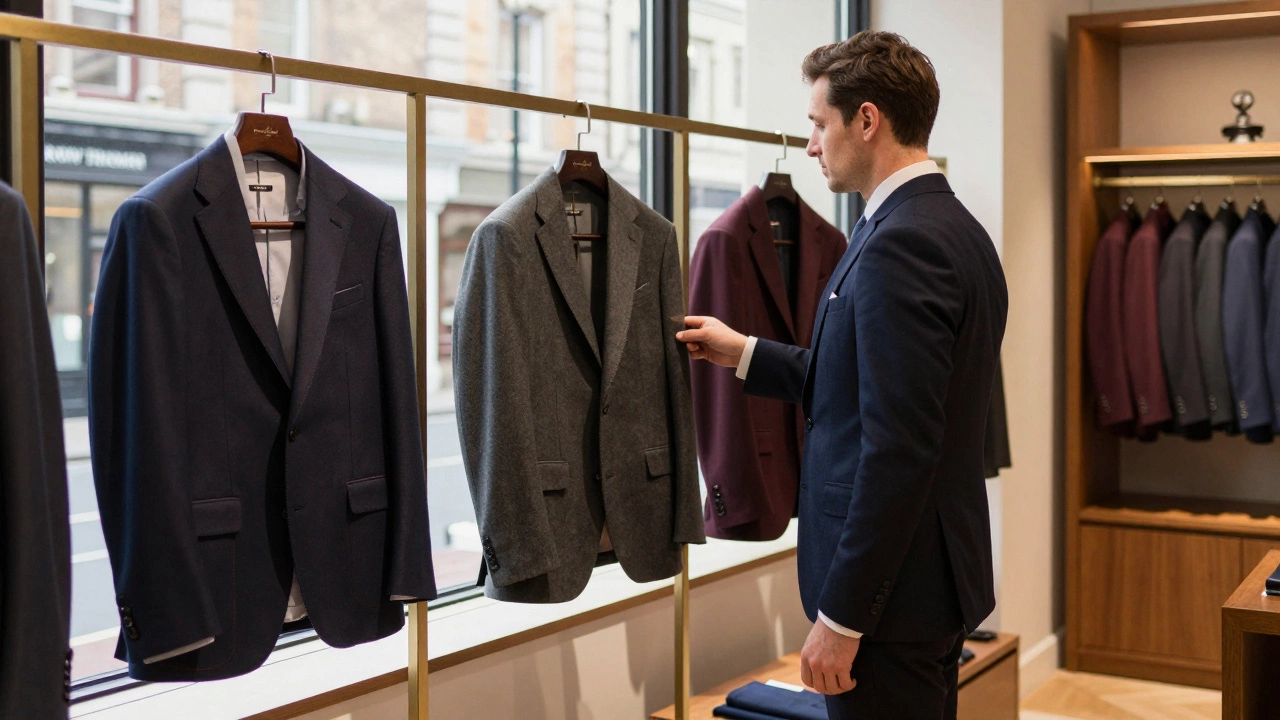
You can grab a jacket from the rack on Grafton Street for less than your weekly grocery bill, or you can drop a year's rent on something bespoke from a craftsman in Galway. So, where does that leave us? If you are standing in the middle of Brown Thomas today, staring at three different jackets, you need a number. You don't want to overpay, but you also know that a suit hanging on sale at a chain store usually doesn't survive an Irish winter.
The short answer is this: for most people living in Ireland, spending between €300 and €600 is the sweet spot. This range gets you decent fabric, a cut that looks sharp without alterations, and enough durability to last several years. However, that number shifts depending on exactly what you need the suit for and how often you'll actually wear it.
Why Your Budget Depends on How Often You Wear It
Before you pull out your card, you have to think about usage. If you buy a €300 suit for one wedding in Cork, that is a massive expense per hour of use. But if you are a consultant in CityWest who wears suits five days a week, that same €300 becomes a bargain. We call this the cost-per-wear formula.
Here is how the math works in practice. Let’s say you buy a suit for €500. If you wear it once for a funeral, you paid €500 for one day. That hurts. Now, let’s say you wear that same suit 50 times over four years. Suddenly, that suit costs you €10 every time you put it on. That is cheaper than buying coffee at a Dublin cafe twice a week.
| Budget Tier | Price Range (€) | Best For |
|---|---|---|
| Entry LevelSuits under €300 | €150 - €299 | One-off events, school leavers, infrequent use |
| Mid-Range Professional€300 - €600 | €300 - €600 | Career starters, regular office wear, frequent guests |
| Premium InvestmentOver €600 | €650+ | Daily executive wear, bespoke requirements, special occasions |
If you are working in finance or law along the Liffey, clients notice the difference in fit. Cheap suits tend to bubble at the back after sitting through meetings. A mid-range option holds its shape better when you are commuting on the DART or walking home in the wind off the quay.
Fabric Quality and Irish Weather
In many places, the fabric matters mostly for style. In Ireland, fabric matters for survival. When people ask about suit costs, they forget that we live in a country where rain is part of the daily commute. A synthetic polyester blend might be cheaper, but it absorbs moisture, clings to your skin, and looks terrible by lunchtime.
Look for Wool BlendsMixtures of natural fibers designed for comfort. They breathe better. Even if you aren't paying £1,000, aim for at least 70% wool. The price jump from a poly-blend to a wool-blend is noticeable, usually adding €50 to €100 to the price tag, but the longevity doubles.
Have you ever tried a cheap suit coat after a week in the drizzle? The shoulder pads sag, and the lining tears. With a slightly higher budget tier, the internal canvas structure stays intact. It protects you against the damp chill that hits you even inside a modern office building with leaky window seals. Paying more upfront saves you from buying replacements every eighteen months.
Where to Find Value in the Irish Market
Shopping for suits in Ireland offers some unique advantages. The retail landscape has changed since 2020. Online-only brands are fighting physical stores, driving competition down. High street retailers in cities like Dublin, Cork, and Galway know they must offer competitive pricing to get you in the door.
Department stores remain a strong contender. Places like Brown Thomas or Debenhans often run sales in January and November that slash the price of mid-range brands significantly. If you wait until the end of September, you can often find spring stock moving at half price.
Then there is the local tailor factor. Buying a €250 off-the-rack suit is great, but spending an extra €80 on adjustments makes it look like you spent €800. Irish tailors are skilled. Going to a small shop near St Stephen's Green rather than relying solely on the in-store alteration team ensures the trousers hit your shoe length perfectly and the shoulders sit right. This step is crucial because standard sizing doesn't account for the specific build types common in our region.
Don't ignore the "made-to-measure" options available now. Several brands in Dublin allow you to customize a pattern at a mid-range price point. You aren't getting a fully bespoke hand-stitched suit (which would set you back upwards of €2,500), but you get a factory-cut garment tailored specifically to your body measurements. For someone needing a suit for a specific interview or wedding, this balances fit and cost efficiently.
When Does Spending More Actually Make Sense?
Sometimes, the best way to save money is to spend more initially. If you are entering a senior role, the psychological boost of wearing something comfortable and high-quality cannot be overstated. You stand differently. You move differently.
A suit costing over €1,000 generally means you are dealing with Super 100s to Super 150s wool counts. This fabric is softer and feels less scratchy. In a humid Irish winter, that difference matters. Also, higher-end garments often come with lifetime repair guarantees. If the elbows wear out or a button tears loose five years later, you might get them repaired for free. Cheap suits usually break completely once the stitching gives way, forcing you to throw them away.
If you are a student or a recent graduate looking for interview gear, do not blow your savings on a premium brand. Buy a classic navy or charcoal grey mid-range suit from a reputable retailer, wear it for two seasons, and then sell it on Vinted or similar platforms when you are done. You can recoup about 30% to 40% of your cost, making the actual net spend much lower.
Hidden Costs You Might Miss
When calculating what you can afford, look at the total bill. The suit itself is just one part. You need shoes. You need socks. You need hangers that support the shoulder width so the jacket doesn't droop on your closet rail.
If you buy a €300 suit, try to stick to €100-€150 footwear. Wearing €50 plastic-soled sneakers with a tailored jacket kills the whole look. Conversely, putting €800 dress shoes with a €200 polyester suit draws attention to the mismatched fabric quality. Balance your budget across the whole outfit to maintain a cohesive appearance in public settings.
Buying Second-Hand in Ireland
The vintage market has exploded here. Walking down streets in Temple Bar or even the suburbs, you see shops dedicated to pre-loved designer clothing. A suit bought in excellent condition from a reputable consignment shop can be 60% cheaper than retail.
You get access to brands that no longer ship to Ireland or charge import fees. Finding a vintage Italian suit made in the 1990s is possible these days. Those were built with robust construction methods that modern fast-fashion lacks. Checking the seams and pockets for stains is easy. Just ensure you take it to a cleaner immediately, because moth damage was a real issue for older garments stored in wardrobes over the decades.
This route requires patience, but it aligns well with values around sustainability which are becoming mainstream across the island. If you are willing to search, you can walk out of a boutique shop looking like a professional from a top firm without touching your overdraft.