Irish Summer Comfort Checker
In Ireland, the weather changes fast. This tool helps you decide if your current outfit plan is a smart move or a mistake. Select your clothing details below to calculate your "Cooling Score" and get specific advice.
Verdict
Why this matters in Ireland:
- Wind Factor: Loose fits create a chimney effect, letting wind carry heat away.
- Fabric First: Linen beats black polyester every time because it allows evaporation.
- UV Protection: Darker colors like red/blue offer better sun protection than white, which can be blinding and less protective against UV rays.
It’s a paradox we all know too well: you’re standing on Grafton Street or waiting for the Luas, and suddenly the sun breaks through the grey. The temperature spikes, but the humidity stays low. You pull out your favorite summer dress, but which one actually keeps you cool? Is it the black slip that looks chic but feels like a sauna? Or the white linen number that stains instantly with coffee? In Ireland, where the weather can shift from drizzle to blazing sunshine in ten minutes, picking the right color isn’t just about style-it’s about thermal survival.
Most people assume black is bad because it absorbs heat. That’s true in a lab, but physics gets messy in the real world. When you’re dealing with Irish summers, wind plays a massive role. Let’s break down what actually works when you’re trying to stay cool without looking like you’re dressed for a funeral in July.
The Myth of Black vs. White
You’ve heard it a thousand times: wear white to reflect sunlight, avoid black because it absorbs it. This is basic solar radiation logic. White reflects up to 80% of visible light, while black absorbs nearly all of it. But here’s the catch-this only matters if the sun is beating directly on you and there’s no breeze.
In Ireland, direct sun exposure is rare compared to countries like Spain or Australia. We get diffuse light more often than harsh beams. If you’re walking along the Cliffs of Moher or sitting in a park in Phoenix Park, you’re likely dealing with indirect sunlight. In these scenarios, the difference between a black cotton tee and a white one is negligible. What matters more is how the fabric handles body heat.
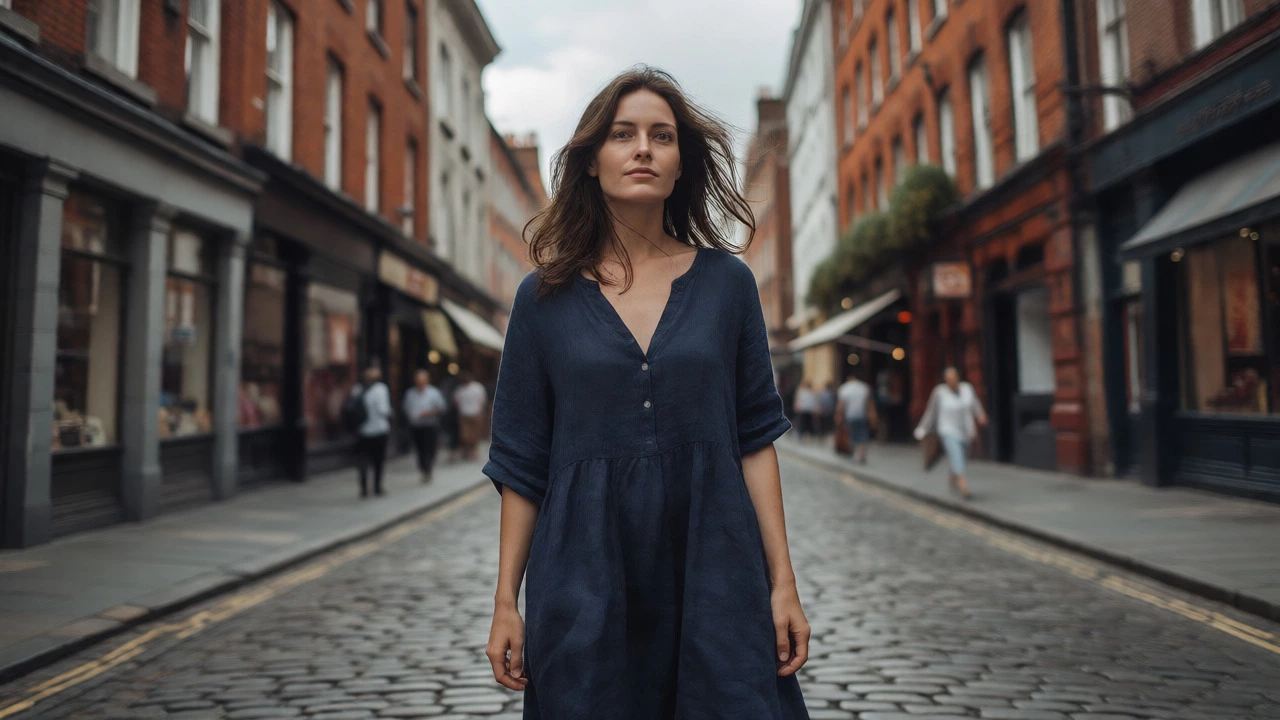
Black clothing absorbs radiant heat from your own body. Yes, your skin radiates heat. If you’re wearing tight black synthetics, that heat has nowhere to go. It bounces back onto your skin. But if you’re wearing loose, black linen? The air circulation underneath carries that heat away before it traps against your skin. So, don’t banish black entirely. Just check the cut.
Why Fabric Beats Color Every Time
If you take one thing away from this article, let it be this: fabric choice trumps color choice. A bright yellow polyester shirt will make you sweat faster than a dark blue linen one. Why? Because polyester doesn’t breathe. It traps moisture against your skin. Linen, even if it’s navy blue, allows air to pass through its weave, facilitating evaporative cooling.
Linen is king in Ireland for good reason. It’s durable, dries quickly (essential when those sudden showers hit), and has a natural texture that keeps the fabric off your skin. Cotton is a close second, especially high-thread-count cotton poplin used in many quality Irish-made shirts. But beware of heavy denim. Unless you’re going for a specific look, thick jeans in a Dublin heatwave are a mistake. Opt for lightweight cotton blends instead.
| Fabric Type | Breathability | Drying Speed | Best For |
|---|---|---|---|
| Linen | High | Fast | All-day wear, humid days |
| Cotton Poplin | Medium-High | Moderate | Office wear, casual outings |
| Silk | Medium | Slow | Evenings, dry heat |
| Polyester Blends | Low | Fast | Avoid unless technical sportswear |
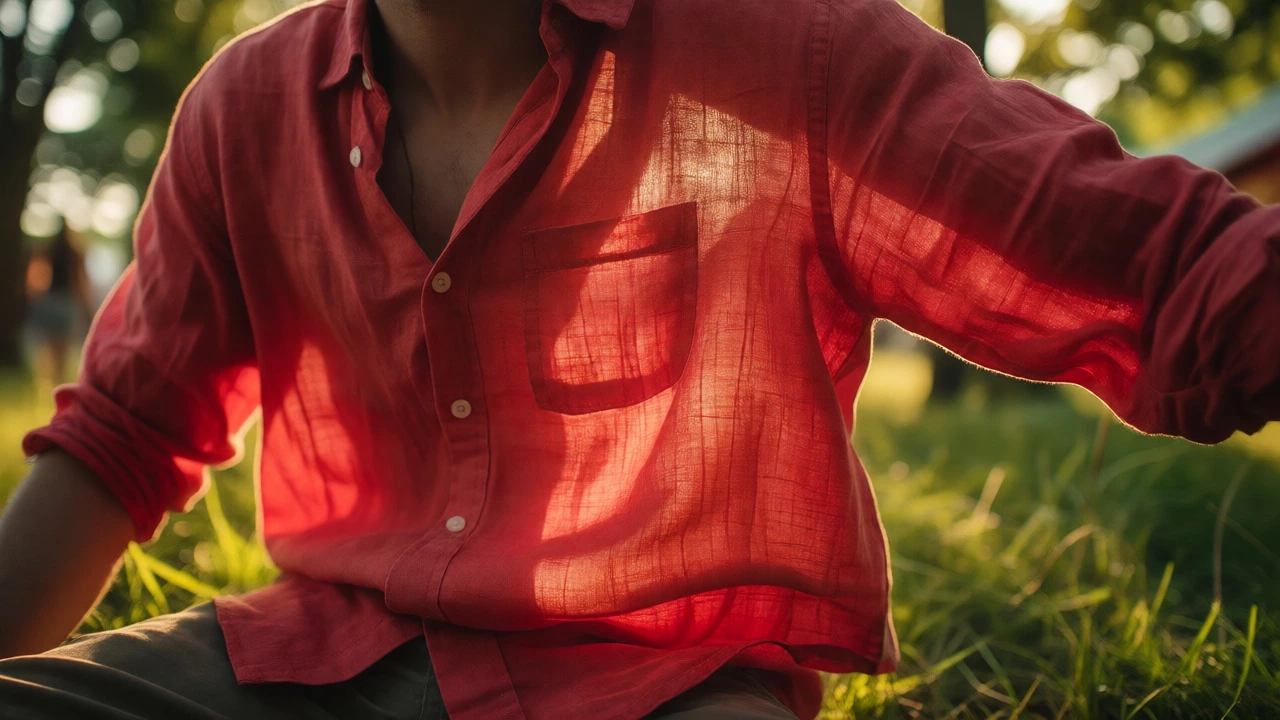
Red and Blue: The Surprising Contenders
Here’s where it gets interesting. Recent studies suggest that red and dark blue might actually outperform white in certain conditions. Why? Ultraviolet (UV) protection. White fabrics allow more UV rays to penetrate through to your skin. This can lead to sunburns, which make you feel hotter as your body tries to repair itself. Darker colors, particularly reds and deep blues, absorb UV radiation better, shielding your skin.
Think about the traditional Aran sweaters. They’re usually undyed wool, cream-colored. But modern Irish fashion brands like Studios Donegal or Rory O’Donnell often use rich indigos and earthy tones. These colors protect your skin from harmful rays while managing heat effectively if the weave is open enough.
If you’re spending a day at an outdoor festival like Electric Picnic or Galway Races, consider a loose red or royal blue dress. It offers UV protection without the stark glare of white, which can be blinding in bright conditions. Plus, they hide grass stains better than white-a practical tip for anyone navigating Irish lawns.
Practical Tips for Irish Summers
Ireland’s climate is unique. We rarely hit 30°C, but when we do, it feels intense because we aren’t acclimatized. Here’s how to dress smartly for our specific brand of warmth:
- Go Loose, Not Tight: Fit matters more than color. A loose-fitting garment creates a chimney effect. Hot air rises and escapes, pulling cooler air in from below. Tight clothes trap heat regardless of color.
- Layer Strategically: Since Irish weather is unpredictable, start with a neutral base layer. A beige or light grey undershirt won’t show through lighter outer layers but provides a barrier against sweat.
- Watch the Neckline: Open necklines allow heat to escape from your chest and face. V-necks or scoop necks are cooler than high collars, even in darker colors.
- Consider Wetness: If you’re near the coast, say in Howth or Bray, the air is salty and damp. Avoid delicate silks that stain easily. Stick to robust linens or cottons that handle moisture well.

Local Brands Doing Cool Right
You don’t need to fly to Italy for breathable clothes. Irish designers understand our climate. Look for pieces made from locally sourced flax linen. Brands focusing on sustainable, slow fashion often use natural dyes and breathable weaves. Check out collections from Simone Rocha for high-end options, or local boutiques in Dublin’s Temple Bar district for accessible linen shifts.
Also, keep an eye on thrift stores. Vintage linen shirts from the 70s and 80s are abundant in charity shops across Cork and Limerick. They’re often made from higher-quality, thicker linen than fast-fashion alternatives, offering better durability and breathability.
Key Takeaways
- Loose fits beat tight ones: Airflow cools you down more than color reflection does.
- Natural fibers rule: Linen and cotton outperform synthetics, regardless of hue.
- Dark colors offer UV protection: Red and blue can shield skin better than white.
- Context matters: In windy, diffuse light, black is fine if the fabric is breathable.
Does wearing black really make you hotter?
Not necessarily. While black absorbs more solar radiation, loose-fitting black garments allow air circulation that carries heat away from your body. In windy conditions, such as those common in coastal Ireland, the cooling effect of airflow often outweighs the heat absorption of the color.
Is white always the coolest option?
White reflects sunlight best, making it ideal for direct, intense sun. However, it offers less UV protection than darker colors and shows sweat and dirt easily. For variable Irish weather, mid-tones like beige, light grey, or pastels often strike a better balance between heat reflection and practicality.
Which fabric is best for hot weather in Ireland?
Linen is generally considered the best fabric for warm weather due to its high breathability and quick-drying properties. Cotton is also excellent, particularly in lightweight weaves like poplin or voile. Synthetic fabrics like polyester tend to trap heat and moisture, making them less suitable unless specifically designed as technical performance wear.
Do dark colors attract more bugs?
Yes, mosquitoes and other biting insects are often attracted to dark colors like black, navy, and red. If you’re spending time outdoors in rural areas of Ireland, such as during hiking in Wicklow Mountains, wearing lighter colors may help reduce insect bites.
Can I wear denim in summer?
Traditional heavy denim can be uncomfortable in warm weather. However, lightweight denim or denim blends with elastane or cotton-linen mixes are more breathable. Choose looser cuts like wide-leg trousers rather than skinny jeans to allow airflow.