Slipper Size Recommendation Tool
Your Recommended Size:
-Quick Takeaways for the Perfect Fit
- Go one size up if you plan to wear thick wool socks.
- Stick to your true size for memory foam or molded soles.
- Sizing down is almost always a mistake-tight slippers cause blisters and cold feet.
- Consider the material; natural wool stretches, while synthetic faux-fur can shrink.
The Golden Rule of Slipper Sizing
If you're staring at two different sizes in a shop like Penhaligon's or browsing an online store, the general rule is: when in doubt, size up. Why? Because your feet naturally swell throughout the day, and nothing ruins a cozy evening in front of a turf fire faster than a slipper that squeezes your pinky toe. A slipper that is slightly too large can be managed with a thicker sock, but a slipper that's too small is simply unwearable.
Think about the physics of comfort. Slippers are lightweight indoor footwear designed for warmth and protection. Unlike dress shoes, they don't have rigid structures to hold your foot in place. If you go too small, the heel of your foot will likely hang over the edge of the sole, which wears down the fabric faster and leaves your heel exposed to the cold tiles of a kitchen floor.
When to Buy a Size Bigger
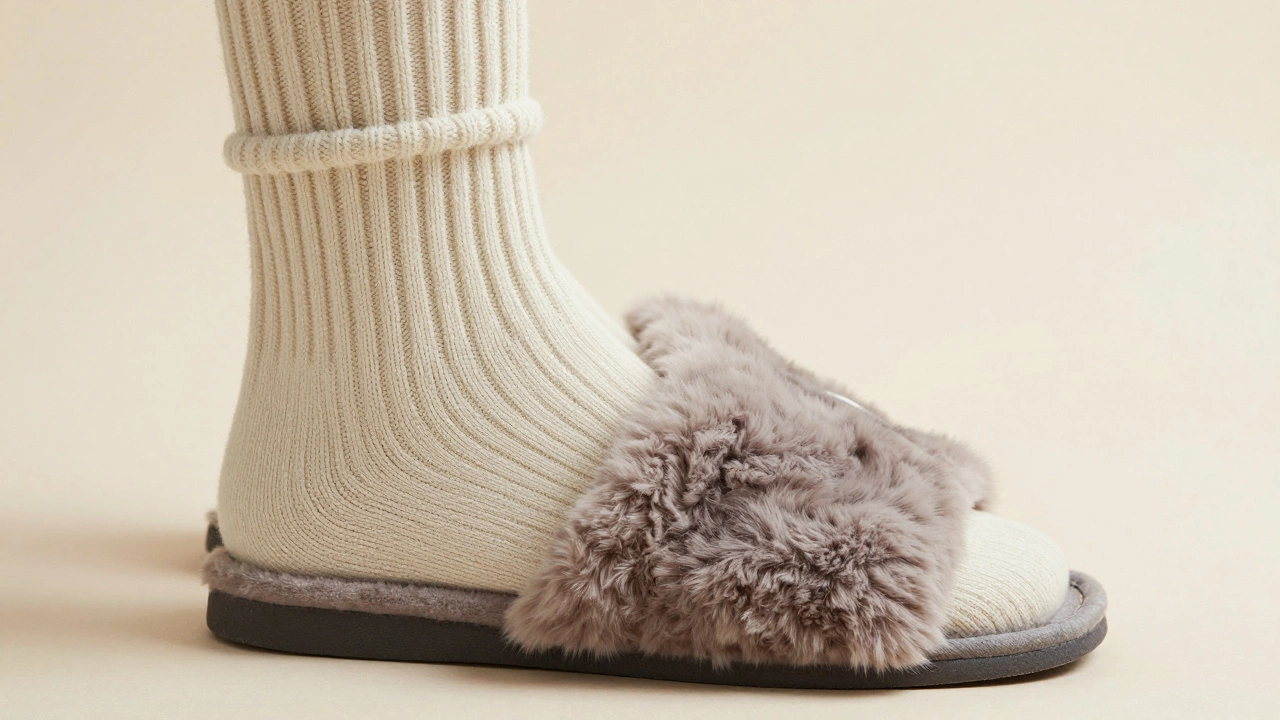
There are specific scenarios where moving up a size isn't just a suggestion-it's a necessity. For most of us living in the rainy climate of the Emerald Isle, "winter mode" involves heavy-duty socks. If you're a fan of Merino Wool socks-those thick, insulating layers that keep you warm during a cold snap in Galway-your standard shoe size won't work. A thick wool sock can add up to a half-size or even a full size to your foot's volume.
Another reason to size up is the type of closure. If you're buying a closed-back slipper or a bootie style, you need that extra bit of room to slide your foot in without struggling. If you have to force your foot into a slipper, you're likely stretching the material beyond its limit, which will lead to the seams popping within a few months. A little extra space at the toe (about a thumb's width) allows your toes to wiggle, which is essential for maintaining circulation and keeping your feet actually warm.
The Case for Staying True to Size
You don't always need to jump a size. Some materials are designed to accommodate your foot without needing extra room. Memory Foam is a prime example. This material is engineered to contour to the unique shape of your foot. If you buy memory foam slippers a size too big, you lose that "hugged" feeling, and the slipper may start to slip off, making you stumble when you're rushing to answer the door.
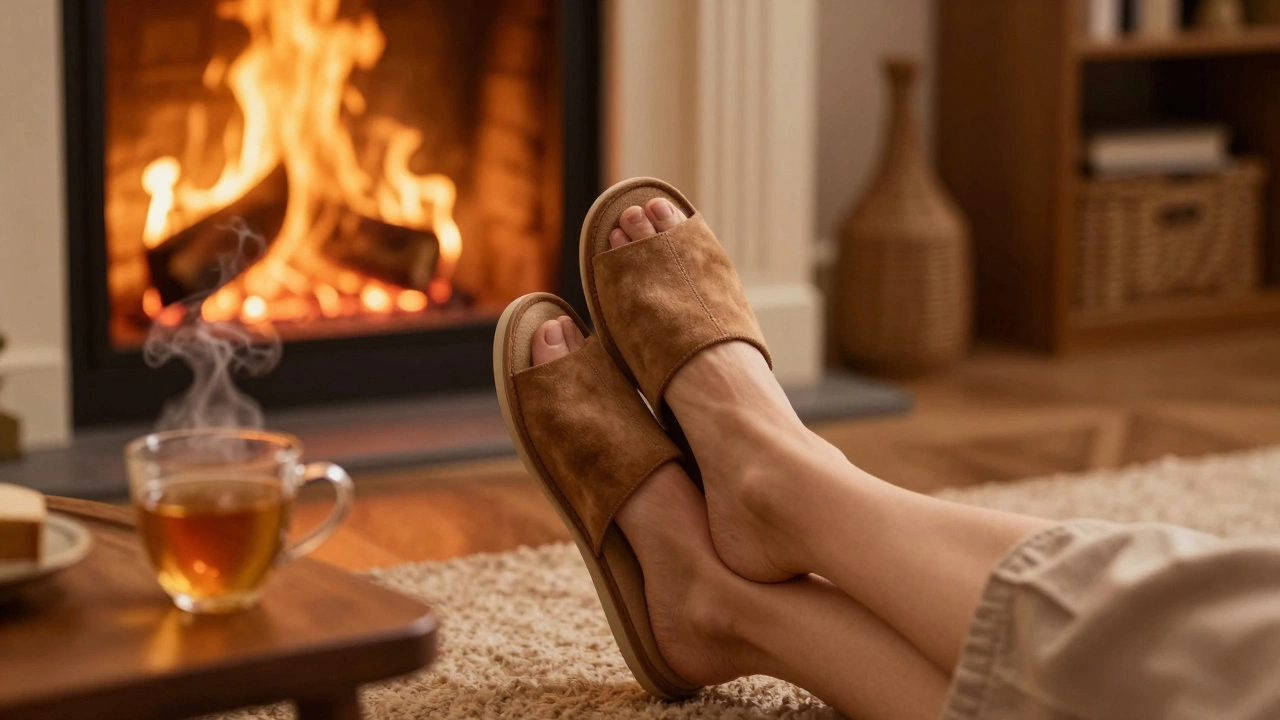
Similarly, if you're buying high-quality leather or suede slippers, remember that these materials stretch. A leather slipper that feels a tiny bit snug out of the box will likely become your favorite pair after a week of wear as the hide softens and molds to your foot. In this case, sizing up would be a mistake, as you'd eventually find the slippers too loose to stay on your feet.
| Material/Scenario | Sizing Recommendation | Reasoning |
|---|---|---|
| Thick Wool Socks | Size Up (+1) | Prevents toe pinching and restricts blood flow. |
| Memory Foam | True Size | Material contours to foot; too large leads to slipping. |
| Genuine Leather | True Size / Slightly Snug | Leather stretches and molds over time. |
| Synthetic Faux-Fur | Size Up (+0.5 to 1) | Inner lining often takes up significant volume. |
| Open-Toe/Slides | True Size | No toe box means no risk of pinching. |
The Danger of Sizing Down
You might be tempted to size down if you're between sizes or if you want a "secure" fit. Resist this urge. Sizing down in slippers is the fastest way to develop blisters or cause toe misalignment. When you compress your foot into a space that's too small, you're not just uncomfortable; you're actually restricting the blood flow to your extremities. This is counterproductive because the whole point of wearing slippers in a chilly Irish home is to keep your feet warm.
Furthermore, slippers that are too small put immense pressure on the toe box. If you've ever noticed the fabric at the front of your slippers wearing through or developing holes, it's often because your toes are pushing against the material with every step. A slightly larger size ensures the fabric isn't under constant tension, extending the life of your footwear.
Considering the "Irish Home" Environment
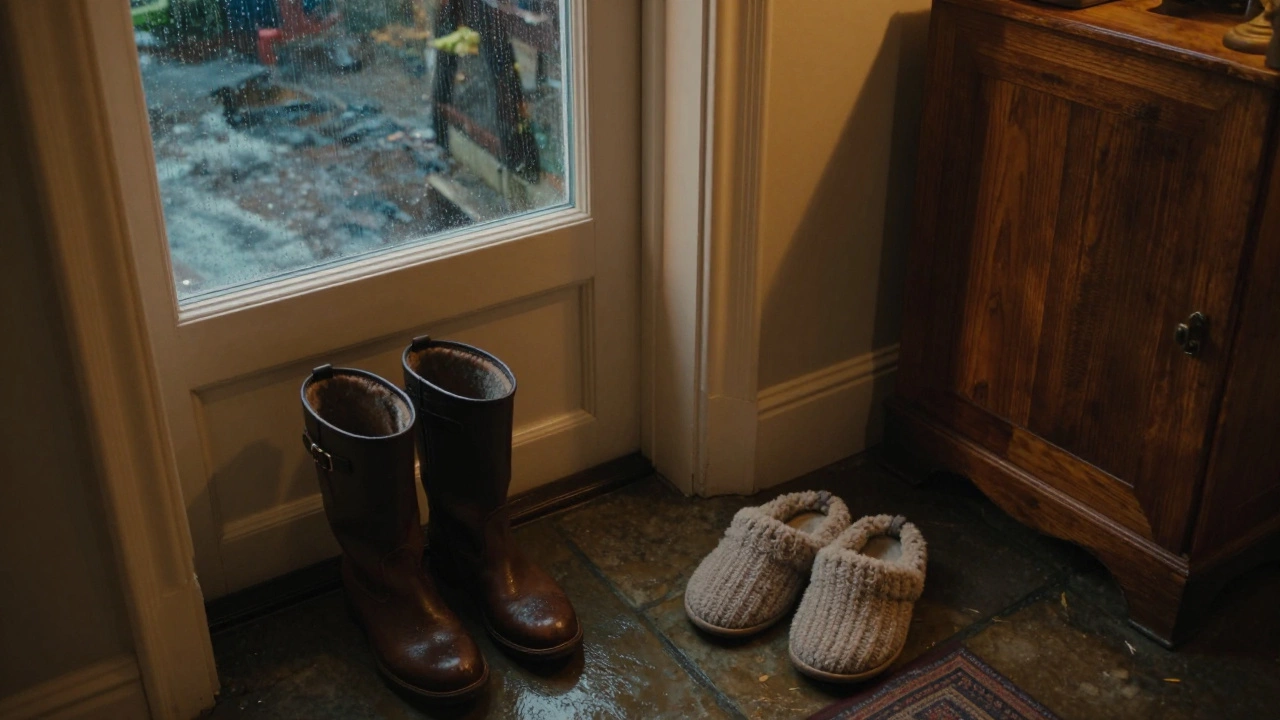
Our homes in Ireland often have a mix of flooring-cold limestone in the hall, hardwood in the lounge, and maybe a plush carpet in the bedroom. Your choice of size should also depend on the sole of the slipper. If you're opting for Rubber Soles (essential for those quick trips to the bin or the porch), these don't stretch. If the rubber sole is too short, your heel will wrap around the edge, creating a tripping hazard.
Think about your daily routine. Do you spend your evening lounging on the sofa with a cup of tea, or are you constantly moving around the kitchen? If you're active, a secure fit is better, but if you're primarily relaxing, a roomier fit provides more comfort. Also, consider the humidity. In the damp Irish winter, feet can swell slightly more due to the cold and the way our bodies regulate temperature. That extra half-size acts as a buffer against these changes.
Pro Tips for Finding the Perfect Pair
To get the fit right the first time, try these practical tricks:
- Shop in the Evening: Your feet are at their largest at the end of the day. If a slipper fits comfortably at 6 PM, it will fit all day.
- Bring Your "Winter Socks": If you're shopping in person at a store in Grafton Street or Dundrum, don't try on slippers with thin dress socks. Wear the thickest pair you own to see how the sizing actually behaves.
- The Thumb Test: Push your toes to the front of the slipper. You should be able to fit your thumb comfortably between your heel and the back of the slipper (or have about 1cm of space in the toe box).
- Check the Lining: Some slippers have a very thick faux-fur lining that "eats" the internal space. If the lining looks chunky, always go one size up.
Should I buy slippers a size bigger if I have wide feet?
Yes, absolutely. If you have wide feet, sizing up is the best way to avoid the sides of the slipper pinching your foot. Look for "wide fit" specific models, but if those aren't available, moving up one full size usually provides the necessary lateral room to keep your feet comfortable.
Do slippers shrink after washing?
Many do, especially those made from wool or cotton. High heat in a dryer can shrink a wool slipper by half a size or more. To avoid this, always air-dry your slippers or wash them on a cold, gentle cycle. If you know you'll be washing them frequently, buying a slightly larger size can act as insurance against shrinkage.
What is the best material for warmth in an Irish winter?
Natural wool is the gold standard. It's breathable yet insulating and naturally water-resistant, which is great for the dampness we get in Ireland. Sheepskin is also an excellent choice as it regulates temperature, keeping you warm in winter and cool if the heating is cranked up too high.
Is it okay if my heel hangs slightly over the back?
No, it's not ideal. If your heel hangs over, the slipper is too small. This not only wears down the material quickly but also means you aren't getting the full benefit of the sole's insulation, leaving your heel cold. Size up until your heel sits comfortably within the perimeter of the sole.
How often should I replace my home slippers?
Typically every 6 to 12 months. Once the internal cushioning collapses or the sole begins to thin, they lose their ability to insulate your feet from the cold floor. If you notice the fit has become too loose due to stretching, it's a sign the material has broken down and it's time for a new pair.
What to Do After Your Purchase
Once you've found that perfect pair, the goal is to keep them fitting well. If you bought them a size larger and find they're a bit too loose without socks, you can add a small cushioned insole. This fills the gap and actually adds an extra layer of warmth between you and the floor.
If you've bought leather slippers that feel slightly too tight, try wearing them with a pair of socks for a few hours a day. The heat from your feet will help the leather stretch more quickly and comfortably. Just be careful not to overstretch them, or you'll end up with the opposite problem-slippers that slide right off.