
Irish Hoodie Quality Checker
Use this tool to assess if your current hoodie or potential purchase is built for the damp, windy Irish climate. Enter the specifications below to get a quality score.
Fabric Weight (GSM)
Construction & Features
Quality Assessment
Verdict will appear here.
Fabric Analysis
Construction Analysis
It’s raining sideways in Dublin. You’re standing outside the Luas stop on George’s Street, waiting for that tram that never seems to arrive on time. Your hoodie is your only defense against the damp chill creeping into your bones. But as you pull the hood up, it feels thin, flimsy, and honestly, a bit sad. You’ve just spent €45 on something that looks like it was designed for a mild summer in Spain, not the relentless Atlantic drizzle of November.
Buying clothes in Ireland is tricky because our weather doesn’t care about fashion trends; it cares about survival. A good hoodie isn’t just a style statement-it’s essential gear. Whether you’re commuting from Cork city centre or hiking the Wicklow Mountains, knowing how to tell if a hoodie is actually good quality can save you money and keep you warm. It’s not about the logo on the chest. It’s about the weight of the fabric, the strength of the stitching, and how well it holds up after three washes in a hard-water washing machine.
The Weight Test: GSM Matters More Than Brand Names
Here’s the secret most fast-fashion brands hope you’ll ignore: fabric weight. In the textile world, this is measured in GSM (grams per square meter). If you pick up a hoodie and it feels light as a feather, put it back. For the Irish climate, you need substance.
A standard t-shirt might be 150-180 GSM. That’s fine for July, but useless here in November. A decent hoodie starts at around 300 GSM. Anything below that is essentially a sweatshirt with a hood attached, not a proper thermal layer. High-quality hoodies, especially those made by local Irish brands or reputable heritage labels, often range from 350 GSM to 450 GSM. This heavy cotton construction traps heat effectively and blocks the wind better than lighter fabrics.
| GSM Range | Fabric Feel | Ideal Use Case in Ireland | Durability Rating |
|---|---|---|---|
| 200-250 GSM | Thin, see-through when stretched | Summer evenings, indoor wear | Low (Pills quickly) |
| 280-320 GSM | Standard mid-weight | Mild spring/autumn days | Medium |
| 350-400 GSM | Heavy, structured, stiff initially | Irish winter commutes, outdoor work | High |
| 450+ GSM | Very thick, almost sweater-like | Extreme cold, mountain hikes | Very High |
When you’re shopping in Grafton Street or browsing online, check the label. If it doesn’t state the GSM, assume it’s lightweight. Brands like Aran Wool producers or high-end streetwear labels usually highlight their fabric weight because they know it’s a selling point. If the tag says "heavyweight cotton," verify it. Hold it up to the light. If you can clearly see your hand through the fabric, it’s too thin for an Irish winter.
Inspect the Stitching: The Durability Check
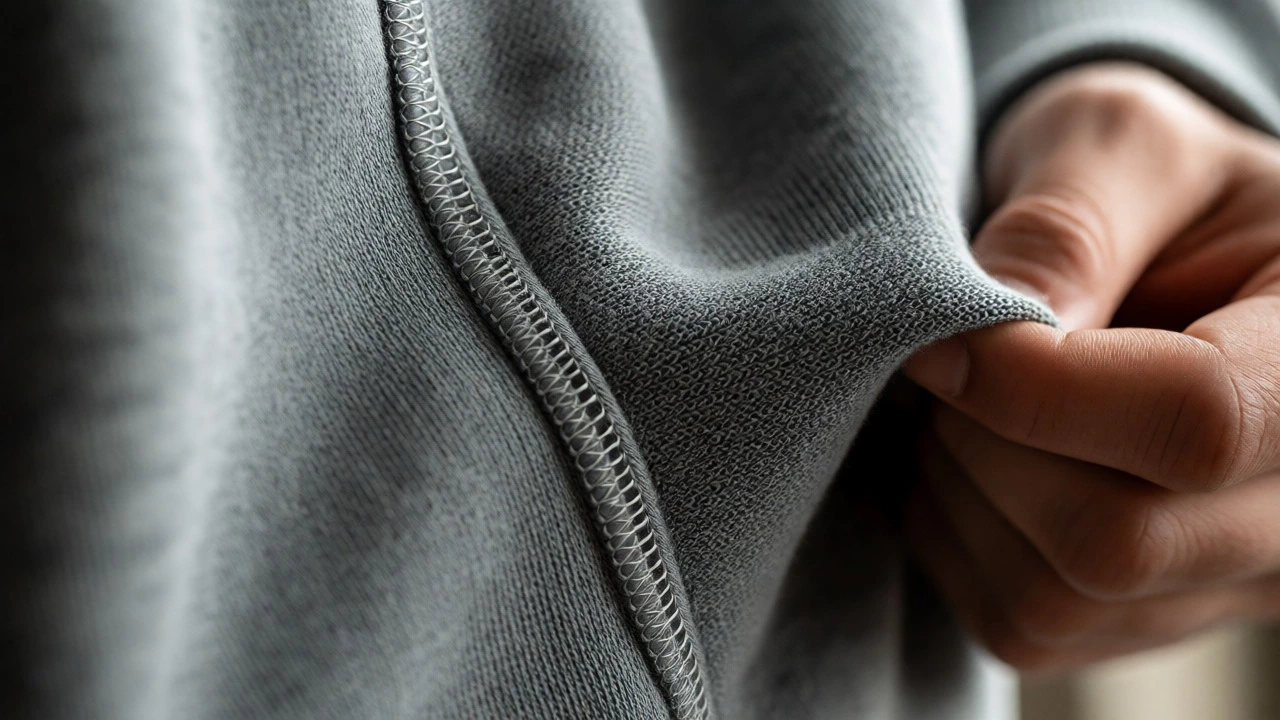
You don’t need to be a tailor to spot bad stitching. Just look closely at the seams. Flip the hoodie inside out. Run your finger along the side seams and the shoulder joins. You’re looking for double-stitching. Single-stitched seams are common in cheaper garments sold in discount stores across Limerick or Galway, but they unravel easily. Double-stitching means two rows of thread running parallel. It’s stronger, more durable, and less likely to burst open when you reach for your keys in a crowded pocket.
Check the cuffs and hem. These areas take the most abuse. Pull them gently. Do they snap back into shape immediately? Or do they stay stretched out? Good quality ribbing uses elastane blended with cotton to maintain elasticity. Cheap ribbing is just loose knit that will eventually look baggy and tired after one wash. If the cuff feels rigid or brittle, avoid it. It will crack in the cold.
Another red flag is uneven stitching. Look for skipped stitches or threads that are pulling tight in some spots and loose in others. This indicates poor manufacturing quality control. In Ireland, where we rely on our clothes to last through wet winters, this kind of inconsistency leads to premature holes. Don’t buy it unless you plan to replace it every season.
Fabric Composition: Cotton vs. Blends in Humid Climates
Material matters. Most people default to 100% cotton. It’s breathable and soft. But pure cotton absorbs water. When it rains-and let’s be honest, it always rains-the hoodie gets heavy and stays wet for hours. This is dangerous if you’re walking home from a pub in Dublin without an umbrella. You’ll feel colder due to evaporative cooling.
For the Irish market, a blend is often smarter. Look for 80% cotton, 20% polyester. The polyester adds durability and helps the garment dry faster. It also resists shrinking, which is crucial given the hardness of tap water in many parts of Ireland. Hard water minerals can break down natural fibers over time, making them rough and brittle. Synthetic blends mitigate this effect slightly.
If you want premium quality, look for French Terry or Fleece-lined interiors. French Terry has loops on the inside, which trap air and provide insulation without adding bulk. Fleece lining is warmer but can make you sweat indoors. Since Irish buildings are often heated aggressively, you might find fleece too hot for office environments. French Terry offers a better balance for transitioning from the cold outdoors to a warm train carriage.
Hood Structure and Hardware Details
The hood itself is a critical component. A cheap hood collapses flat against your back. A good hood stands up on its own because it’s constructed with multiple panels and reinforced edges. Check the drawstrings. Are they plastic tips that crack in the cold, or metal aglets? Metal lasts longer. Also, check if the drawstring is enclosed within the channel. Exposed strings snag on everything-door handles, bike chains, and other people’s bags. Enclosed channels are cleaner and safer.
Look at the kangaroo pocket. Is it sewn directly onto the front panel, or is it a separate piece stitched on? Separate pieces are higher quality because they allow for better movement and reduce stress on the main body fabric. Also, check the interior of the pocket. Is it lined? An unlined pocket collects lint and feels rough against cold hands. A lined pocket is a sign of attention to detail.
Zippers are another weak point. If your hoodie has a zip, test it. Does it glide smoothly? YKK zippers are the gold standard. If you see a generic brand zipper that catches or requires force, walk away. There’s nothing worse than being stuck in a half-zipped hoodie while trying to get off the bus in the rain.
Fit and Cut: Why 'Boxy' is Better for Layering
Irish fashion leans towards practicality. You’re likely wearing layers under your hoodie-a long-sleeve tee, maybe a thin jumper. A slim-fit hoodie will restrict movement and bunch up uncomfortably. Look for a boxy or relaxed cut. This allows room for layering without feeling constricted.
Pay attention to the armholes. Low armholes restrict movement when you raise your arms. High armholes offer better mobility. Sit down in the hoodie before buying. Does it ride up? Does it feel tight across the shoulders? If you have broad shoulders, common among rugby players and manual workers here, ensure the seam sits comfortably on the bone, not cutting into your neck.
Length matters too. Too short, and your lower back gets exposed when you sit. Too long, and it looks sloppy. The ideal length hits mid-hip. This covers your kidneys when you bend over to tie your shoelaces or pick up groceries from Aldi. Practicality wins over aesthetics every time in this country.

Washing Instructions: The Longevity Factor
Finally, read the care label. Good quality hoodies are pre-shrunk. If the label says "wash cold" and "tumble dry low," follow it. Ignoring these instructions will ruin even the best garment. However, if the label gives vague instructions like "machine washable," be cautious. It might mean the fabric hasn’t been treated properly and will shrink significantly.
In Ireland, we deal with dampness constantly. Mold and mildew can attack stored clothes. Ensure your hoodie is fully dry before storing it in a closet. Hang it rather than folding it tightly, which can create permanent creases in heavier fabrics. Proper maintenance extends the life of your investment. A €60 hoodie that lasts five years is cheaper than a €20 hoodie replaced annually.
Key Takeaways for Smart Buyers
- Check the GSM: Aim for 350+ GSM for true winter warmth in Ireland.
- Inspect Seams: Demand double-stitching for durability against daily wear.
- Choose Blends: 80/20 cotton-polyester balances comfort with quick-drying properties.
- Test the Fit: Prioritize boxy cuts for layering and freedom of movement.
- Verify Hardware: Metal aglets and smooth YKK zippers indicate quality control.
Is a 100% cotton hoodie better for Irish weather?
Not necessarily. While cotton is comfortable, it absorbs moisture and takes a long time to dry, which can make you cold in humid conditions. A blend with 10-20% polyester improves durability and drying speed, making it more practical for frequent rain exposure.
What does GSM mean on a hoodie label?
GSM stands for Grams per Square Meter. It measures fabric density. Higher numbers indicate thicker, heavier, and generally warmer fabric. For Irish winters, look for 300 GSM or higher.
Why do my hoodies shrink in the wash?
Shrinkage occurs due to heat and agitation relaxing the tension in woven or knitted fibers. Pre-shrunk fabrics resist this better. Washing in cold water and avoiding high-heat tumble drying prevents excessive shrinking.
Are expensive hoodies worth it in Ireland?
Yes, if they use high-GSM fabric and durable construction. Cheap hoodies degrade quickly in wet conditions and frequent washing. A high-quality hoodie acts as long-term outerwear, offering better value per wear.
How should I store my hoodie to prevent mold?
Ensure it is completely dry before storage. Store in a ventilated area, not a sealed plastic bag. Hanging is preferred over tight folding to maintain shape and allow airflow, reducing the risk of mildew in damp climates.