T-Shirt History & Trivia Quiz
Think you know what the "T" in T-shirt stands for? Take this quick quiz to test your knowledge on the garment's journey from US Navy underwear to a global fashion staple.
Loading question...
0/5
Calculating results...
You've just tested your knowledge on the humble T-shirt's fascinating history.
You are standing in a fitting room in Grafton Street, Dublin, holding up a plain white cotton top. It fits perfectly. It breathes well. It costs less than your morning coffee run to Avoca. But have you ever stopped to ask: what is the T in T-shirt short for? If you guessed "Top," you are close, but not quite right. If you guessed "Training," you are also wrong. The answer lies in the shape of the garment itself and a bit of military history that changed how we dress from Cork to Galway.
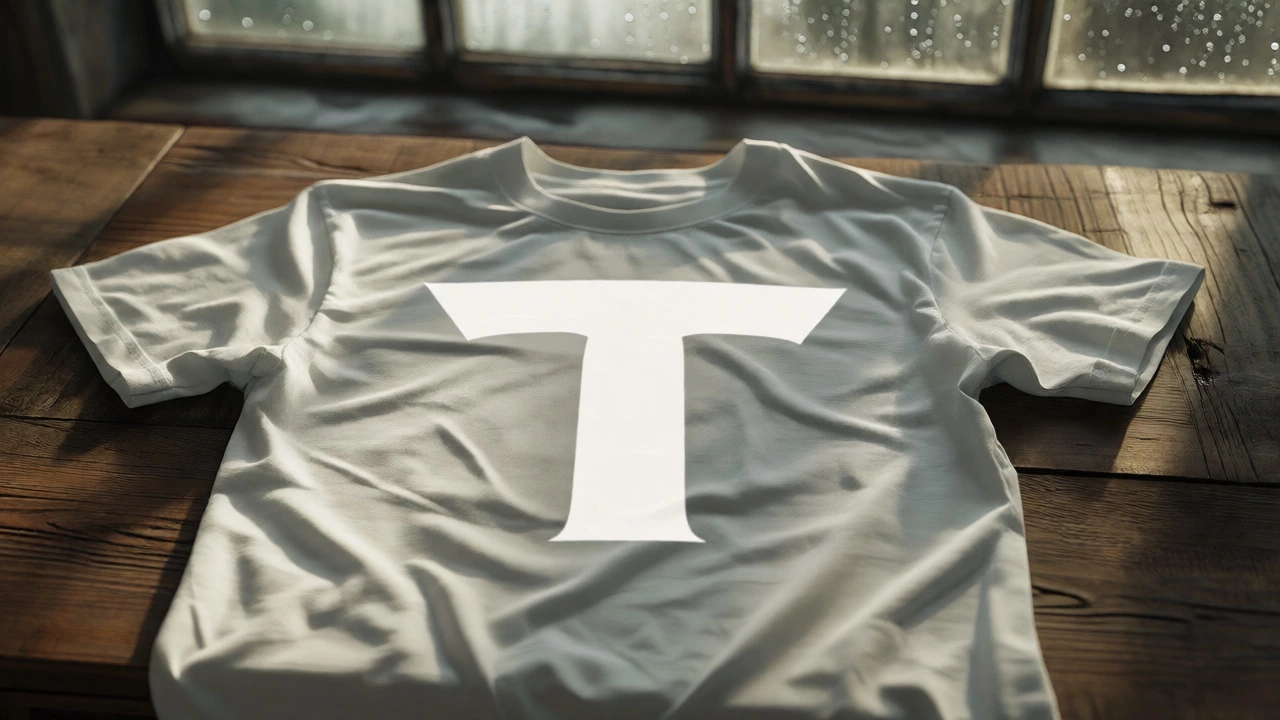
The term "T-shirt" describes the silhouette of the item when laid flat. The body forms the vertical line of the letter T, and the sleeves form the horizontal crossbar. There is no hidden acronym like "Textile Shirt" or "Traditional Wear." It is purely descriptive geometry. This simple naming convention stuck because it was efficient, accurate, and easy to remember. But why did this specific shape become the global uniform for casual wear, especially here in Ireland where our weather demands layers?
The Military Roots of the Modern Tee
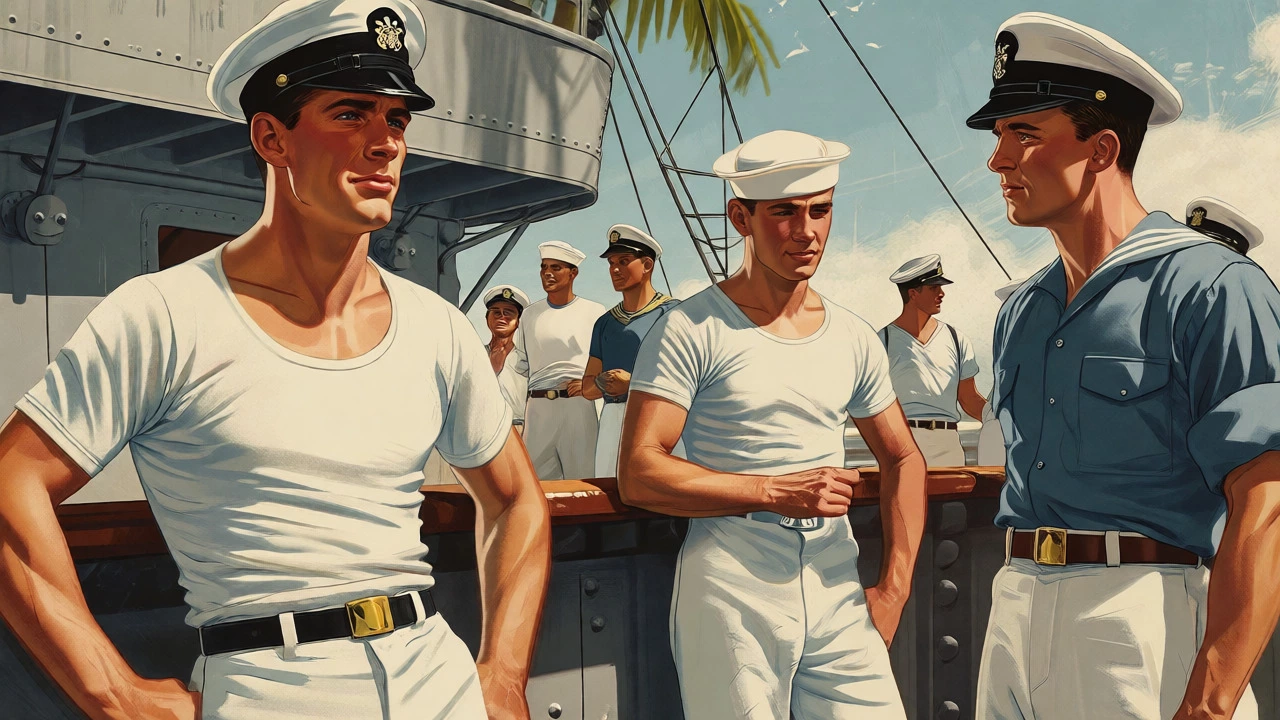
To understand the name, you have to look at who wore them first. Before they were fashion statements sold in Brown Thomas or Penneys, T-shirts were underwear. In the early 20th century, the United States Navy issued lightweight, short-sleeved undershirts to sailors. These men worked on hot ships in tropical climates. Wearing a full wool uniform was unbearable. They needed something light that absorbed sweat and didn't chafe under heavy outer layers.
The US Army adopted the style during World War I and II. Soldiers found these undershirts so comfortable that many began wearing them as outerwear when off-duty. This transition from underwear to everyday clothing happened gradually. By the time American troops arrived in Europe, including ports like Liverpool and later influencing trends across the UK and Ireland, the "T-shirt" was already gaining traction as a standalone garment. The name had already been coined by the press to describe the distinct shape, distinguishing it from button-down shirts or tank tops (which lack the sleeves).
T-shirt is a type of shirt with short sleeves, a round neckline, and no collar. It is named after its T-shaped appearance when laid flat. Originally designed as an undershirt for laborers and soldiers, it evolved into a staple of global casual fashion.
Why the Name Stuck in Ireland
Ireland has a long tradition of knitting and textile work, from Aran sweaters to Donegal tweed. Yet, the imported cotton T-shirt took over quickly. Why? Because it solved a practical problem. Irish weather is unpredictable. You need a base layer that works under a raincoat, under a wool jumper, or on its own during a rare heatwave in July. The T-shirt’s simplicity made it perfect.
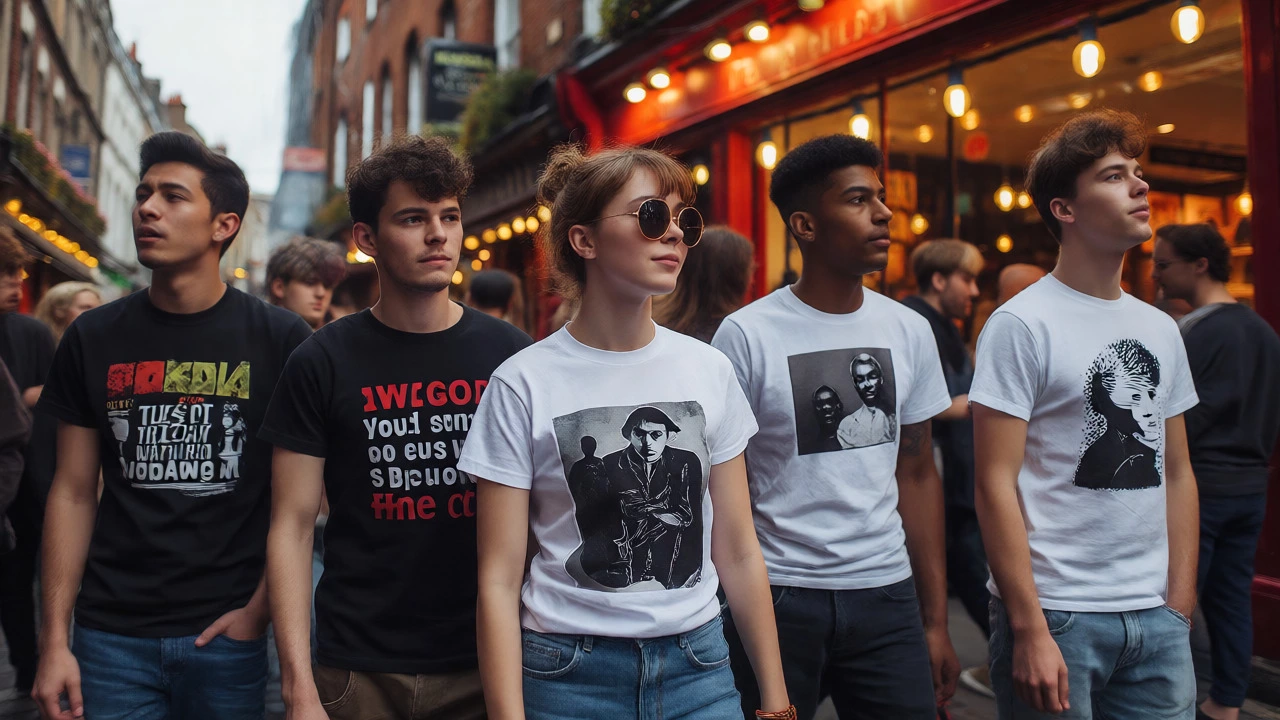
In the 1950s and 60s, Hollywood films featuring Marlon Brando and James Dean popularized the white T-shirt as a symbol of rebellion and coolness. Young people in Dublin and Belfast wanted that same effortless look. Local brands began printing logos on them. Suddenly, the T-shirt wasn't just underwear; it was identity. When you walk through Temple Bar today, you see thousands of printed tees. Each one tells a story, but they all share the same root: the geometric "T" shape that defined the category.
Consider the local market. Brands like Dunnes Stores or independent designers in the City Quay area sell thousands of these garments annually. The demand remains high because the utility hasn't changed. Whether you are hiking in Wicklow Mountains or sitting in a pub in Cork, the T-shirt remains the most versatile piece in your wardrobe.
Common Misconceptions About the Name
People often invent acronyms to explain everyday terms. Here are the most common myths about what the "T" stands for, debunked:
- "Training Shirt": While used in gyms, this isn't the origin. Gym clothes came later.
- "Textile Shirt": Too vague. All shirts are textiles.
- "Traditional Wear": Incorrect. It was modern technology for its time.
- "Two-piece": No, it is a single piece of fabric.
The truth is boring but fascinating: it is simply the shape. Language often evolves from visual description rather than complex abbreviation. Think of the word "hoodie"-it has a hood. The "T-shirt" looks like a T. It is functional language at its best.
The Evolution of the T-Shirt in Irish Fashion
From its military origins, the T-shirt transformed into a canvas for expression. In Ireland, this shift mirrored broader social changes. The Celtic Tiger era saw a boom in branded merchandise. Tourists flocked to Cliffs of Moher, buying "I Love Ireland" tees. Locals started using tees to support GAA clubs, music festivals like Electric Picnic, or political causes.
Today, the sustainable movement in Ireland influences T-shirt production. Consumers in Dublin and Galway increasingly ask about organic cotton and ethical manufacturing. The simple "T" now carries weight beyond shape-it represents values. Many Irish brands source materials locally or from certified suppliers, ensuring that the humble T-shirt aligns with modern environmental standards.
| Era | Primary Use | Social Perception | Irish Context |
|---|---|---|---|
| Early 1900s | Underwear for workers/soldiers | Functional, invisible | Limited availability, mostly imported |
| 1950s-1960s | Casual outerwear | Rebellious, youthful | Adopted by youth culture in cities |
| 1980s-1990s | Branding and advertising | Commercial, mainstream | Rise of local sports merchandising |
| 2020s | Fashion statement & activism | Sustainable, expressive | Focus on eco-friendly Irish brands |
How to Choose the Right T-Shirt in Ireland
Knowing the history helps you appreciate the garment, but choosing the right one requires attention to detail. Not all T-shirts are created equal, especially given our damp climate. Here is a quick guide for the Irish shopper:
- Check the Fabric Weight: Look for GSM (grams per square meter). A standard tee is 150-180gsm. For cooler Irish days, choose heavier weights (200gsm+) which provide better insulation under jumpers.
- Consider the Neckline: Crew necks are classic and durable. V-necks can stretch out faster if worn frequently under collared shirts. For a modern look, opt for a slightly higher crew neck, which retains shape better.
- Look for Ethical Sourcing: Support Irish businesses that prioritize fair trade. Many local printers use water-based inks that last longer and are kinder to the environment.
- Fit Matters: Traditional cuts were boxy. Modern fits are slimmer. Try it on. Ensure the shoulder seam sits exactly at the edge of your shoulder bone. If it droops, it is too big. If it pulls, it is too small.
Whether you buy from a high-street chain or a boutique in Belfast, the goal is comfort and longevity. The T-shirt should survive multiple washes without shrinking or fading. In a country where laundry might be done less frequently due to energy costs, durability is key.
The Cultural Impact of Printed Tees
Printed T-shirts have become a mobile billboard for Irish culture. From Guinness slogans to references to Game of Thrones filming locations, these garments spread awareness globally. When a tourist wears a tee bought in Dublin back to their home in New York or Sydney, they carry a piece of Irish identity with them.
This phenomenon extends beyond tourism. Musicians, artists, and activists use T-shirts to spark conversations. At festivals like Fleadh Cheoil, you will see custom designs celebrating traditional music. These prints turn the simple "T" shape into a narrative device. The garment becomes a conversation starter, proving that even the most basic item can hold significant cultural weight.
Moreover, the rise of online platforms allows Irish designers to reach international audiences instantly. A small studio in Limerick can sell limited-edition tees to customers in Tokyo. This democratization of fashion ensures that the legacy of the T-shirt continues to evolve, driven by creativity and connectivity.
Is the T-shirt actually named after the letter T?
Yes, absolutely. The name comes from the fact that when the shirt is laid flat, the body and sleeves form the shape of the capital letter T. There is no other acronym involved.
Who invented the T-shirt?
There is no single inventor. The concept evolved from European undergarments and was standardized by the US Navy in the early 20th century for sailors working in hot conditions.
Why are T-shirts popular in Ireland despite the rain?
They serve as excellent base layers. Cotton and synthetic blends wick moisture and regulate temperature, making them ideal under raincoats or wool jumpers, which are staples of Irish wardrobes.
Can I shrink a T-shirt to fit better?
Yes, washing in hot water and drying on high heat can shrink cotton T-shirts. However, pre-shrunk fabrics are common now, so check the care label to avoid damaging the print or fabric integrity.
Are there eco-friendly T-shirt options available in Ireland?
Yes, many Irish retailers offer organic cotton, recycled polyester, and hemp blends. Look for certifications like GOTS (Global Organic Textile Standard) to ensure genuine sustainability claims.