Leather Shoe Suitability Calculator
How Suitable Are Leather Shoes For Your Situation?
Answer a few quick questions to see if leather shoes are appropriate for your Irish weather conditions.
Recommendation
Why This Matters
Key Factor: Rain Frequency
Key Factor: Walking Distance
In Ireland, where rain falls more often than not and the ground stays damp for weeks, choosing the right footwear isn’t just about style-it’s about survival. Leather shoes look sharp for a wedding in Galway, a meeting in Dublin, or a stroll along the Cliffs of Moher, but they come with real downsides in this climate. If you’ve ever stepped out in polished oxfords only to find your socks soaked by lunchtime, you know exactly what we’re talking about.
Leather shoes don’t handle rain well
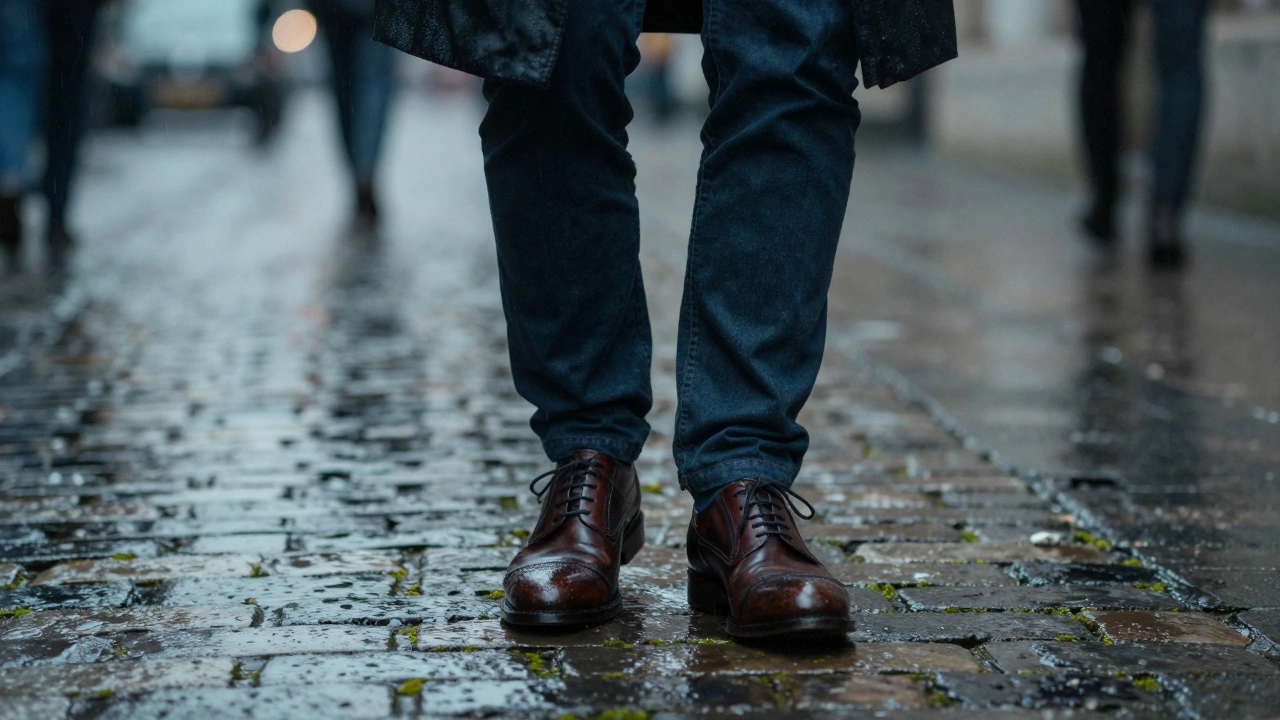
Ireland averages 150-250 rainy days a year, depending on where you live. In Cork, it’s not unusual to get three days of steady drizzle in a row. Leather, especially full-grain or smooth leather, absorbs water like a sponge. Once wet, it swells, loses shape, and takes days to dry properly. You might think air-drying near a radiator helps, but that actually cracks the leather and weakens the glue holding the sole on. Many Irish walkers have learned the hard way that a pair of €180 John Lobb shoes can become unusable after one rainy week in Connemara.
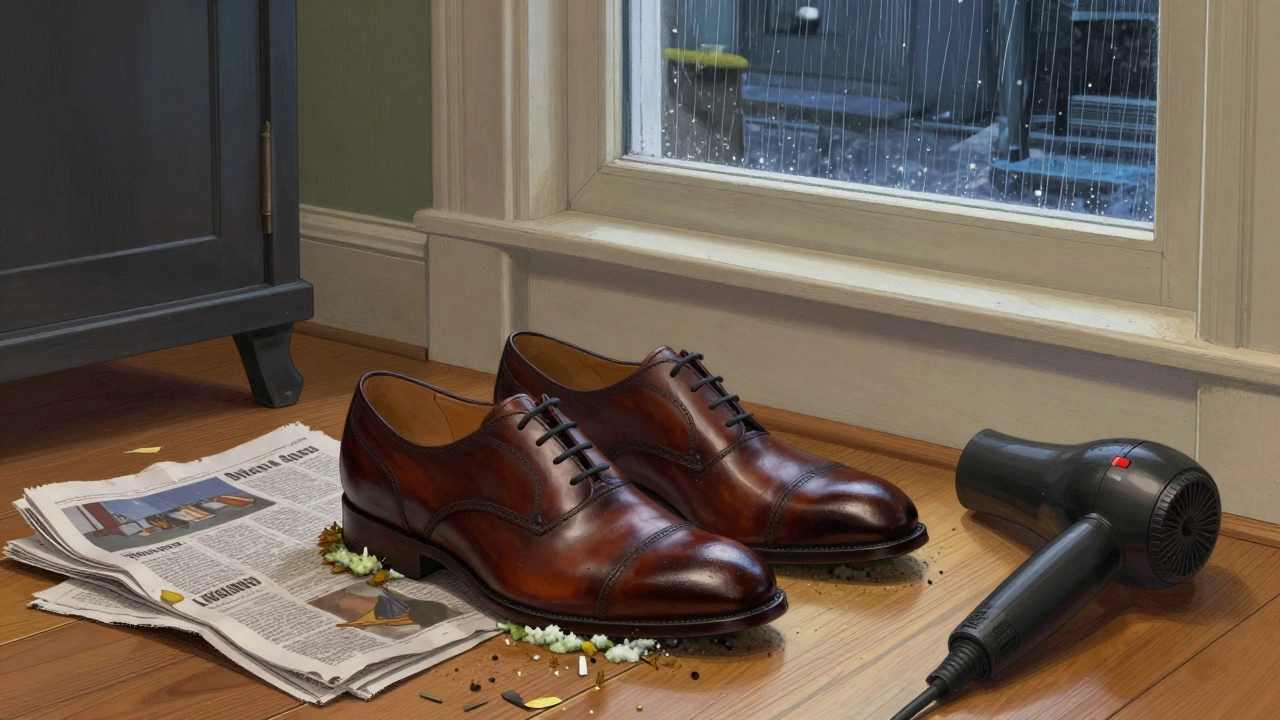
Even waterproofing sprays-like those from Saphir or Nikwax-only delay the inevitable. They work for a light shower, sure, but not for walking through puddles on Grafton Street or trudging home from the Luas after a late shift. And if you’ve ever tried to dry wet leather shoes with a hairdryer, you know the result: brittle, stiff leather that cracks along the seams.
They’re slippery on wet surfaces
Most traditional leather shoes have smooth leather soles. That’s fine on dry pavement, but in Ireland, where moss grows on cobblestones in Kilkenny and rain turns Dublin’s sidewalks into skating rinks, that’s a recipe for falls. I’ve seen friends slip on wet granite outside Trinity College, on the cobbled lanes of Doolin, and even on the stone steps of the Rock of Cashel. Leather soles offer almost no grip when wet. They’re like ice skates on wet stone.
Even brands known for quality, like Clarks or Ecco, often use leather outsoles on their dressier lines because they look elegant. But in Ireland, that elegance comes at a cost: safety. Rubber soles, like those on Aigle boots or even the newer models from Johnston & Murphy, grip far better. If you’re commuting in Dublin or walking the Wicklow Way, you need traction-not polish.
They take too long to dry
Leather shoes need air, time, and low humidity to dry properly. In Ireland, humidity hovers around 80% for much of the year. Your shoes won’t dry overnight. They’ll sit in the hallway, damp and musty, for days. That’s not just inconvenient-it’s unhygienic. Damp leather breeds mold and bacteria. You’ll start to smell it: a sour, earthy odor that clings to your socks and lingers in your closet.
And if you’re someone who walks to work in Galway or cycles to the university in Limerick, you can’t afford to wait three days for your shoes to dry. You need something you can wear back-to-back. Leather shoes don’t allow that. Synthetic uppers, mesh linings, and quick-dry footbeds-like those in Merrell or Birkenstock’s waterproof models-do.
They require constant maintenance
Leather shoes aren’t ‘set and forget.’ In Ireland, you need to clean them weekly, condition them every few weeks, and reapply waterproofing monthly if you’re serious about keeping them alive. That means buying leather cleaner, conditioner, wax, and brushes. It means setting aside time you don’t have. For many Irish workers-teachers, nurses, shop assistants-this kind of upkeep is a luxury.
Think about it: if you’re on your feet for 8 hours a day in a Cork hospital or a Belfast pub, do you really want to spend your Sunday afternoon polishing shoes instead of watching the rugby or getting a pint with friends? That’s the trade-off. Leather shoes demand attention. Most people in Ireland just want shoes that work without drama.
They’re expensive for what they deliver
Let’s be honest: a good pair of leather dress shoes costs €150-€400 in Ireland. Brands like Dunlop, Allen Edmonds, or even local makers like Irish Leather Works carry premium prices. But in a country where rain ruins them, salt from winter roads eats away at the stitching, and dampness warps the shape, you’re paying for aesthetics, not durability.
Compare that to a pair of waterproof walking boots from O’Neills or a pair of waterproof loafers from Clarks’ Aqua line-both under €120-and you start to see the value. You get the same professional look, with better grip, faster drying, and zero maintenance. Why pay twice as much for something that breaks down faster in your climate?
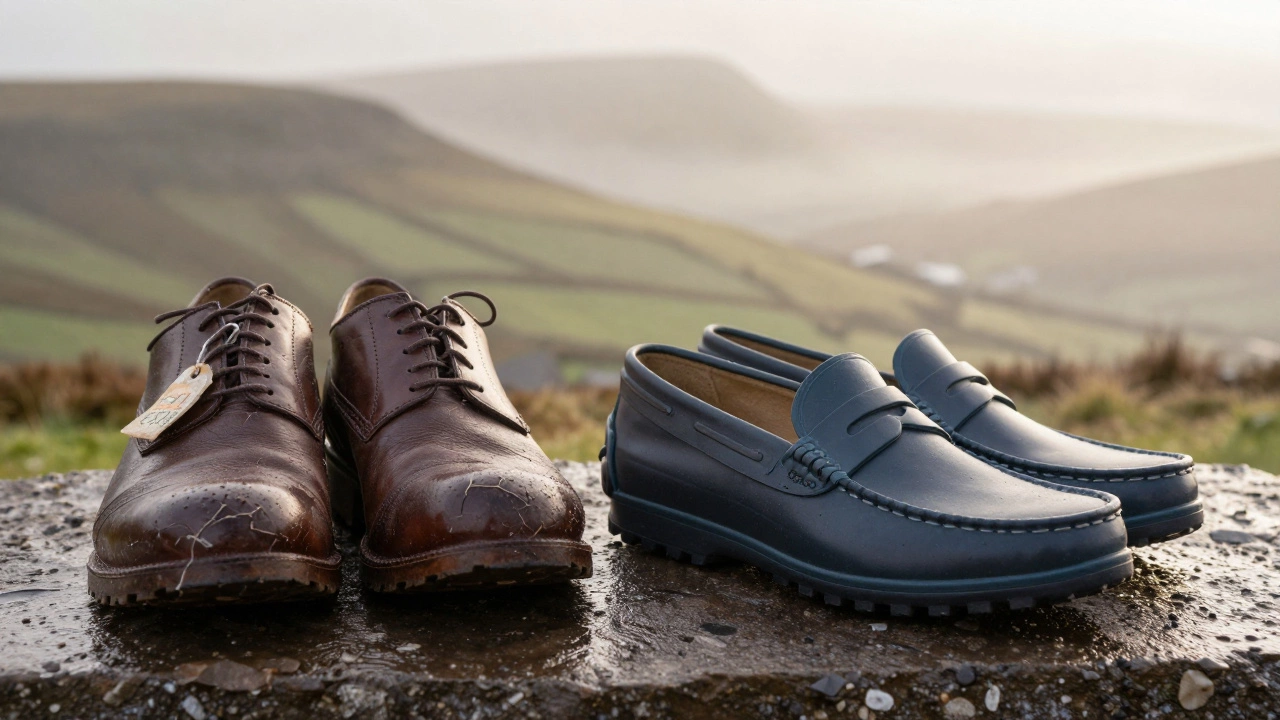
They’re not suited to Ireland’s casual culture
Even in cities, Irish dress codes have softened. You won’t see many people wearing full suits and leather oxfords to the office anymore. In Dublin’s tech hubs, jeans and sneakers are normal. In Galway’s creative scene, boots and sturdy loafers rule. Leather shoes feel out of place unless you’re at a formal event-like a wedding at Blarney Castle or a funeral in Kildare.
And even then, many Irish families now opt for practicality. I’ve been to three weddings in the last year where the groom wore waterproof Chelsea boots instead of dress shoes. His wife wore leather-free flats. Nobody thought it was odd. In fact, they were praised for being smart about the weather.
There are better options for Ireland’s climate
You don’t have to give up style to protect your feet. There are now plenty of shoes that look like leather but behave like rain gear. Brands like Ecco, Clarks, and even Irish-made companies like Irish Leather Works now offer water-resistant leather alternatives using sealed seams, breathable membranes, and rubber outsoles. You get the look of classic brogues with the performance of hiking boots.
Or go fully modern: waterproof loafers from Birkenstock, slip-ons from UGG’s Weatherproof line, or even the new waterproof boots from O’Neills that mimic the shape of traditional Irish shoes. These cost less, dry faster, and won’t leave you slipping on wet stones.
If you love the look of leather, fine. But don’t pretend it’s practical for daily life in Ireland. Use them for special occasions. Keep them in the closet. Let your everyday shoes do the hard work.
Bottom line: Leather shoes are a liability in Ireland
They’re expensive, high-maintenance, slow to dry, slippery, and poorly suited to our weather. In a country where rain is routine and dampness is unavoidable, leather shoes are more of a fashion statement than a functional choice. If you’re serious about comfort, safety, and value, choose footwear designed for Ireland-not just worn in it.
Next time you’re shopping, ask yourself: Do I need a shoe that looks good in a photo-or one that won’t leave me soaked, sore, and stuck at home because my shoes are still damp?
Are leather shoes ever a good choice in Ireland?
Yes-but only for dry, short-term use. Leather shoes work for a Sunday church service, a formal dinner in Kilkenny, or a wedding at Ashford Castle. But they’re not suited for daily wear, commuting, walking in rain, or any activity where you’ll be on wet ground. Keep them for special occasions and rely on waterproof alternatives for everyday use.
Can I waterproof leather shoes to make them suitable for Irish weather?
You can apply waterproofing sprays or waxes, but it’s not a long-term fix. These treatments wear off after a few weeks of regular use, especially in high-wear areas like the toe box. Reapplying every month is necessary, and even then, water can still seep in through stitching or around the sole. Waterproofing helps, but it doesn’t make leather shoes reliable for Irish conditions.
What are the best alternatives to leather shoes in Ireland?
Look for waterproof shoes with rubber soles and breathable linings. Brands like Ecco, Clarks Aqua, Birkenstock’s waterproof loafers, and O’Neills’ Irish-made boots are popular. For casual wear, Merrell’s trail-style shoes or waterproof sneakers from Columbia work well. Even some Irish designers now offer leather-look synthetic shoes that mimic the appearance of real leather but dry in hours, not days.
Do Irish people still wear leather shoes at all?
Yes, but mostly for formal events. You’ll see them at weddings, funerals, and business meetings in Dublin’s financial district. But even there, more people are choosing waterproof dress shoes or smart boots. The trend is shifting toward function without sacrificing style. Fewer people wear traditional leather oxfords to work now than they did 10 years ago.
How do I care for leather shoes if I must wear them in Ireland?
Never let them dry near direct heat. Use cedar shoe trees to hold shape and absorb moisture. Clean them weekly with a damp cloth and leather cleaner. Apply a quality conditioner every three weeks. Reapply waterproofing monthly if you walk outside often. Store them in a dry, ventilated space-never in a plastic bag. If they get soaked, stuff them with newspaper and let them dry slowly over 48 hours.