The 5-Suit Wardrobe Builder
Select the suits you need based on your lifestyle in Ireland. This tool will calculate your estimated investment and suggest usage scenarios.
Charcoal Grey
Professional Standard
€300 - €450
Black Tuxedo
Formal Anchor
€600+ (or rent)
Light Grey/Beige
Seasonal Wildcard
€300 - €400
Patterned/Textured
Creative Flex
€250 - €400
Your Wardrobe Plan
Select suits above to see your personalized plan and cost estimate.
You’ve been invited to a wedding in the Dáil, a funeral in Galway, and a client meeting in Dublin’s financial district. You check your closet, panic sets in, and realize you only own one navy blazer. Enter the 5 suit rule. It’s not a law passed by the Oireachtas, but it is a widely accepted guideline for modern men who want to look sharp without spending their entire paycheck on tailoring. In Ireland, where weather shifts from sunny to soaking wet in minutes and social codes range from strict corporate formality to relaxed rural gatherings, having five distinct suits covers almost every scenario you’ll face.
The concept is simple: own five core suits that rotate through your life’s major events. This isn’t about hoarding clothes; it’s about strategic versatility. When you follow this rule, you stop worrying about whether your charcoal suit is appropriate for a summer garden party in Kildare or if your black tie option fits a boardroom presentation in Cork. Let’s break down exactly what these five suits are, why they matter, and how to choose them based on Irish conditions.
The Foundation: The Navy Suit
If you buy only one suit, make it navy. It is the undisputed king of versatility. In the context of the 5 suit rule, the navy suit is your daily driver. It works for job interviews at tech hubs like Docklands, first dates in Temple Bar, and even some funerals if paired with a white shirt and black tie. Why navy? Because it flatters most skin tones common in Ireland and doesn’t show dust or rain splashes as easily as lighter colors.
| Attribute | Value/Reason |
|---|---|
| Color Versatility | Pairs with blue, grey, pink, and patterned shirts |
| Formality Level | Business casual to semi-formal |
| Irish Weather Resistance | Hides minor moisture spots better than beige |
| Occasions | Interviews, weddings (guest), dinners |
When shopping in Dublin or online, look for a two-button single-breasted style. Avoid overly slim fits that restrict movement when you’re trying to duck under a low ceiling in an old pub. Brands like Marks & Spencer or local tailors in Grafton Street often offer good entry-level options around €300-€400. Remember, the fabric should be wool or a wool blend. Pure polyester traps heat, which is bad news during those rare hot spells in July.
The Professional Standard: Charcoal Grey
Your second suit should be charcoal grey. This is the color of authority. If you work in law, finance, or politics, this is your uniform. Unlike navy, which can feel slightly approachable, charcoal commands respect. It’s the standard for serious business meetings in IFSC (International Financial Services Centre) offices. It’s also the safest choice for winter weddings in Ireland, where the light is dim and the atmosphere is somber.
Charcoal is less versatile than navy for casual wear. You won’t wear it to a casual Friday at a startup in Blanchardstown. But for high-stakes environments, it’s unbeatable. Ensure the cut is structured enough to hold its shape under a heavy Irish raincoat. A notch lapel is standard here. Pair it with a crisp white shirt and a conservative tie. This suit says, "I mean business," without shouting it.
The Formal Anchor: Black Tuxedo/Dinner Jacket
The third piece in the 5 suit rule is the black tuxedo or dinner jacket. Many men skip this, thinking it’s only for Hollywood red carpets. Wrong. In Ireland, black-tie events are common. Think charity galas in the RDS, formal award ceremonies in the Convention Centre Dublin, or upscale weddings in country estates like Ashford Castle. You cannot substitute a black business suit for a tuxedo. The satin lapels, the specific trousers with the braid, and the cummerbund or waistcoat create a distinct silhouette that signals you understand dress codes.
Buying a full tuxedo can be expensive, often costing €600+. However, renting is a viable option if you only attend one such event a year. If you attend several, buying is more cost-effective. Look for a peak lapel if you want a bold look, or a shawl lapel for a softer appearance. The key is fit. Shoulders must align perfectly. No amount of tailoring can fix bad shoulders.
The Seasonal Wildcard: Light Grey or Beige
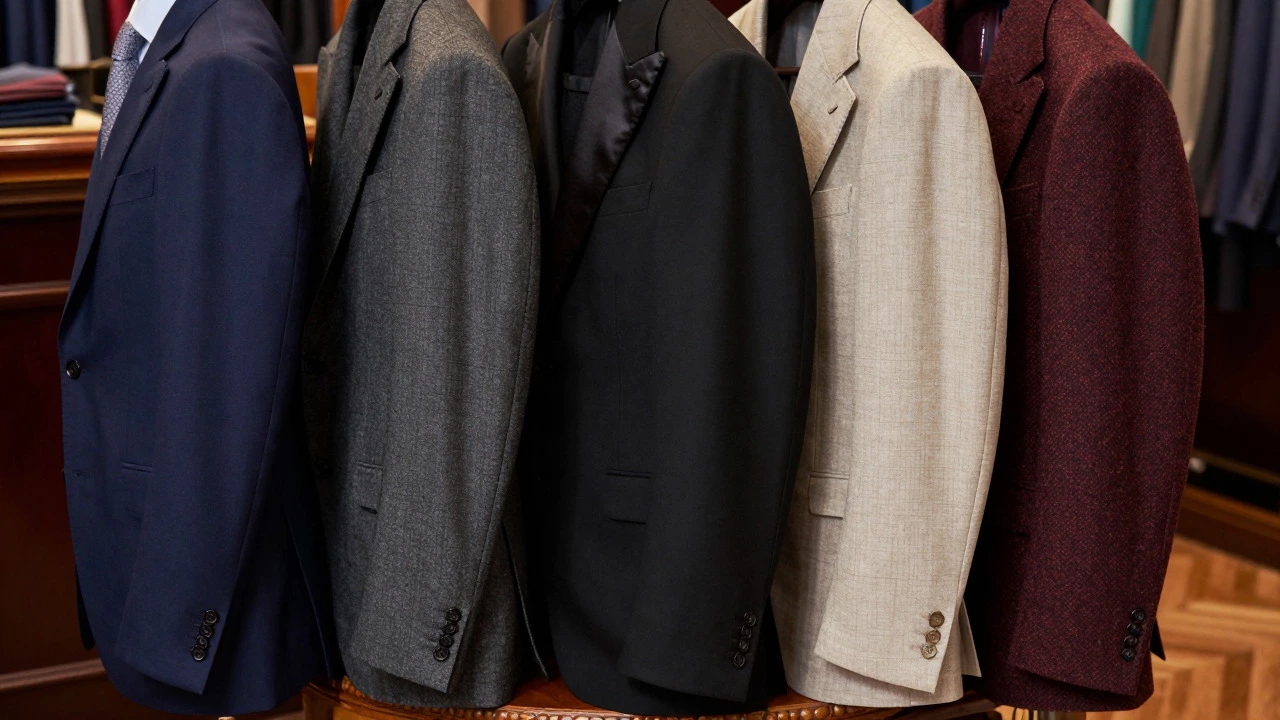
Summer in Ireland might be mild, but it exists. The fourth suit breaks the dark monotony. Choose light grey or beige/tan. This suit is strictly for daytime events. Wear it to a garden wedding in Wicklow, a summer gala in Killarney, or a creative industry event in Limerick. It looks fresh, energetic, and seasonally appropriate. Dark suits in bright sunlight can look oppressive; light suits reflect the environment.
Caution is needed here. Light fabrics show dirt easily. Given Ireland’s unpredictable drizzle, this suit requires careful handling. Always carry a compact umbrella. Fabric-wise, opt for tropical wool or linen blends. Linen wrinkles easily, so a blend offers a balance between breathability and structure. This suit allows you to experiment with brighter shirts and ties, adding personality to your wardrobe.
The Creative Flex: Patterned or Textured Suit
The fifth suit is yours to define. This is the wildcard. It could be a pinstripe suit, a tweed jacket, a burgundy velvet blazer, or a subtle plaid. This suit reflects your personal style and interests. If you love traditional Irish aesthetics, a Harris Tweed-inspired suit connects you to local heritage. If you’re in marketing or arts, a bold pattern shows creativity. This suit is for when you want to stand out, not blend in. It’s perfect for networking events where memorability matters, or for leisure activities like golf days in Portmarnock.
This suit shouldn’t be too loud. Subtle patterns work best. A windowpane check or a faint herringbone adds texture without overwhelming the eye. It proves you have depth beyond the standard corporate uniform. It’s the conversation starter.

Maintaining Your Suits in Ireland
Owning five suits is half the battle; keeping them in condition is the other. Ireland’s damp climate is the enemy of wool. Moths thrive in humid environments. Store your suits in breathable garment bags, not plastic dry-cleaning covers. Use cedar blocks instead of mothballs, which leave a harsh chemical smell. Rotate your suits. Never wear the same suit two days in a row. Wool needs time to recover its shape and release moisture absorbed from your body.
Dry cleaning should be done sparingly-once or twice a year per suit. Over-cleaning damages fibers. Instead, spot clean stains immediately. Brush off dust with a soft brush after each wear. Invest in good hangers. Wooden hangers maintain shoulder shape better than wire ones. Local dry cleaners in cities like Cork and Galway offer specialized services for delicate fabrics, so utilize them wisely.
Building Your Wardrobe on a Budget
Five suits sound expensive. They don’t have to be all bought at once. Start with the navy and charcoal. These cover 80% of occasions. Add the tuxedo next if your social calendar demands it. Then branch out into seasonal and creative options. Consider sales seasons. January and July sales in Ireland offer significant discounts on last-season styles. Online retailers like ASOS or Mr Porter often have flash sales. Alternatively, explore vintage shops in Dublin’s Smithfield area for unique finds that require minimal tailoring.
Tailoring is crucial. A €200 suit tailored to fit you looks better than a €1,000 suit that doesn’t. Find a reliable tailor early. In Ireland, word-of-mouth recommendations are powerful. Ask colleagues or friends for their go-to alteration experts. Good tailoring ensures longevity and comfort, making each suit a long-term investment rather than a disposable purchase.
Is the 5 suit rule necessary for everyone?
Not necessarily. If you work in a casual industry like tech or hospitality, you might need fewer suits. However, having at least two versatile suits (navy and charcoal) is recommended for most professional men in Ireland to handle unexpected formal events.
Can I wear a black suit to a wedding in Ireland?
It depends. For evening weddings, a black suit is acceptable if it’s well-fitted and paired with elegant accessories. For daytime weddings, avoid black as it can look too somber. Navy or grey is safer. If the invitation specifies black-tie, a black suit is insufficient; you need a tuxedo.
How do I store suits during the rainy season?
Store suits in a cool, dry place away from direct sunlight. Use breathable cotton garment bags. Include silica gel packets or cedar chips to absorb moisture and prevent mold. Avoid plastic bags which trap humidity and promote mildew growth.
What is the best fabric for suits in Ireland?
Wool is the best all-around fabric. It regulates temperature, resists wrinkles, and handles moisture better than synthetic fibers. For summer, choose lightweight tropical wool. For winter, heavier wool or tweed provides warmth and durability against wind and rain.
Where can I find affordable suit alterations in Dublin?
Areas like Smithfield, Parnell Street, and parts of South City Centre have numerous tailors offering competitive rates. Always check reviews and ask for a consultation to assess quality. Expect to pay €20-€50 for basic alterations like hemming trousers or taking in the waist.