Construction Site Shoes: What Works in Ireland's Tough Weather
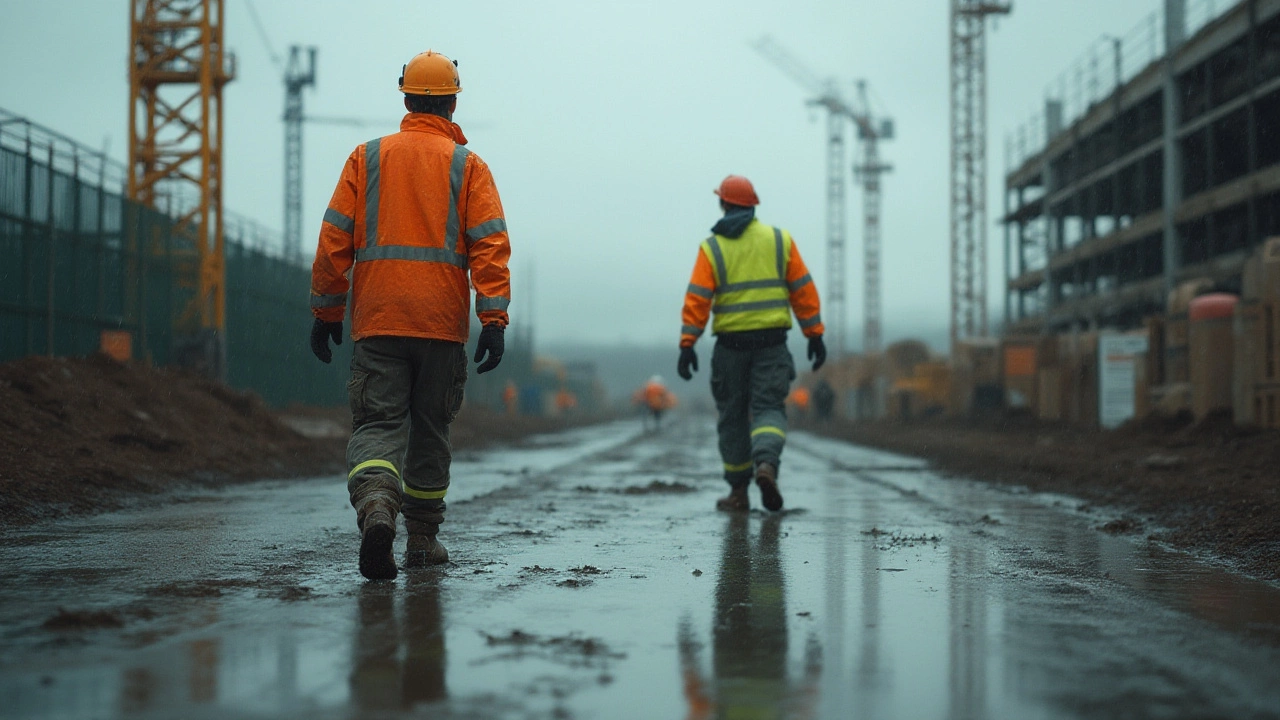
When you’re walking across a muddy construction site in Galway or climbing scaffolding in Dublin, your construction site shoes, sturdy, protective footwear designed for hazardous work environments. Also known as work boots, they’re not just about looking tough—they’re the only thing standing between your feet and a twisted ankle, a puncture, or a slip on wet concrete. In Ireland, where rain is part of the daily forecast and ground turns to sludge after a storm, these shoes have to do more than look professional. They need to grip, drain, insulate, and survive.
It’s not just about the brand. It’s about the sole. A good pair of work boots, heavy-duty footwear built for durability and safety on rough terrain needs a deep tread that bites into mud, not just rubber that squishes. The uppers? They can’t be thin leather that soaks through after an hour in a puddle. Real Irish builders swear by waterproof membranes, steel toes that don’t weigh you down, and midsoles that cushion long hours on hard surfaces. You’ll find these features in boots worn by electricians in Cork, plumbers in Limerick, and site managers in Belfast—all dealing with the same wet, uneven ground.
And it’s not just safety standards that matter—it’s comfort. If your feet hurt by noon, you’re not working safely. That’s why so many Irish workers trade in stiff, old-school boots for lighter models with breathable linings and arch support. Some even swap out insoles for custom orthotics because standing on concrete all day isn’t something you can just tough out. These aren’t luxury choices. They’re survival tools.
What you won’t see on an Irish site? Flimsy sneakers, shiny dress shoes, or those trendy ‘urban work boots’ that look good in a photo but leak after one rainstorm. The wrong shoe doesn’t just ruin your day—it risks your safety. That’s why the posts below don’t just talk about fashion. They’re full of real stories from people who’ve slipped, twisted, or soaked through the wrong pair—and what they switched to instead.
You’ll find guides on which brands actually last through Irish winters, what to look for when buying online from UK suppliers, and why some of the best work shoes come from Spain or Italy—not because they’re fancy, but because they’re built for wet, rough conditions. There’s even a post on the oldest shoe brand still trusted on Irish sites, and why repair culture here means people keep boots alive for years.
Whether you’re on a site, in a warehouse, or just tired of slipping on wet pavement, the right pair of construction site shoes isn’t an expense. It’s the foundation of every day’s work. Below, you’ll find the real talk—no fluff, no marketing buzzwords—just what works when the rain won’t stop and the ground won’t quit.
Job Site Footwear Mistakes in Ireland: What Shoes Put You at Risk?
Get the facts about dangerous footwear on job sites in Ireland. Learn what never to wear, why, and how local conditions influence safe choices.
Keep Reading