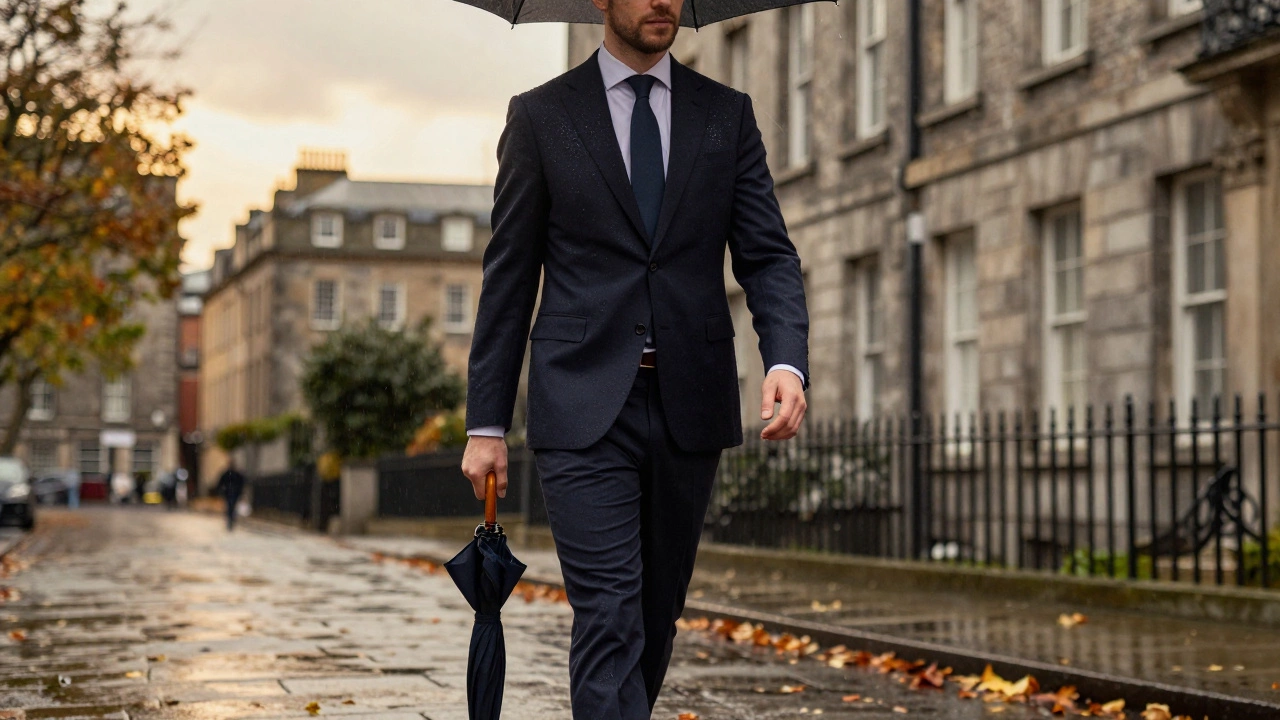
When you live in Ireland, the weather doesn’t wait for you to pick the right suit. One minute you’re walking past St. Stephen’s Green in a crisp navy double-breasted, the next you’re dodging rain near Grafton Street in a soaked lapel. That’s why owning the right number of suits isn’t about looking sharp for photo ops-it’s about surviving the Irish calendar without looking like you lost a fight with a washing machine.
One Suit Isn’t Enough-But You Don’t Need a Closet Full
In Ireland, the average man doesn’t wear a suit five days a week. Most of us work in tech, education, healthcare, or small business-places where jeans and a jumper are standard. But when you do need to look professional-say, for a meeting at the Department of Enterprise in Dublin, a funeral in Cork, or a wedding at Ashford Castle-you need to show up right. The sweet spot? Three suits. That’s it. Three suits cover 95% of what you’ll ever need in this country.
Think of it like your coat collection: you don’t need a different one for every season, but you do need one for rain, one for cold, and one for when you’re trying to impress.
The Essential Three: What to Own
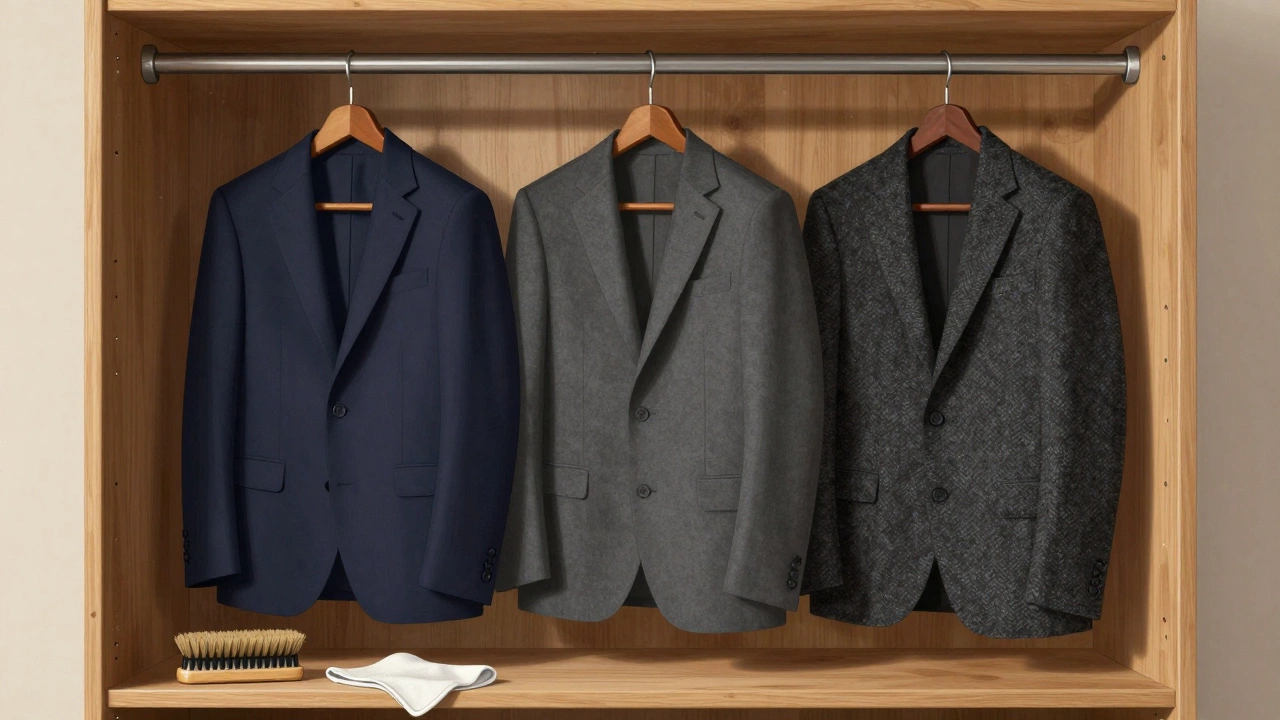
- A dark navy suit-this is your all-rounder. It works for job interviews at Accenture, church services in Galway, and even a business dinner at The Merrion Hotel. Navy doesn’t show water stains like black does, and it looks smarter than grey in natural Irish light. Go for a medium-weight wool, preferably from a brand like John Smedley or Barrow & Co. in Dublin-they know how to cut for a slightly broader shoulder and a longer jacket to suit taller frames common here.
- A medium grey suit-this is your fallback for less formal occasions. Think networking events at the Convention Centre, morning meetings at the Bank of Ireland branch in Limerick, or a cousin’s civil ceremony in Kilkenny. Grey is forgiving in dull weather and pairs well with both brown and black shoes, which matters when you’re running from a pub to a funeral and only have time to swap socks.
- A lightweight charcoal or tweed suit-this one’s for autumn and winter. Ireland’s winters aren’t snowy, but they’re damp and chilly. A wool-tweed blend from Claremont Tailors in Belfast or McGee’s Bespoke in Cork adds warmth without bulk. Tweed also hides rain better than smooth wool, and it’s culturally at home here-think of it as the suit version of a Donegal wool jumper.
Don’t bother with bright colours, patterns, or double-breasted styles unless you’re a politician or a wedding guest in a castle. Stick to solid, single-breasted, two-button cuts. They’re timeless, easy to tailor, and won’t make you look like you’re auditioning for a period drama.
What to Skip (and Why)
Black suits? Only if you’re attending a funeral or a very formal gala. Outside of that, they look like you’re trying too hard-and in Ireland, trying too hard is a social misstep. We respect effort, but we don’t celebrate performance.
Light grey or beige suits? Save those for holidays in the south of France. In Dublin in November, they’ll look like you just walked off a cruise ship. The same goes for silk lapels, pinstripes, and anything labeled "business casual" unless it’s from a local tailor who’s seen you in a rainstorm.
And no, you don’t need a tuxedo. Not unless you’re attending the annual Irish Film & Television Awards in Dublin or a black-tie event at Trinity College. Even then, renting one from Costume Hire Ireland in Temple Bar costs less than buying one you’ll wear once.
Fit Matters More Than Brand
Many Irish men buy suits online from international retailers because they’re cheaper. But here’s the truth: if your suit doesn’t fit right in the shoulder, it won’t matter if it’s Armani or Asda. The Irish body type tends to be broader in the chest and shorter in the torso than the American or Italian standard. That means off-the-rack suits from London or New York often sit wrong here.
Go to a local tailor. Places like McGee’s Bespoke in Cork, St. Stephen’s Tailors in Dublin, or Claremont Tailors in Belfast can adjust a ready-made suit for under €100. That’s cheaper than buying a new one online and returning it twice. Plus, they’ll remember your preferred sleeve length after you’ve complained about your coat sleeves covering your hands in winter.
Seasons, Events, and the Irish Suit Calendar
In Ireland, your suit use isn’t tied to the workweek-it’s tied to the calendar of life.
- Spring (March-May): Navy or grey for job interviews, Easter services, and graduation ceremonies at UCD or Queen’s Belfast.
- Summer (June-August): Lighter wool or linen-blend suits for weddings at Powerscourt or Killarney. Skip the tie if it’s over 20°C-Irish weddings are more relaxed than you think.
- Autumn (September-November): Tweed suit for harvest festivals, business dinners in Galway, and the Galway International Oyster Festival if you’re networking with seafood exporters.
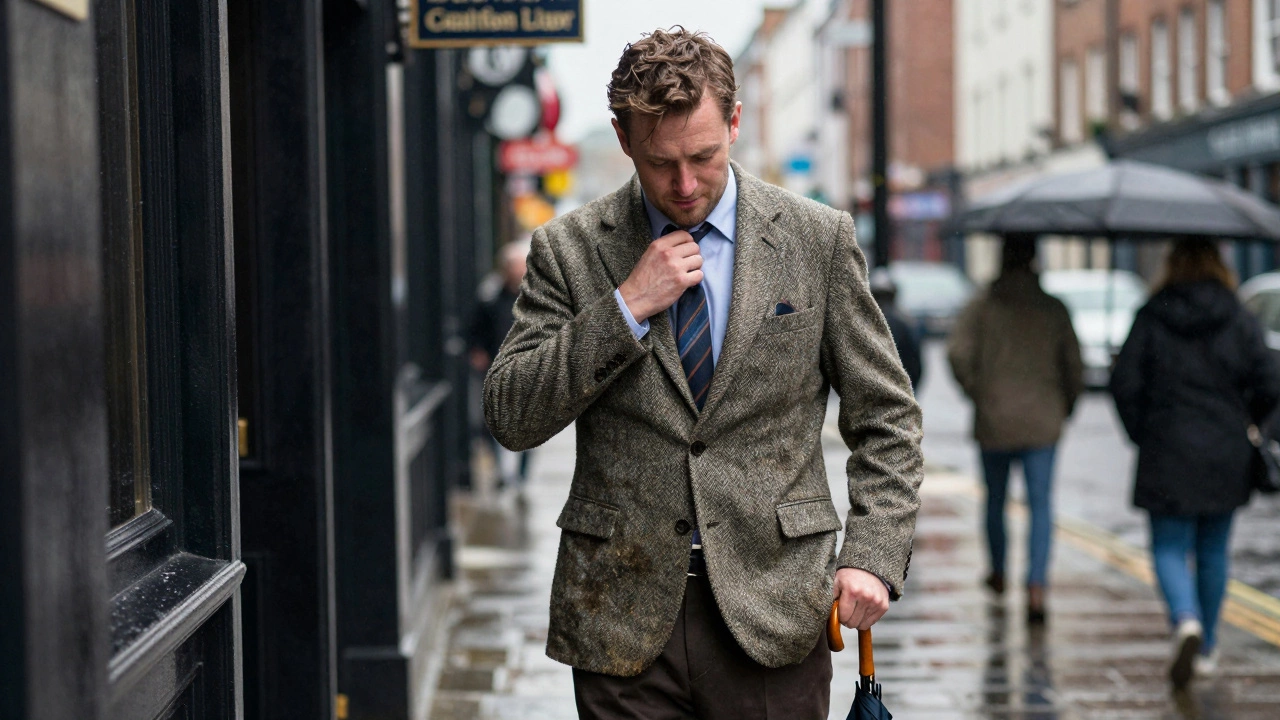
- Winter (December-February): Navy or charcoal for Christmas parties at the Shelbourne, funerals in Sligo, and the Irish Times Business Awards. Always carry a compact umbrella in your suit pocket. It’s not a fashion statement-it’s survival.
Storage and Care in a Humid Climate
Irish humidity kills suits faster than rain. Don’t hang them in a damp hallway or a wardrobe next to the washing machine. Use cedar hangers (available at Irish Home & Garden in Kilkenny) to repel moths and absorb moisture. Brush your suits after every wear with a horsehair brush-this removes dust and prevents the fabric from matting.
Dry cleaning? Only when necessary. Every time you dry clean a suit, you strip the natural oils from the wool. Spot clean with a damp cloth and a drop of mild soap. If it’s been rained on, hang it in a dry, ventilated room overnight. Never use a radiator. It shrinks the shoulders.
What About Secondhand?
There’s a quiet secondhand suit culture in Ireland. Look for vintage suits at St. Patrick’s Vintage in Dublin 8, or check out the monthly Charity Suit Sale at St. Vincent de Paul in Cork. Many suits here are bought once for a wedding, worn once, and then donated. You can find a perfectly good navy suit from 2018 for €80-just make sure the shoulders fit. Tailoring is cheaper than the suit itself.
Final Answer: Three Suits. That’s All.
One navy. One grey. One tweed or charcoal for winter. That’s your Irish man’s suit wardrobe. No more. No less.
You don’t need a suit for every occasion. You need the right suit for the right moment-and in Ireland, that’s usually just three.
Do I need a suit for a job interview in Ireland?
Yes, but it doesn’t have to be fancy. A well-fitted navy or grey suit from a local tailor is enough. In sectors like finance or law, it’s expected. In tech, startups, or public service, a smart blazer and dark trousers may be acceptable-but when in doubt, suit up. It shows you respect the process.
Can I wear the same suit to a wedding and a funeral?
Technically, yes-but only if it’s navy or charcoal. Avoid black unless it’s a funeral. For weddings, pair it with a light shirt and maybe a pocket square. For funerals, keep it simple: white shirt, dark tie, no patterns. In Ireland, understated respect matters more than fashion.
Is tweed appropriate for business in Ireland?
Absolutely. Tweed is part of Irish heritage, not just rural attire. Many professionals in Cork, Galway, and Belfast wear tweed suits in winter-it’s warm, durable, and quietly professional. Just avoid loud patterns. A subtle herringbone or houndstooth in charcoal is ideal.
Should I buy suits online or from a local tailor?
Buy online only if you’re replacing a suit you already own and love. For your first suit or any new purchase, go local. Irish body types vary, and off-the-rack suits often don’t fit right. A €100 alteration at a Dublin or Cork tailor will make a €400 suit look like it was made for you.
How often should I replace my suits in Ireland?
With proper care-brushing, airing, minimal dry cleaning-a good wool suit lasts 7-10 years. Tweed lasts even longer. Replace them only when the fabric thins, the shoulders sag, or the lining tears. Most Irish men keep their navy suit for over a decade.